Signs your ducts need cleaning in Portland, OR

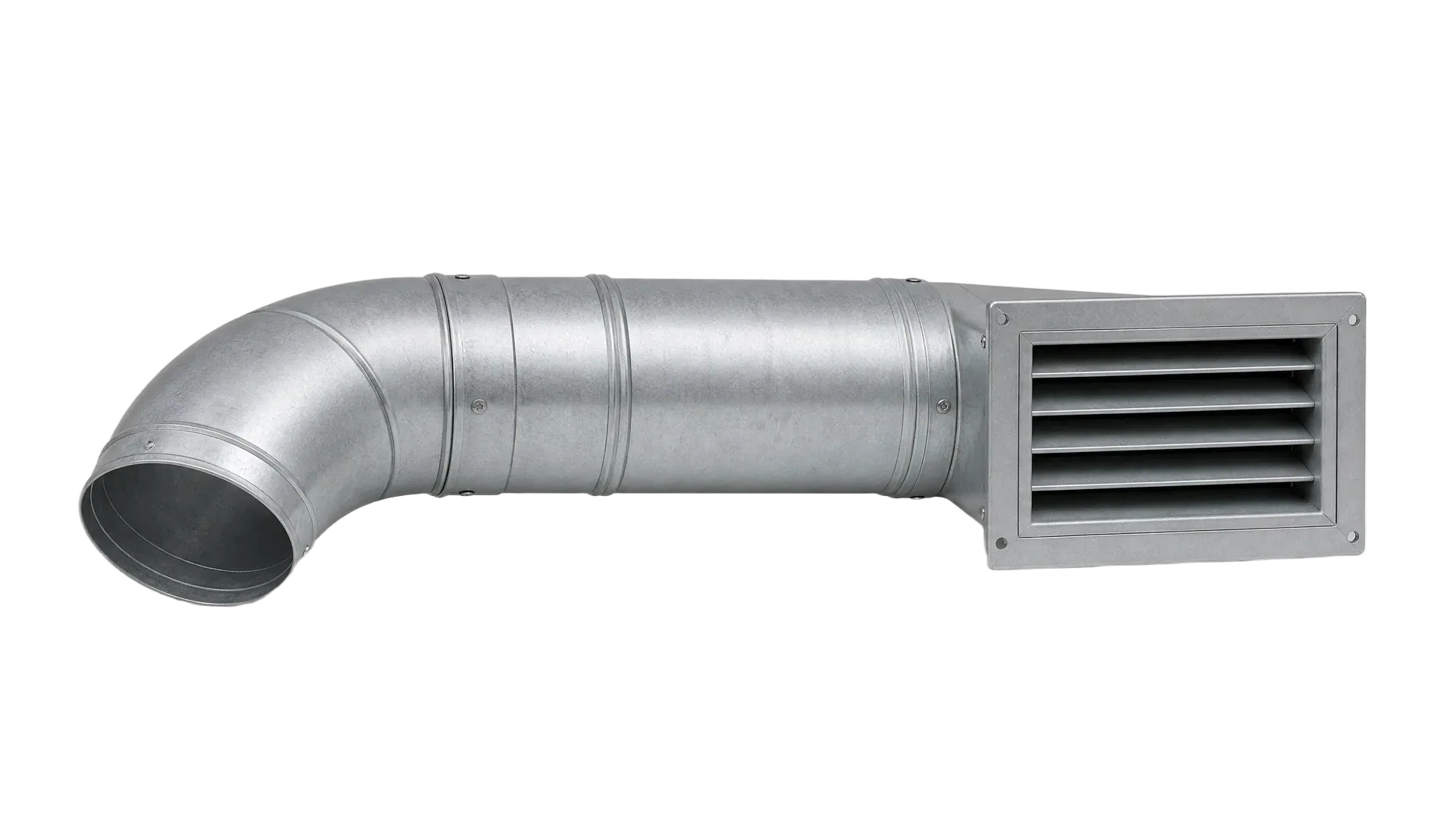
A galvanized metal round duct with a 90-degree elbow connected to a rectangular louvered vent grille, shown against a plain gray background.
Start one form

Dust building up on your vent covers, a musty smell when the heat kicks on, or rooms that seem dustier than they should be days after cleaning are the usual signs your ducts need attention. So is a furnace filter that looks gray again just weeks after you changed it. Most homes in the Portland area heat with electricity, and electric systems push air through the same ductwork all winter, so dust and debris that settle in the lines get circulated every time the heat runs. If anyone in the house has started sneezing more at home than elsewhere, or you can see dust kicked up near a register when the system starts, that is the ductwork doing it. Rodents or insects getting into ducts through gaps near the attic or crawlspace is another reason to have them checked, especially if you hear scratching near vents. None of this means the ductwork is unsafe, but it does mean the air moving through your house is carrying more than it should.

Why would your ducts in Multnomah County need cleaning?

  • Half the homes here were built by 1972

    Half the homes in Multnomah County were built in 1972 or earlier. Older ductwork has had more time to collect dust, and more chances for a joint to come loose.

  • Heat runs October through June

    Heat runs here from October through June, about nine months a year. That's nine months of air pushing through your ducts, carrying whatever has settled in them.

  • Cooling runs August through August

    Cooling only runs in August here. Your ducts spend most of the year moving heated air, so dust and debris have little chance to clear out on their own.

ACS 2020-2024 · NOAA nClimDiv 1991-2020

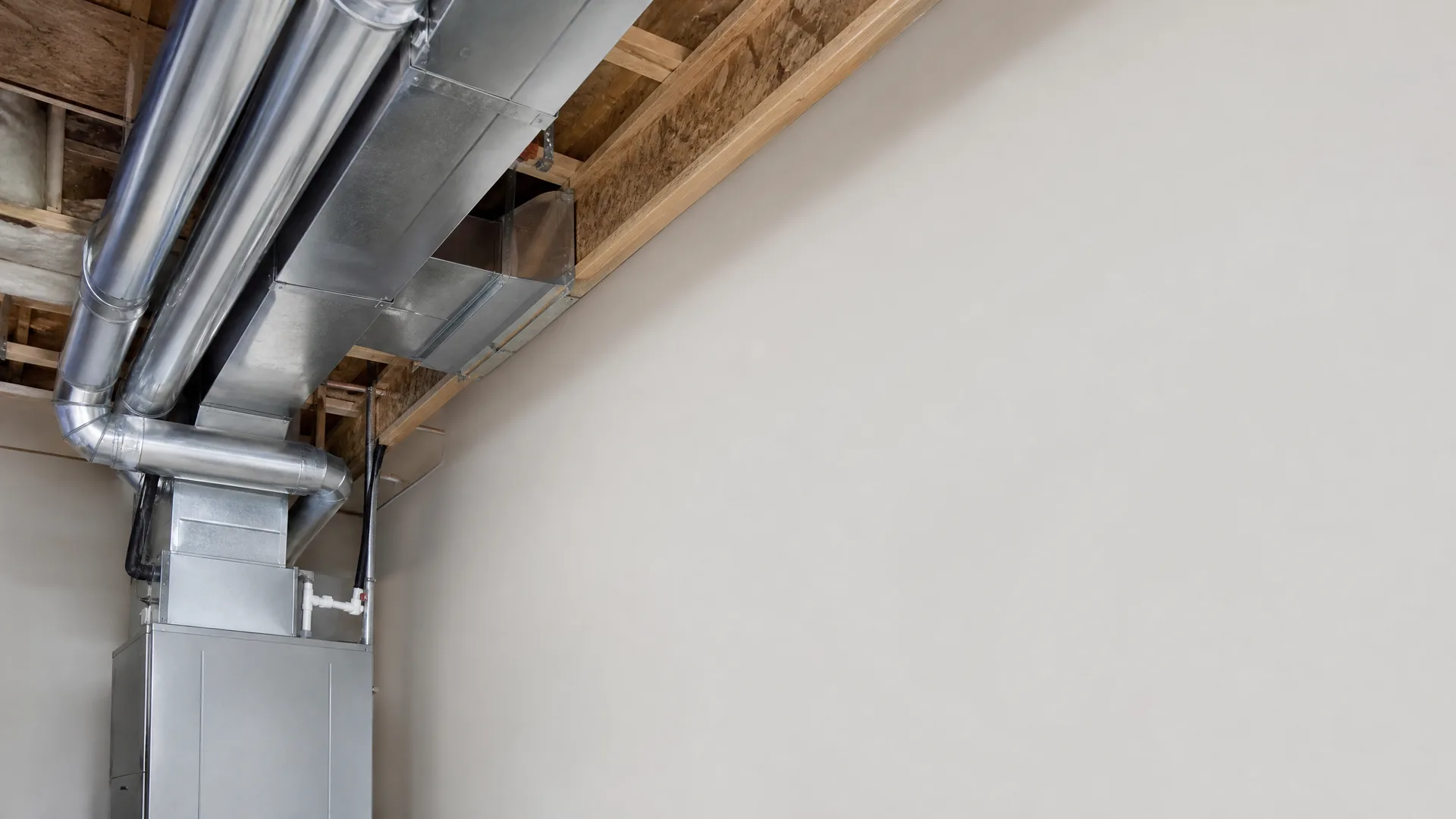
Galvanized sheet-metal ductwork and round pipes running along an exposed wood-joist ceiling with insulation, above a furnace unit beside a blank painted wall.

Signs it's just dust

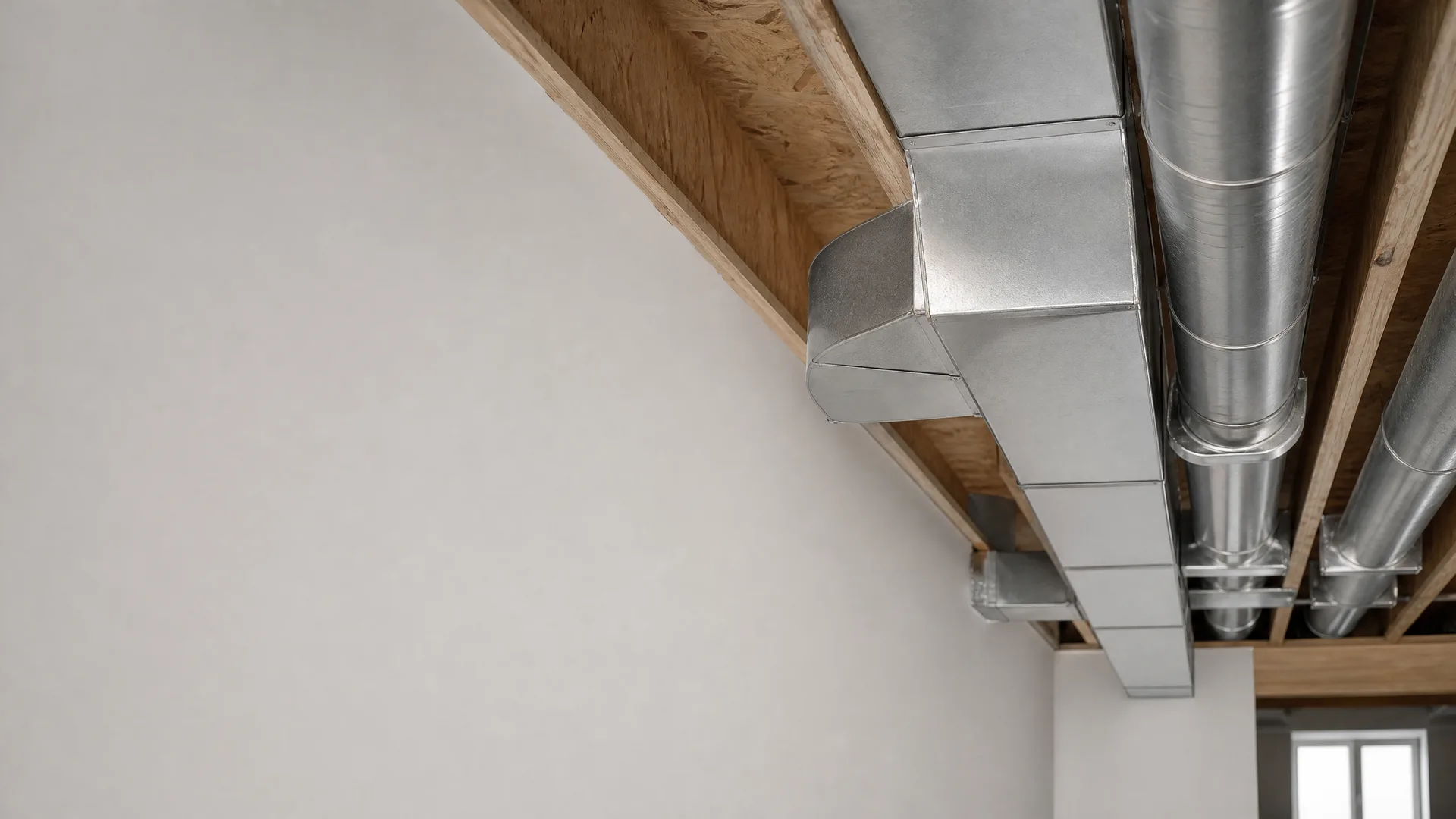
A thin gray film on the vent covers, or a filter that needs changing sooner than it used to, is normal. It means the system is pulling air through the house the way it should. Wipe the covers, swap the filter, and the dust that settles back in a week or two isn't a reason to call anyone. It's what happens when a house runs its heat for months at a stretch.

Galvanized rectangular and round sheet-metal ductwork mounted beneath an exposed wooden joist and OSB ceiling, next to a plain white wall and a window at lower right.

Signs it's more than dust

A musty smell every time the furnace kicks on, or dust that returns heavy within a day or two of cleaning, points to something built up inside the ducts themselves, not just on the covers. If one room runs noticeably dustier than the rest of the house, or you can see debris in the vent when you shine a light in, that's buildup the filter isn't catching and wiping the covers won't touch.

Clean your ducts now or wait

Clean them now

  • Dust keeps returning to the same surfaces within days of wiping them down, even with a clean filter in place.
  • A musty smell comes through the vents specifically when the furnace is running, not the rest of the day.
  • You can see dust or debris inside the duct when you pull a vent cover off and look in with a flashlight.
  • Someone in the house has started sneezing or coughing more right after the heat or AC kicks on.
  • A room that's far from the furnace gets noticeably less airflow than the rooms close to it.

Wait and watch

  • The filter still lasts close to as long as it used to before you need to swap it.
  • Vent covers have a light film of dust that wipes off easy and doesn't come back heavy within a week.
  • No one in the house has new or worse allergy symptoms since the furnace started running this season.
  • Airflow feels about the same in every room, including the ones at the far end of the house.
  • You've had the ducts cleaned or inspected within the last few years and nothing's changed since then.
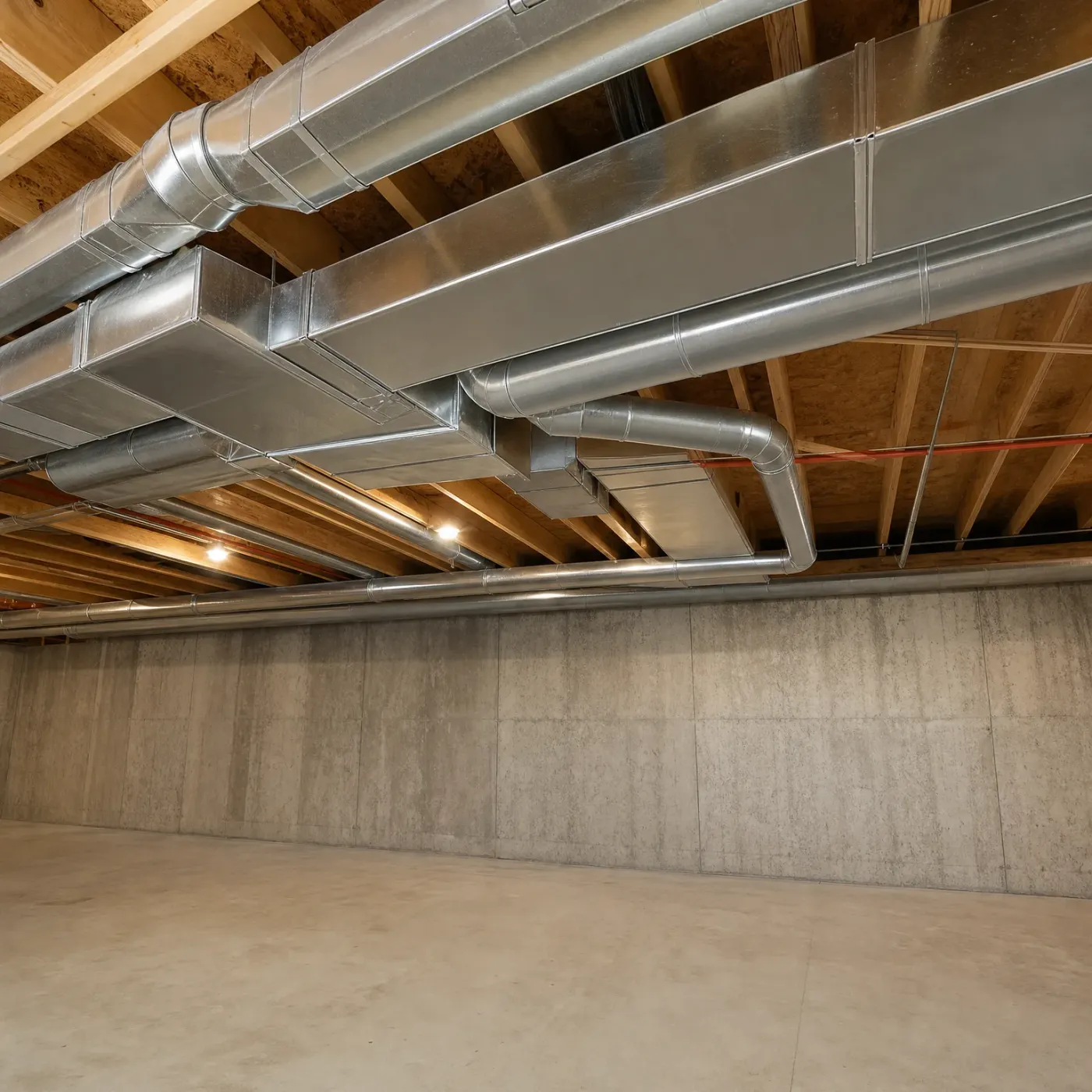
Unfinished basement with bare concrete floor and walls, showing galvanized sheet-metal HVAC ducts, pipes and recessed lights beneath a wood-joist ceiling.

Ducts doing their job

This is what galvanized ductwork should look like, bare metal, no dust riding the seams. Air moves through clean, and what comes out the vents upstairs is just air. A joint here and there might need resealing over time, but the duct itself isn't adding anything to the house.

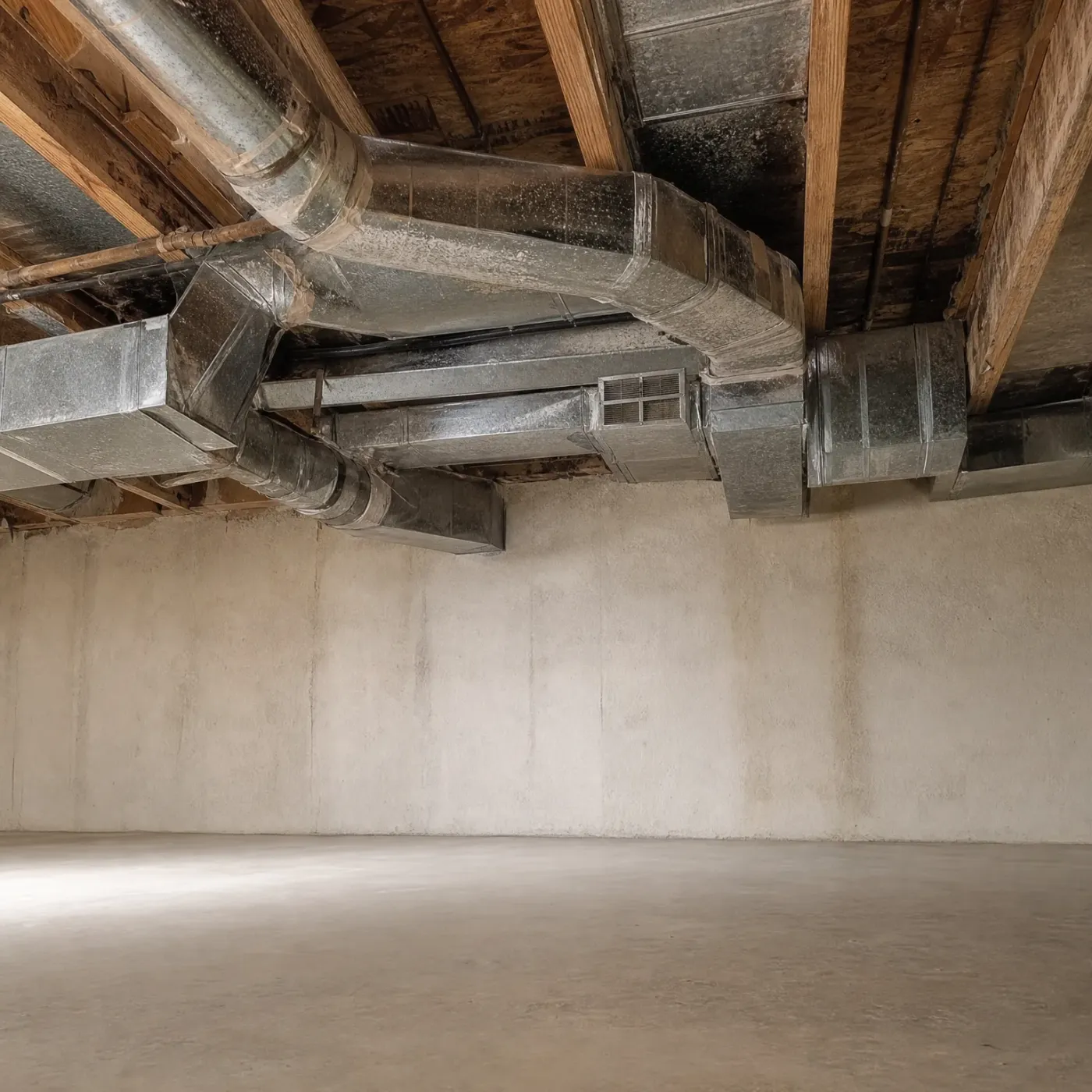
An empty basement room with bare concrete walls and floor, with galvanized sheet-metal HVAC ductwork and a vent grille running along the wooden joist ceiling.

Ducts overdue for cleaning

Dust has built up along the top and sides of every run here, and the dark streaking at the seams means it's been collecting for a while, not days. Every time the furnace kicks on, that layer gets stirred and pushed into the rooms above.

Is what you're seeing in your house normal, or is it time?

Walk through your house and check a few things. Run a finger along a vent cover in a room you don't use much. Look at the top of your TV or a shelf a few days after you dusted it. Open a closet near a supply vent and smell for anything musty, especially once the furnace has been running a while. If someone in the house has started sneezing more at home than anywhere else, or a filter you just changed looks gray again in no time, your ducts are likely pushing that dust and smell through every room they feed. Left alone, that buildup keeps circulating through the air your household breathes every time the furnace kicks on.

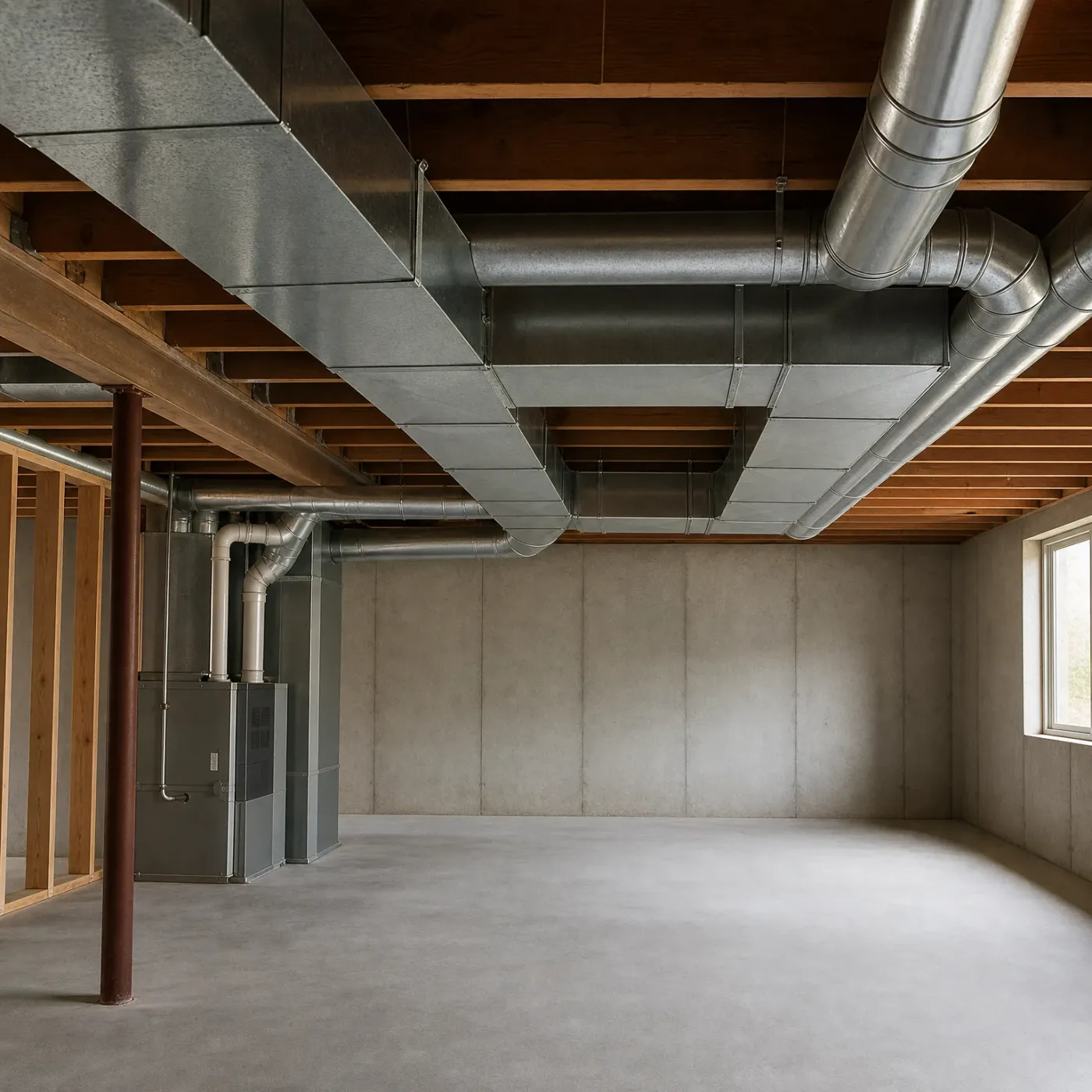
Unfinished basement with concrete floor and walls, exposed wood joists, galvanized sheet-metal ductwork, a furnace unit, a steel support column, and a small window.

Working the way it should

Sheet-metal trunk lines and a spiral duct run clean along the joists, feeding the furnace against the foundation wall. No dust riding the seams, no sag in the flex. Air moves through and what reaches the vents upstairs is just air.

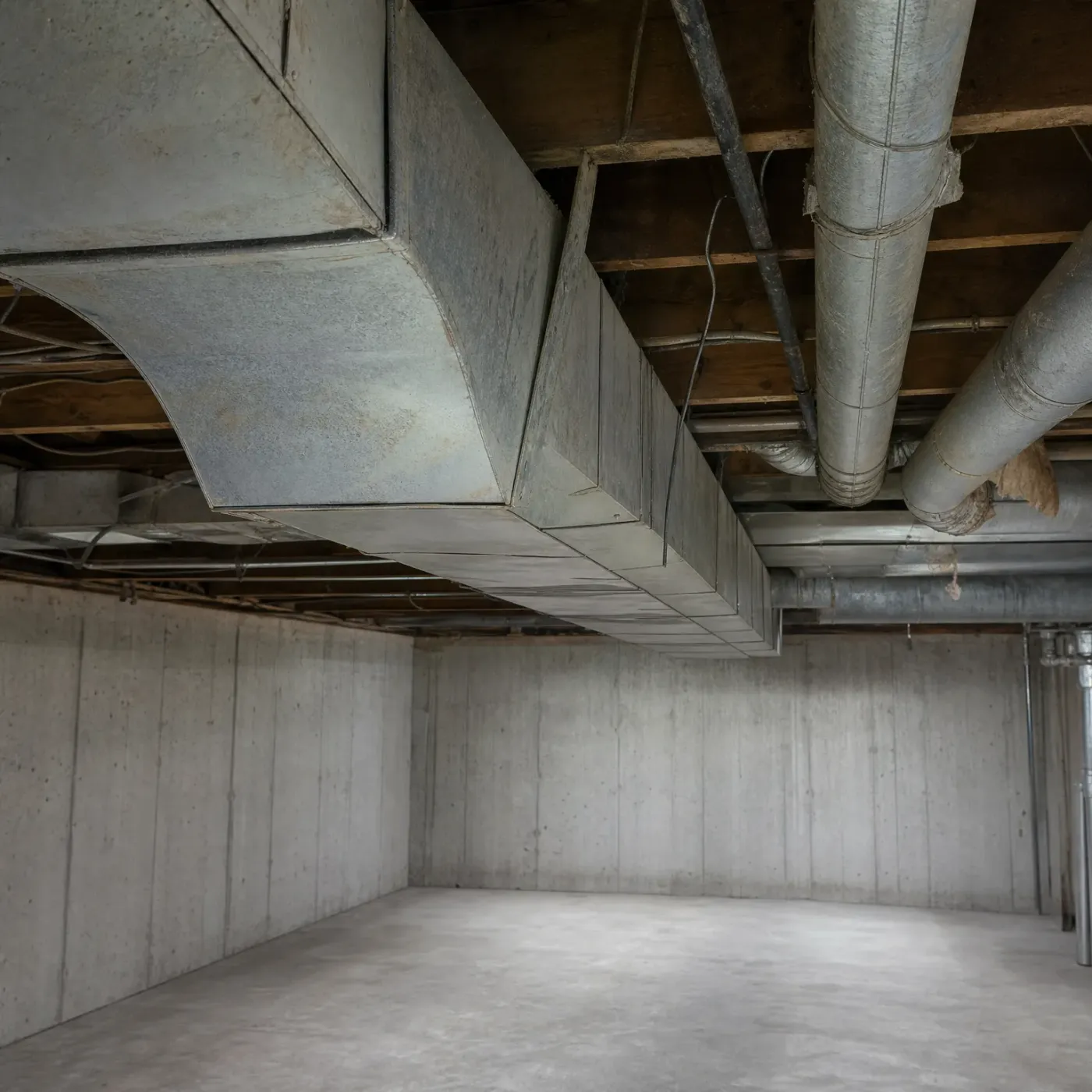
Empty unfinished basement with bare concrete walls and floor, showing exposed wooden joists, galvanized sheet-metal ductwork, pipes, and a white vent grille overhead.

Worth a closer look

Galvanized ducts and flex runs crowd the joists above bare concrete, pipes crossing every which way to a single vent at the far wall. A layout like this has more joints where dust can collect and more distance for air to pick it up before it reaches the room.

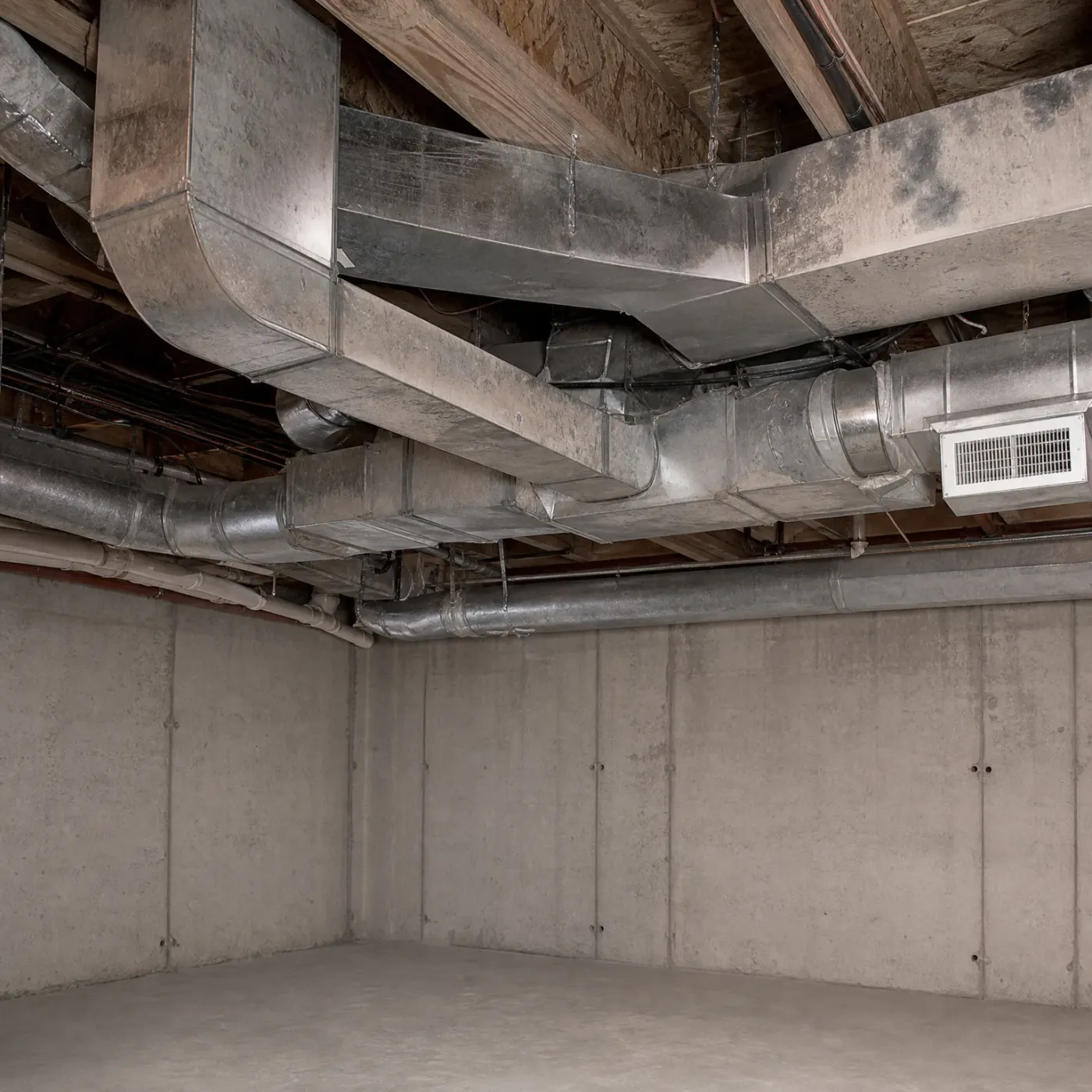
Empty concrete-walled basement with bare floor, showing large galvanized sheet-metal HVAC ducts, insulated pipes, wiring and wooden floor joists overhead.
Before you get your ductwork cleaning
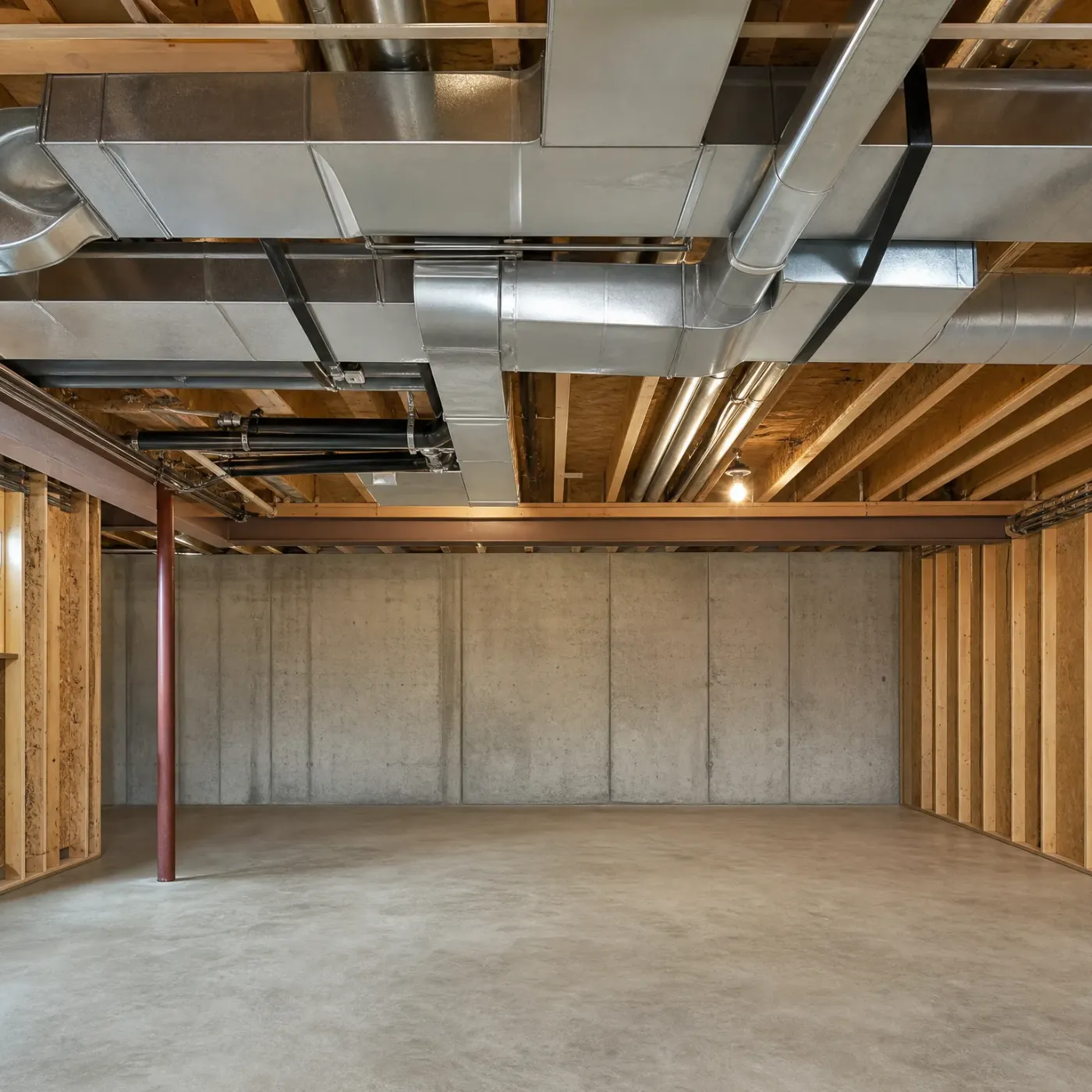
Empty unfinished basement with bare concrete floor and wall, wood-framed stud walls, exposed joists, galvanized HVAC ducts and pipes overhead, a steel beam and red support column, and a single bare bulb light.
After you get your ductwork cleaning

No calling every shop in Multnomah County

Once you've checked the vents and the filter and you're still seeing dust come back fast or catching that musty smell when the furnace kicks on, the next step is getting someone out to look at the ducts themselves, not guess from the signs. That usually means calling a few companies, explaining what you've noticed more than once, and sitting with quotes that are hard to compare because you don't know the ductwork well enough to know what's being priced. A contractor working in Multnomah County sees this same setup often, the older ductwork from houses built in the 1970s or before, the furnace runs from October through June, and knows what tends to be dust and what tends to be a loose joint or a dead spot in the system. Sending this request means one contractor looks at your house, not five companies calling back at once. With heat running most of the year here and power costing what it does, ducts that are pulling air the way they should matter more than they would somewhere milder.

Why dust is heavier in winter

A forced air furnace pushes the same air through your house again and again all winter. Every pass picks up whatever is loose in the ducts and carries it into the rooms before pulling it back through the return. A house that runs its air conditioner for a few months and its furnace the rest of the year puts more total hours on that duct system than one that only runs part of the year. In Multnomah County, with heat running October through June, the air in your house moves through those ducts for most of the year, which gives any dust or debris inside more chances to end up back in the rooms you're standing in.

What a sealed joint should look like

Metal ductwork is built in sections, joined with screws and sealed with mastic or foil tape where the pieces meet. A joint that's sealed right doesn't pull in attic or crawlspace air, and it doesn't leak the air your furnace just heated before it reaches the vent. Over enough years, tape dries out and mastic can crack, and a joint that was sealed when the house was built may not still be sealed now. A loose joint doesn't just waste heat. It gives dust from the attic or crawlspace a way into the air stream, which is one reason older ductwork tends to carry more of it.

A smiling bearded man in a dark sweater sits at a dinner table with lit candles, a glass of red wine, and bowls of food, in a dimly lit room with a lamp and houseplant behind him.
A woman with dark hair in a bun sits on a beige sofa under a knit blanket with her eyes closed and an open book in front of her, with a lit lamp and houseplant in the background.

A duct cleaning fixes what's already built up. It won't stop a loose joint from pulling in attic or crawlspace air, or a disconnected run from dumping heat where nobody lives.

If a room never gets warm no matter how clean the air is, or a utility bill keeps climbing, that's a sign for a contractor to check the ducts themselves, not just clean them.

Power here costs 18.29 cents per kilowatt-hour

Electricity here runs 18.29 cents per kilowatt-hour, and most furnaces in the county are electric. A blower working harder to push air through dust-clogged ducts draws more power the whole time it runs, so the buildup shows up on your bill before you ever see it on a vent cover.

EIA-861 2025

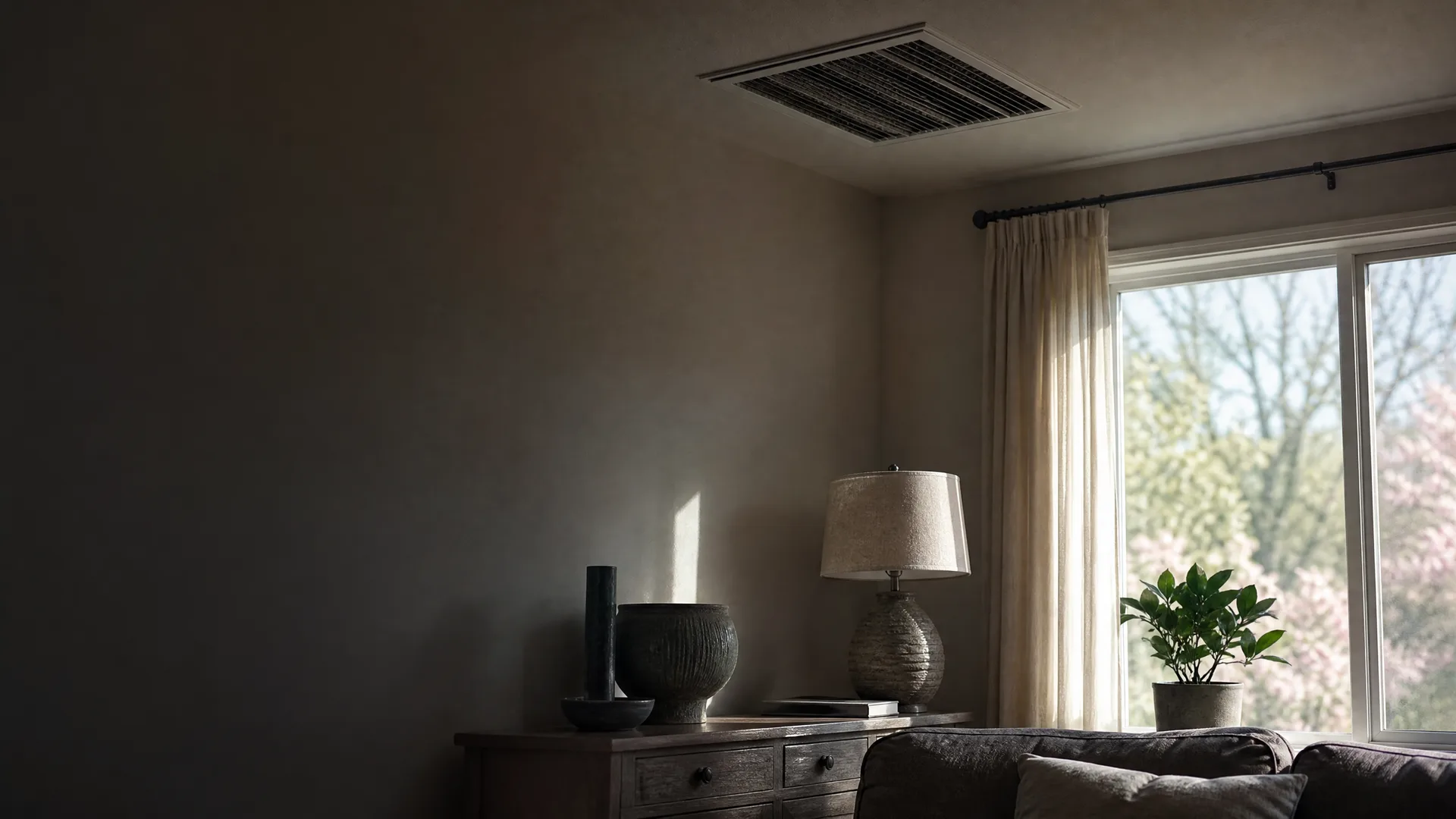
A dim living room corner with a ceiling air vent, a curtained window showing blossoming trees, a table lamp and dark ceramic vessels on a wooden dresser, a potted plant, and a sofa in the foreground.

It's a Saturday afternoon in April, and the heat clicked off a while ago. Sun is coming in through the window and you notice it first on the side table, a thin film of dust that wasn't there Monday. You look up at the ceiling vent and the grille is gray around the slats, more than you remembered. You wiped this table down a few days ago. You know you did. The TV screen has the same dull coat. Outside it's finally mild enough to leave the furnace alone for a while, but the dust it pushed around all winter is still settling, into the carpet, onto the shelf, back onto the table you just cleaned.
A closed laptop and a ceramic mug on a wooden table in front of a kitchen with green cabinets, marble counter, black pot, cutting board, wooden bowl, and a white vase with greenery.

What you've checked is the answer

Dust that comes back fast, a musty smell when the furnace runs, a filter that grays out weeks early. If you've seen any of that, your ducts need cleaning. If what you found was a thin film on the covers and nothing more, your system is doing what it's supposed to do.

Either way, you don't have to spend the evening on it from here. No calling around Multnomah County asking who does duct work, no explaining the gray filter and the musty smell three separate times to three separate companies, no comparing quotes against each other with no way to tell who actually knows what they're looking at. One licensed local contractor, someone who works on ductwork in homes like yours every winter, takes a look and tells you straight whether it's buildup or something else.

Interior corner of a room with a dark upholstered sofa and textured cushion, a potted plant, sheer curtains at a multi-pane window showing blurred green and yellow trees, and a dark table holding a wooden tray with stacked coasters and a small ceramic vase.
A smiling woman with long brown hair in a cream sweater sits at a stone counter with a glass of red wine, with a dimly lit living room, beamed ceiling and glass doors behind her.
A woman with shoulder-length dark wavy hair in a beige sweater laughs while looking off to the side, seated at a white marble counter with a glass of red wine, in a dimly lit home interior with a kitchen and sofa in the background.
A smiling woman with long dark hair in a black sweater sits at a white marble counter with a glass of red wine, in a dimly lit kitchen and living area with pendant lights, a potted plant, and flowers.
A smiling woman with long brown hair in a light knit sweater sits at a stone-topped counter with a glass of white wine, with a dimly lit living room, sofa, fireplace and round mirror behind her.

Ductwork Cleaning

Explain it one time

A licensed pro who works in Multnomah County gets your request.

A black-framed smartphone standing upright against a plain light gray background, its screen filled with solid green.
Duct and vent cleaningDucts or ventsMultnomah County, OR
Step 1 of 2

What ZIP code is the job in?