Is duct cleaning worth it in Portland, OR

Your request goes to a Multnomah County pro who takes ductwork jobs.

Match me with a pro

It depends on what's in your ducts, but most homes in the Portland area don't need it on any kind of schedule. Duct cleaning helps when there's visible dust blowing out of your vents, a musty smell when the furnace or heat pump kicks on, or you've had work done on the house that left debris in the lines. Since most homes here heat with electric heat pumps or furnaces running most of the winter, dirty ducts mean that air gets pushed through your house for months before anyone notices the smell or the dust on the furniture. If your ducts have never been cleaned and the house is older, or you've had rodents or a remodel, it's worth having someone look before you decide. If nothing's changed and no one in the house has new allergy symptoms, you're probably fine skipping it. A contractor can check with a camera and tell you honestly whether it's needed.

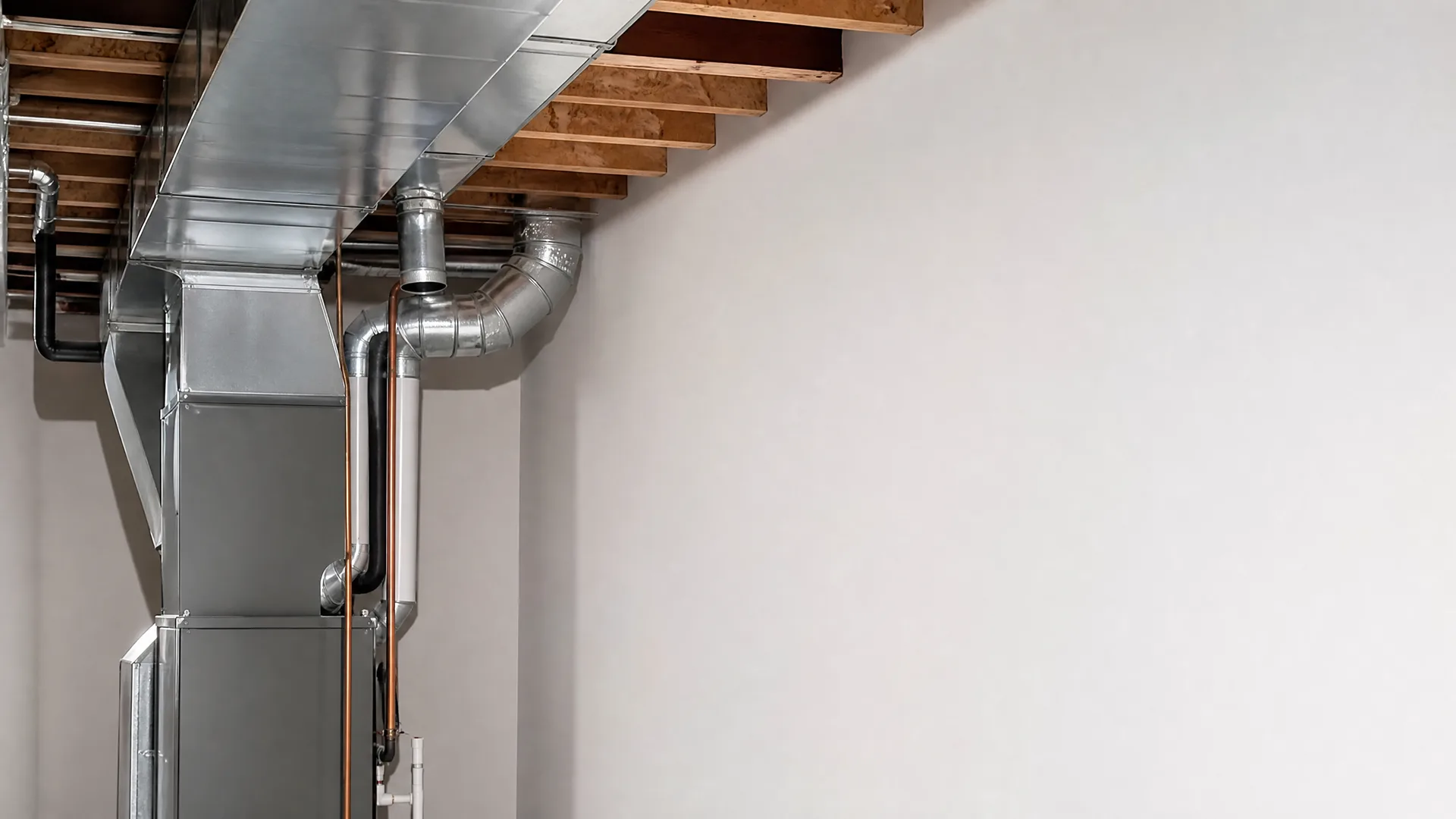
Basement interior showing a furnace with sheet-metal ductwork, a round flue pipe and copper lines running beneath exposed wooden floor joists next to a plain light-colored wall.

What actually builds up in there

Ducts collect dust, pet hair, and whatever drifts in through a return vent left uncovered during work on the house. Most of that settles near the vents and the furnace or heat pump itself, not deep in the runs. If you pull a vent cover and see a thick layer of gray fuzz, that's worth dealing with. A light coating is normal and doesn't move the air you breathe.

Interior corner of a building with a large blank white wall beside an unfinished ceiling showing wood joists, galvanized sheet-metal ductwork, and white and copper pipes.

Where electric heat changes the math

With electric heat running most of the winter in Multnomah County, air moves through the system a lot between October and spring. Restricted airflow from a clogged filter or dusty coil makes the system work harder, and that shows up on a power bill that's already high. Cleaning the ducts themselves won't fix a dirty filter, but if the filter's been kept up and you're still seeing dust, the ducts are the next place to check.

How do I know if my ducts actually need cleaning?

You've looked at the vents, maybe pulled one off to check, and you still don't know if what you're seeing is normal or a reason to call someone. Nobody wants to pay to have ducts cleaned if there's nothing wrong with them, but you also don't want dust blowing into every room all winter. You want a straight way to tell the difference before you decide anything.

Check the supply vents and the return, not just one or the other

Pull a supply vent cover off and look inside with a flashlight. A thin layer of gray dust is normal. What's not normal is dust thick enough to see from across the room, or black streaking around the vent edges, which usually means mold rather than ordinary dust. The return vent tells you more, since that's where air gets pulled back into the system and where debris collects first. If you've had a remodel done, or mice or another pest got into the house, that's a reason to look regardless of what the vents show. Musty smell on startup is worth checking too, but only if it goes away once the system's been running a few minutes. If it doesn't, that points to something else, not the ducts.

Dim room corner with a framed picture on a textured wall above a counter holding a tall ceramic vase and a shallow wooden bowl, with a sheer curtain beside a window and a ceiling air vent overhead.

Late April, early afternoon, light coming in flat through the window. You're on the couch and you notice the ceiling vent grille above the bookshelf, a soft gray line of dust along the slats, thicker than you remembered. You run a finger along the top of the bookshelf and it comes back coated. The heat hasn't kicked on much this week, just the odd cool morning, but when it did yesterday you noticed a faint smell before it faded. You make a note to deal with it, then get pulled into something else. It's still there Saturday, the same dust, a little more on the shelf, when you walk back through the room with the vacuum.


Get matched with a duct system pro in Multnomah County

You've probably checked the vents yourself by now, maybe pulled one off and looked inside with a flashlight. That tells you something, but not everything. A contractor who does this for a living can look at what's actually built up in there and tell you if it's worth the money or if you'd just be paying to clean something that was never dirty enough to matter. Most homes around Portland and the rest of Multnomah County don't need this done, but some do, and the only way to know for sure is to have someone look who isn't guessing. Instead of calling around to a handful of duct cleaning companies, explaining your vents and that musty smell every time, and trying to sort out which quote actually matches what you need, you can hand that off. One contractor who covers your area takes a look and tells you straight whether your ducts need the work or not.

Skip it if the air is just dusty. Dust in a house this dry comes from the room, not the ductwork, and it comes back within days no matter what gets cleaned.

Get it looked at if the smell shows up with the furnace or heat pump, or if there's loose insulation or debris you can see past the vent. That points to something sitting in the ducts, not just the room.

Does a house this old change whether ducts need cleaning?

  • Half the homes here were built by 1972

    Half the homes in Multnomah County were built in 1972 or earlier, half later, so check yours against both ends before you assume anything about the ductwork.

  • Heat runs October through June

    Heat runs October through June here, nine months of pushing air through the same ducts, which gives dust and debris a long stretch to settle in.

  • Cooling runs August through August

    Cooling only runs in August, so most of the year it's the furnace or heat pump moving air through those same runs, not an AC system.

ACS 2020-2024 · NOAA nClimDiv 1991-2020

A woman in a cream turtleneck sweater stands beside a multi-pane window looking out at falling snow, with a dimly lit living room containing a lamp, sofa and shelves behind her.
A woman in a beige turtleneck sweater stands by a large window with snow-covered trees outside, in a living room with a lit lamp, sofa with cushions, and a wood stove with visible flames.
A woman with long dark hair in a beige knit turtleneck sweater stands beside a window with snow outside, looking off to the side, with a warmly lit living room containing a sofa, lamps and a coffee table behind her.
A woman with shoulder-length brown hair in a beige knit sweater stands near a window looking outside at falling snow and snow-covered evergreens, with a dimly lit living room, sofa, lamp, bookshelf and framed landscape painting behind her.

Clean Them Now or Hold Off

Clean them now

  • There's loose insulation visible in the ducts, which is a sign of damage that won't fix itself and can feed into the air you breathe.
  • The musty smell shows up specifically when the furnace or heat pump kicks on, not just in the room generally.
  • There's been recent work on the house, like remodeling or insulation replacement, that could have left debris in the system.
  • You've pulled a vent cover and found more than a light layer of dust, especially near the furnace or heat pump itself.
  • Someone in the house has new or worsening respiratory symptoms that track with when the heat or air runs.

Hold off

  • The dust is just on the vent grille and the furniture nearby, not coming from deep inside the ducts.
  • Nothing's changed in the house recently, no remodeling, no new insulation, no reason for debris to have gotten in.
  • The air feels dry rather than dirty, which in this climate usually points back to the house, not the ductwork.
  • There's no smell tied to the furnace or heat pump running, just the ordinary dust that settles anywhere.
  • You checked the ducts and the buildup is light and near the vents, which is normal and not a sign of a bigger problem.
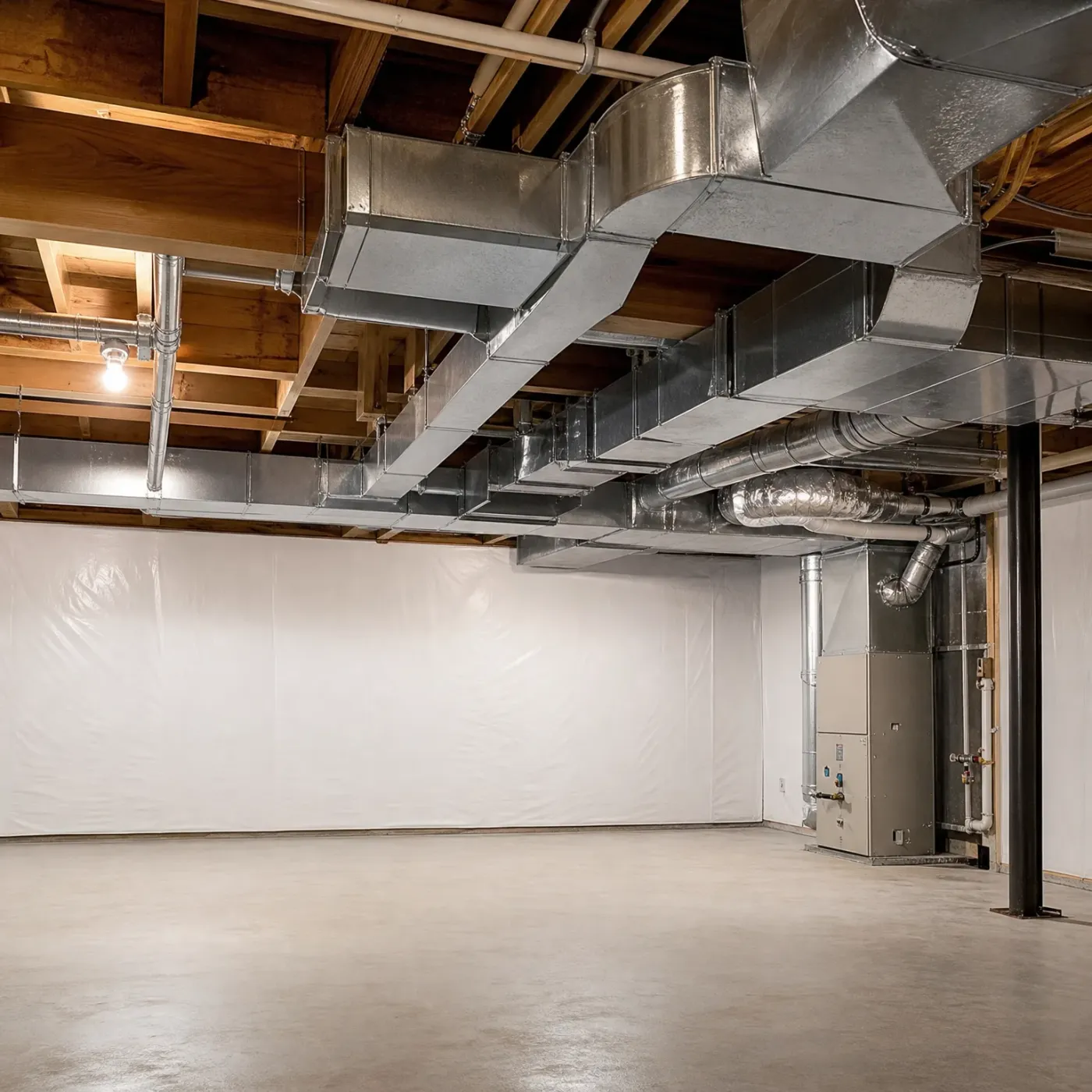
Empty basement with bare concrete floor, white plastic sheeting over one wall, exposed wood joists, galvanized sheet-metal ductwork and pipes overhead, and a furnace unit with a steel support column at right.

Normal ductwork, doing its job

This is what most basements here look like. Sheet metal runs tight along the joists, the furnace sits ready, and the vapor barrier on the walls keeps ground moisture out of the mix. Nothing here needs cleaning on a calendar.

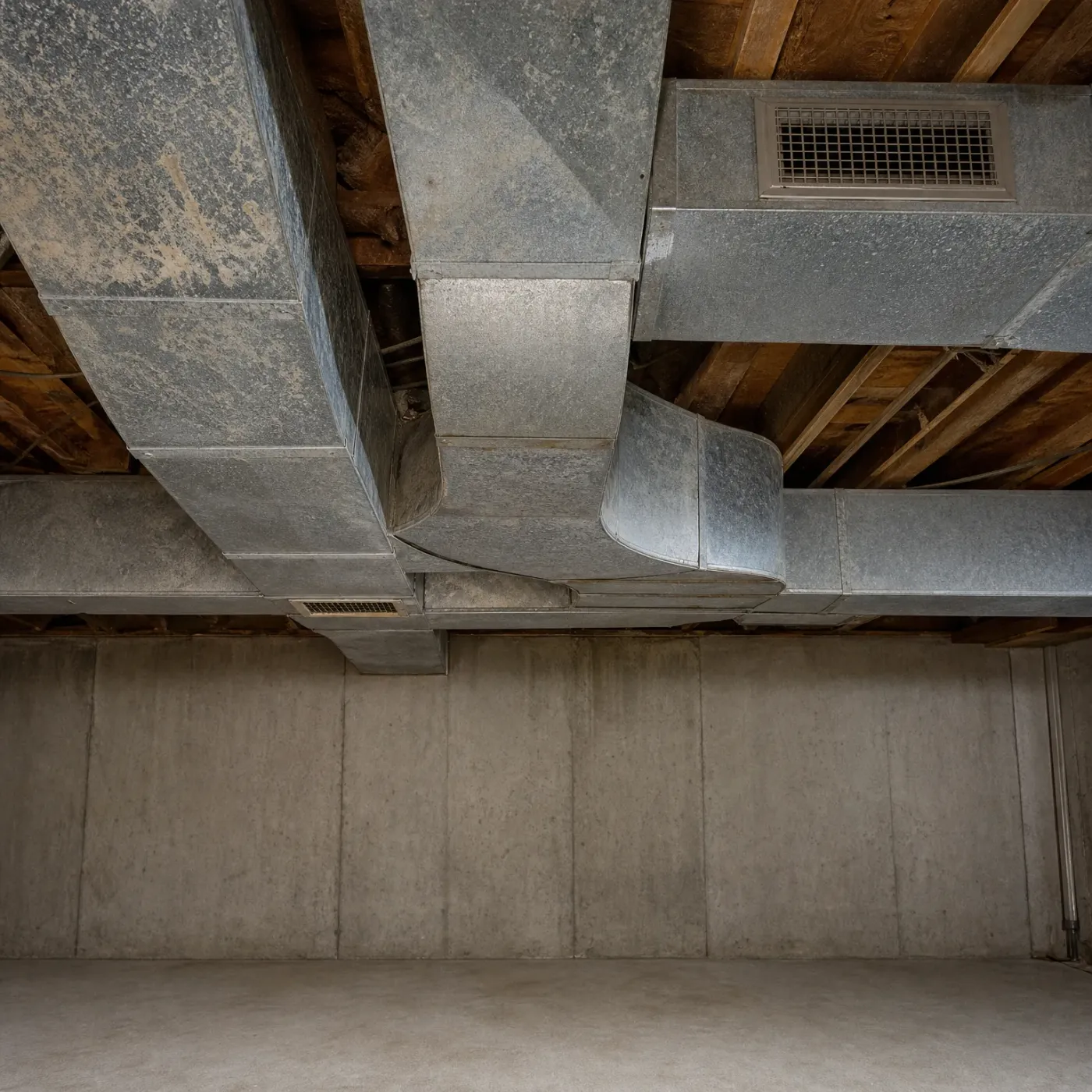
Galvanized sheet metal HVAC ducts with vent grilles run along a wooden floor joist ceiling above bare concrete walls and floor in an unfinished basement.

Ductwork worth a second look

Bare concrete, exposed runs, vents low to the floor. If insulation is loose inside a duct like this or a musty smell rides in with the heat, that's not dust from the room. That's the duct telling you something.

Power here costs 18.29 cents per kilowatt-hour

Most homes here heat with electricity, and at 18.29 cents a kilowatt-hour, a furnace or heat pump working against clogged ducts costs you more to run every month it sits that way. A clean return doesn't fix the rate, but it keeps the system from working harder than it has to.

EIA-861 2025

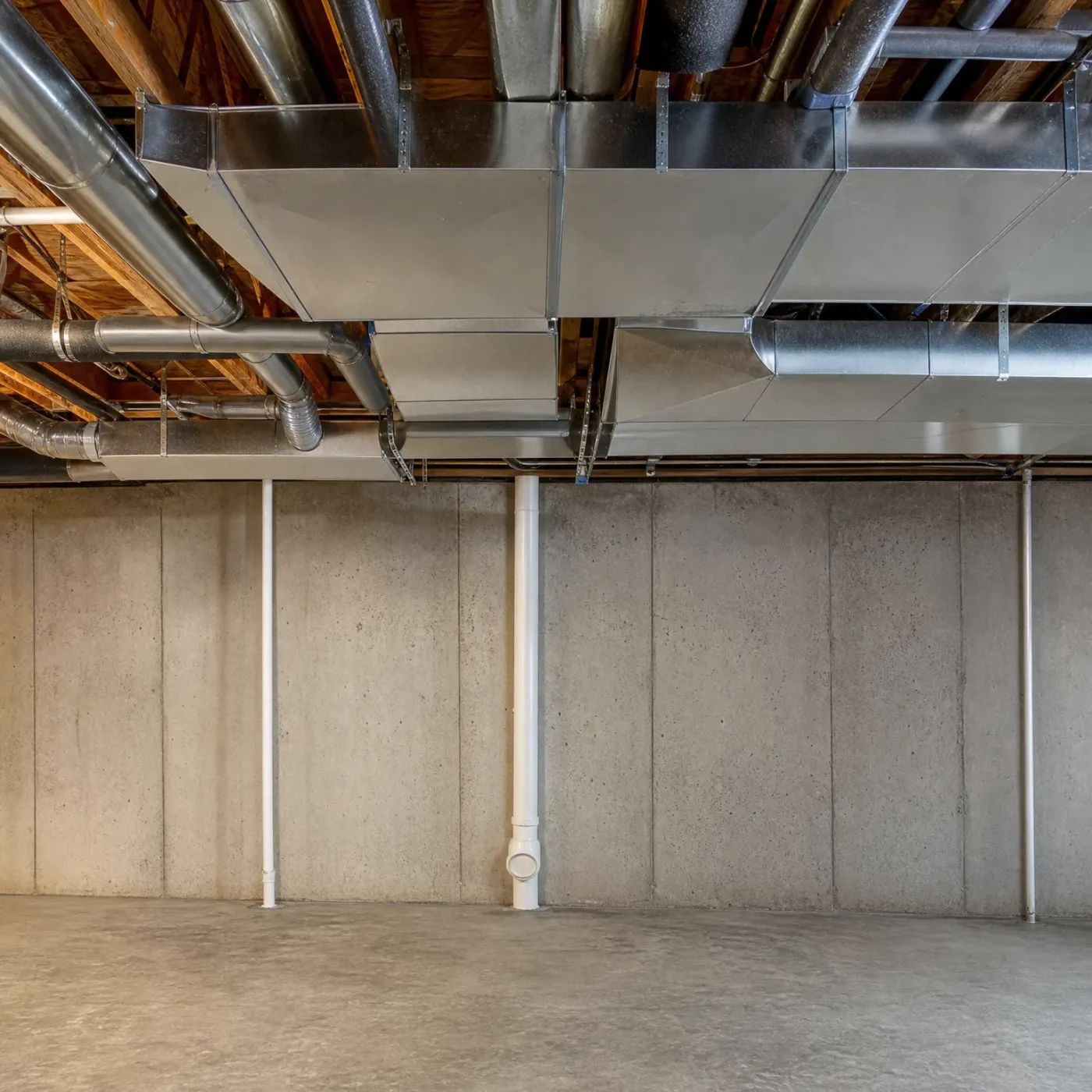
Unfinished basement with poured concrete walls, a bare concrete floor, white PVC pipes running down the wall, and exposed sheet-metal HVAC ductwork beneath wood floor joists.

Ducts running clean

This is what a basement looks like when the ductwork isn't the problem. Sheet metal runs tight against the ceiling, the runs are sealed, and nothing is hanging loose. A system like this can go a long time without anyone touching it.

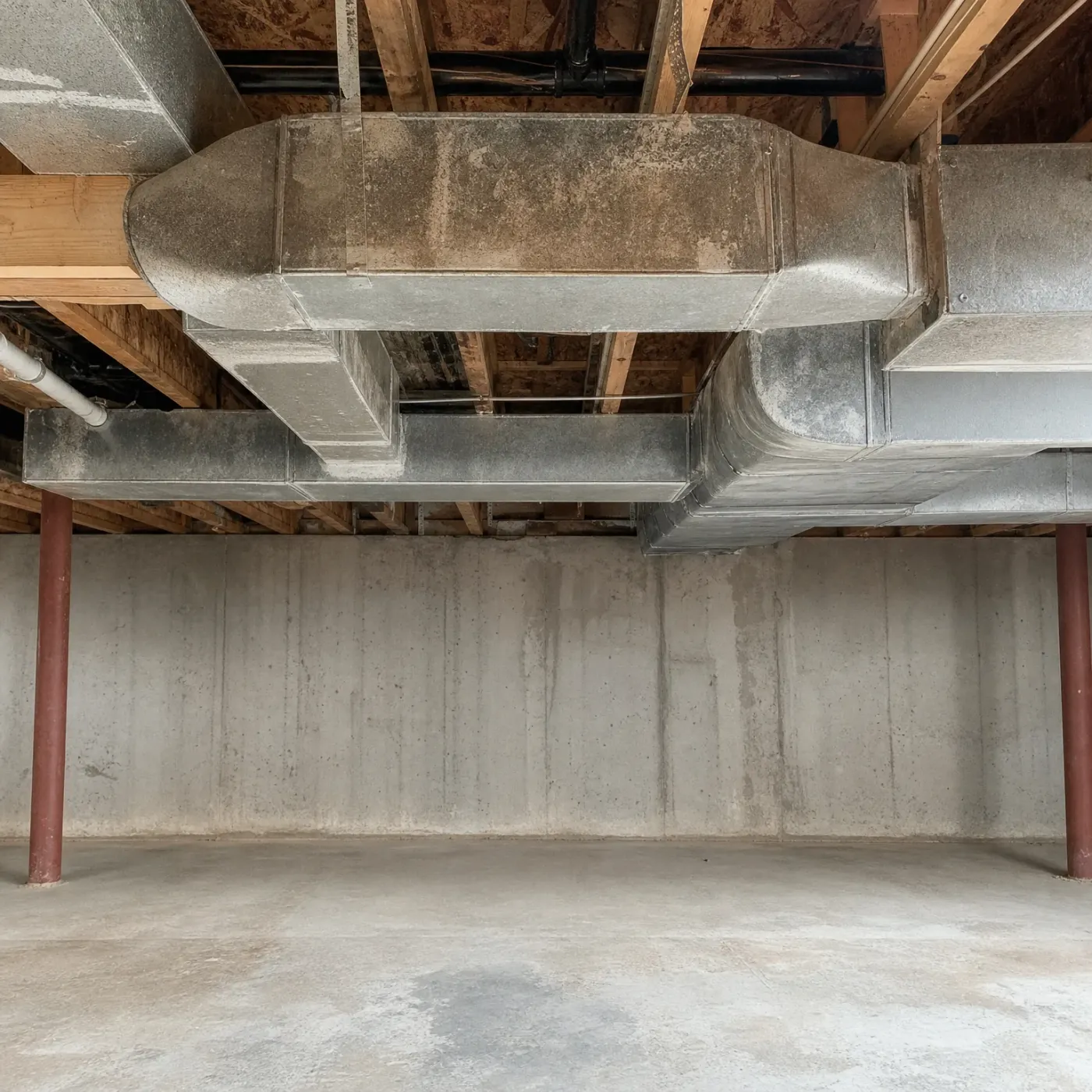
Unfinished basement with bare concrete walls and floor, galvanized sheet-metal HVAC ducts running beneath wooden floor joists, and two red steel support columns.

Ductwork worth a look

Here the ducts hang lower off the joists, with more joints and seams exposed along the way. More connections means more places for insulation or debris to work loose over time. Worth pulling a vent cover and checking before you decide.

A woman in a cream sweater and jeans stands in an open black front door of a white stucco house, viewed over the shoulder of a man in a navy jacket in the foreground.

So, is it worth it

For most houses in the Portland area, the answer is no, not on a schedule, not just because the ducts have never been cleaned. The reasons to do it are specific: a musty smell that shows up when the furnace or heat pump kicks on, loose insulation visible inside a run, work done on the house that left a return open to debris. Without one of those, cleaning the ducts won't change what's in the air or what you pay to heat the house.

If you're not sure which side of that line you're on, that's a judgment call worth getting from someone who looks at ducts for a living, not from guessing based on what you can see through a vent cover. A contractor who takes on this kind of work can tell you in a few minutes whether what's built up in there is normal or worth clearing out, and you won't need to call around or explain the gray dust on the slats more than once to get that answer.

Interior corner of a living room with a sheer-curtained window, a light wood console table holding a vase of greenery and a shallow bowl, a woven basket on the lower shelf, and a blurred upholstered sofa and dark wood table in the foreground.
A bearded man in a red and dark plaid flannel shirt looks out a frost-edged window at a snow-covered yard, with a gray mug on the sill in the foreground.
A smiling man with short dark curly hair and stubble, wearing a navy T-shirt, sits on a beige sofa looking down toward a dark object in the foreground, with a living room, round mirror, lamp and bright window behind him.

Ductwork Cleaning

Find a duct system cleaning pro in Multnomah County

Answer a few questions about the duct cleaning and skip the search.

A black-framed smartphone standing upright against a plain light gray background, its screen filled with solid green.
Duct and vent cleaningDucts or ventsMultnomah County, OR
Step 1 of 2

What ZIP code is the job in?