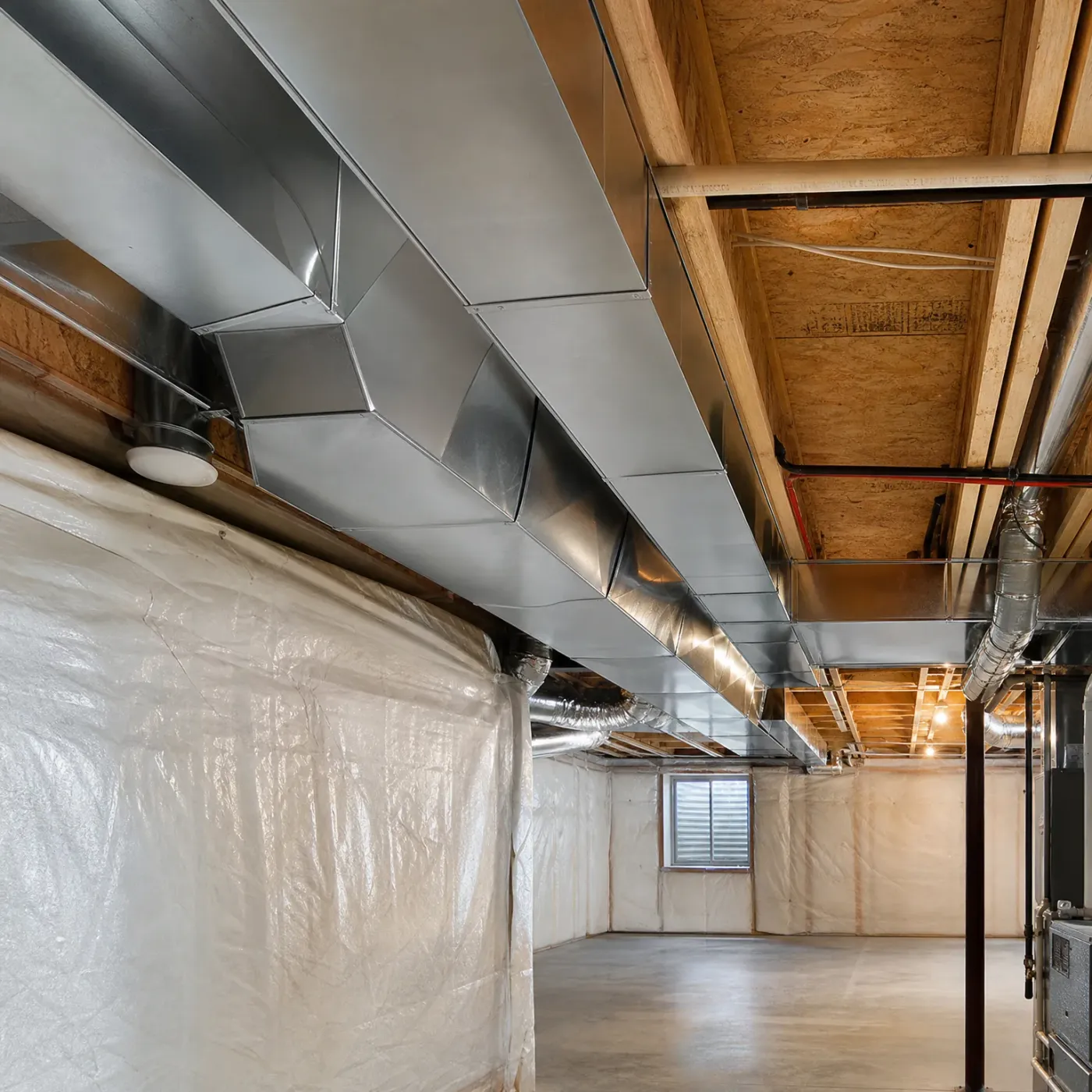
Ducts doing their job
Air moves through the metal runs between the joists without resistance. The furnace pulls return air back, pushes it out through the branch ducts, and nothing in the system is working harder than it should to heat each room.

It depends on what's going on with your ducts, but for most homes in Oregon it isn't something to do on a fixed schedule. Dust and dander build up in ductwork over years, and if nobody in the house has allergies and you haven't had rodents, a leak, or work done on the system, there's usually not much reason to clean them. Where it does matter is after a renovation that left drywall dust behind, after you find signs of pests in the vents, or if a musty smell shows up when the heat kicks on, since most homes here heat with electricity and that system pushes air through the same ducts all winter. If you've never had the ducts inspected and the house is older, it's worth having someone look before deciding. A clean system doesn't fix a leaky duct or a failing furnace, so cleaning alone isn't a cure for bigger problems with the air moving through your house.


A crew doesn't just vacuum out the registers. They run a brush or an air whip through each supply and return run to knock debris loose, then pull it out through a vacuum set up at the trunk line. For that to work, the whole system has to hold negative pressure while they work, otherwise the dust they loosen just moves further down the line instead of coming out. Your furnace coil and blower wheel get handled as a separate step, since those sit in the air path but aren't technically duct. Flex duct and sheet metal duct aren't treated the same way either. Flex has a liner that can tear if a crew scrubs it the way they would scrub metal. The registers and grilles come off and get cleaned on their own, since they collect dust even when the duct behind them is fairly clean. If you notice heavy dust right at the return filter, that's usually a sign the filter hasn't been changed often enough, not a sign the ducts themselves are dirty.




With most homes here heating with electricity instead of gas, there's no furnace flame pulling combustion byproducts through the ducts, which is one less reason dust builds up fast. And with summers in Oregon running warm but not muggy, you're not fighting the kind of damp, heavy air that feeds mold growth in duct runs the way it does elsewhere. So the case for cleaning usually comes down to something specific: a musty smell when the air kicks on, visible dust around the vents, or work done on the house that left debris in the lines. If that's where you are, the next step is figuring out whether a crew needs to look at the whole system or just part of it. Finding that out usually means calling a few companies, describing what you're noticing, and sitting with quotes that don't line up. Getting matched with a contractor who already knows duct work skips that part.

Air moves through the metal runs between the joists without resistance. The furnace pulls return air back, pushes it out through the branch ducts, and nothing in the system is working harder than it should to heat each room.

A plenum box or branch run can collect more than dust over the years. If a joist bay shows water staining, or you can see debris sitting in a duct opening, that's a reason to have someone look, not just clean.
At 15.46 cents a kilowatt-hour, your electric furnace already costs more to run if the blower has to push against dust-coated coils or a clogged filter. Clean ducts don't lower your rate, but they keep the system from working harder than it needs to for the same heat.
EIA-861 2025 statewide residential average




So the answer to whether duct cleaning is worth it in Oregon comes down to your house, not the calendar. If nobody in your home has allergies, you haven't dealt with rodents, and the ducts haven't been touched or opened up by other work, there's no real reason to schedule a cleaning just to have it done. If one of those things is true, it's worth acting on, and an electric furnace doesn't change that calculus much since there's no flame drawing extra soot through the system the way a gas furnace would. What cleaning does for you, when it's warranted, is keep the blower from pushing against a narrowed, dust-packed trunk line. It won't change what you pay per kilowatt-hour, but it keeps the system from working harder than it has to for the same amount of heat.
Once you know it's worth doing, finding someone to do it is its own task. You'd normally be the one calling around, explaining what's going on in your ducts to each contractor you reach, then sitting with a stack of quotes trying to figure out who actually knows what they're looking at. That part doesn't have to fall on you. Getting matched with a contractor who works on Oregon duct systems means one call explaining your situation instead of five, and a licensed pro reaching out to you directly instead of you chasing down estimates on your own.
Answer a few questions instead of calling shop after shop.
Asking costs nothing, and the choice to hire stays yours.