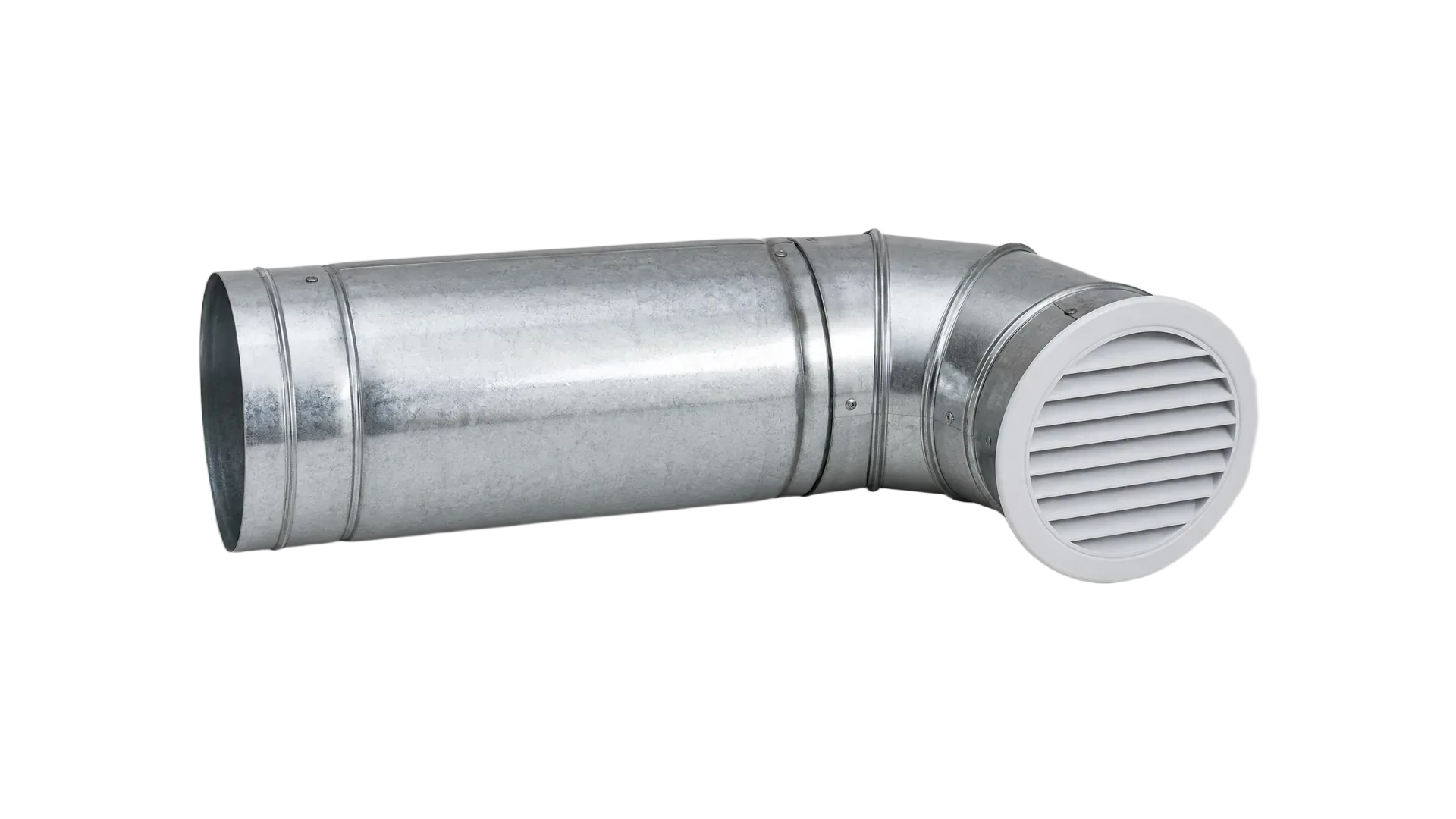
Ducts doing their job
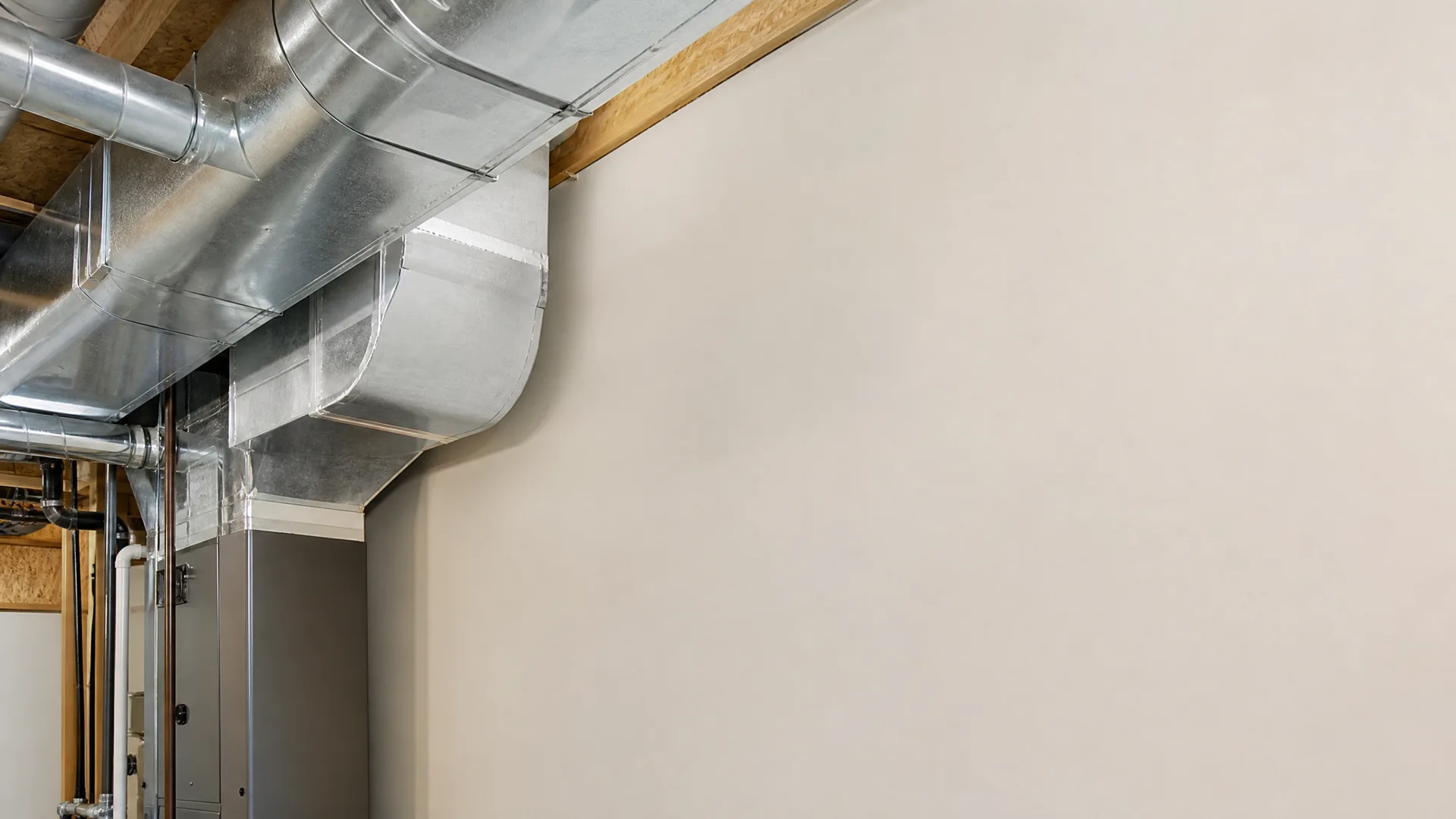
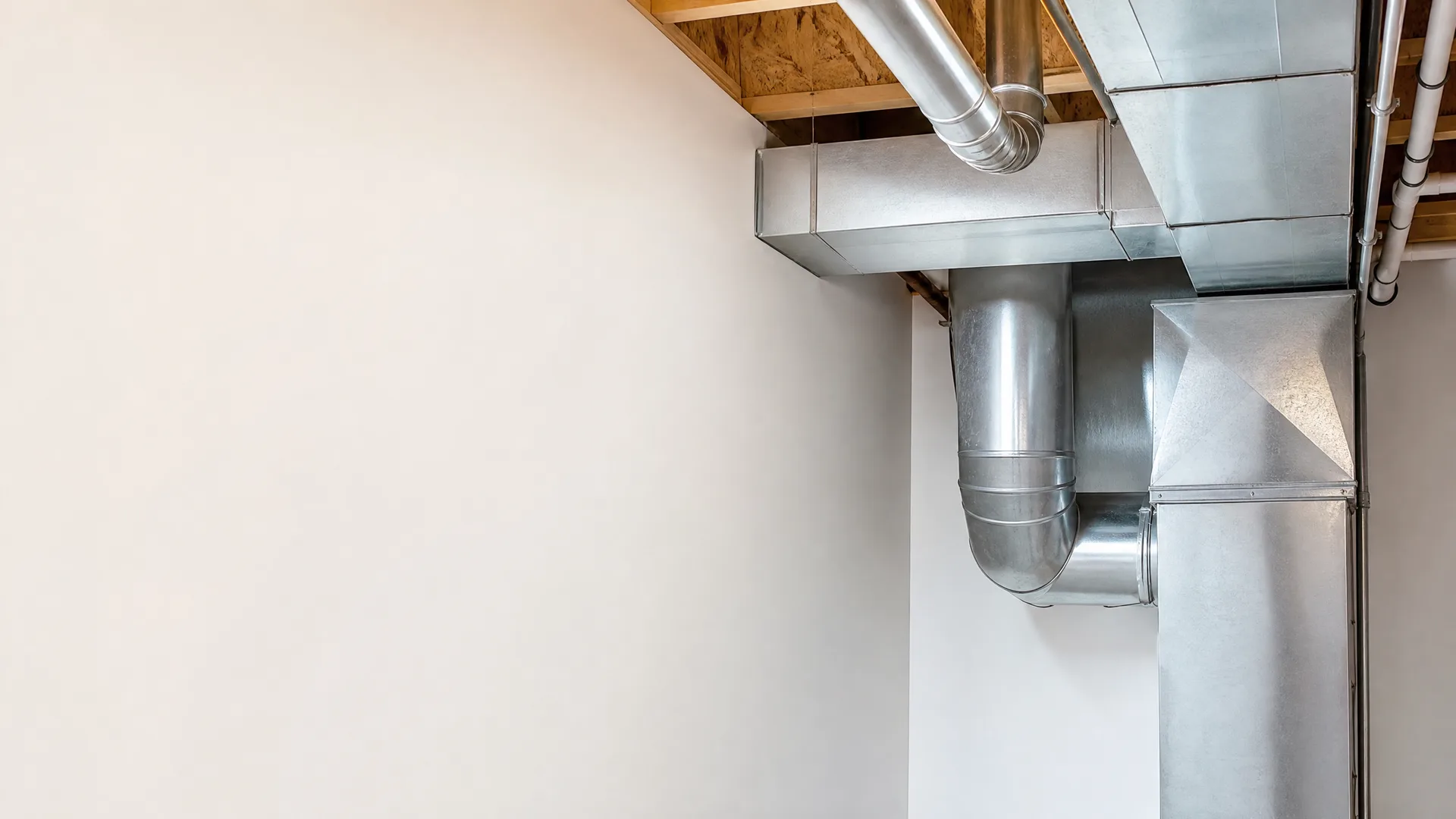
Metal trunks and branch lines like these move air from the furnace to every room and back again. When the system is sealed and the filter is doing its work, dust stays put instead of riding the airflow through your house.
You keep wiping down the same surfaces every few days and the dust comes right back. It settles on the TV stand, the windowsills, the ceiling fan blades. You've checked the obvious spots, maybe even swapped your cleaning routine, and nothing seems to make a real difference. When it's this persistent, the source usually isn't your housekeeping. It's what's moving the air through your home all day, every day.
Your furnace and AC share the same ducts, and those ducts move the same air through your house over and over, all day. If dust, drywall particles or pet dander have built up inside them, every heating and cooling cycle stirs that dust back into the rooms you just cleaned. Washington County homes run the furnace hard through the cold winters and the AC through the warm summers, so the air handler rarely sits idle for long. That near constant airflow is exactly what keeps redistributing whatever is sitting in the ducts. A dirty or poorly sealed filter lets more of it through too. Cleaning the ducts themselves, not just the filter, is what actually stops the cycle.
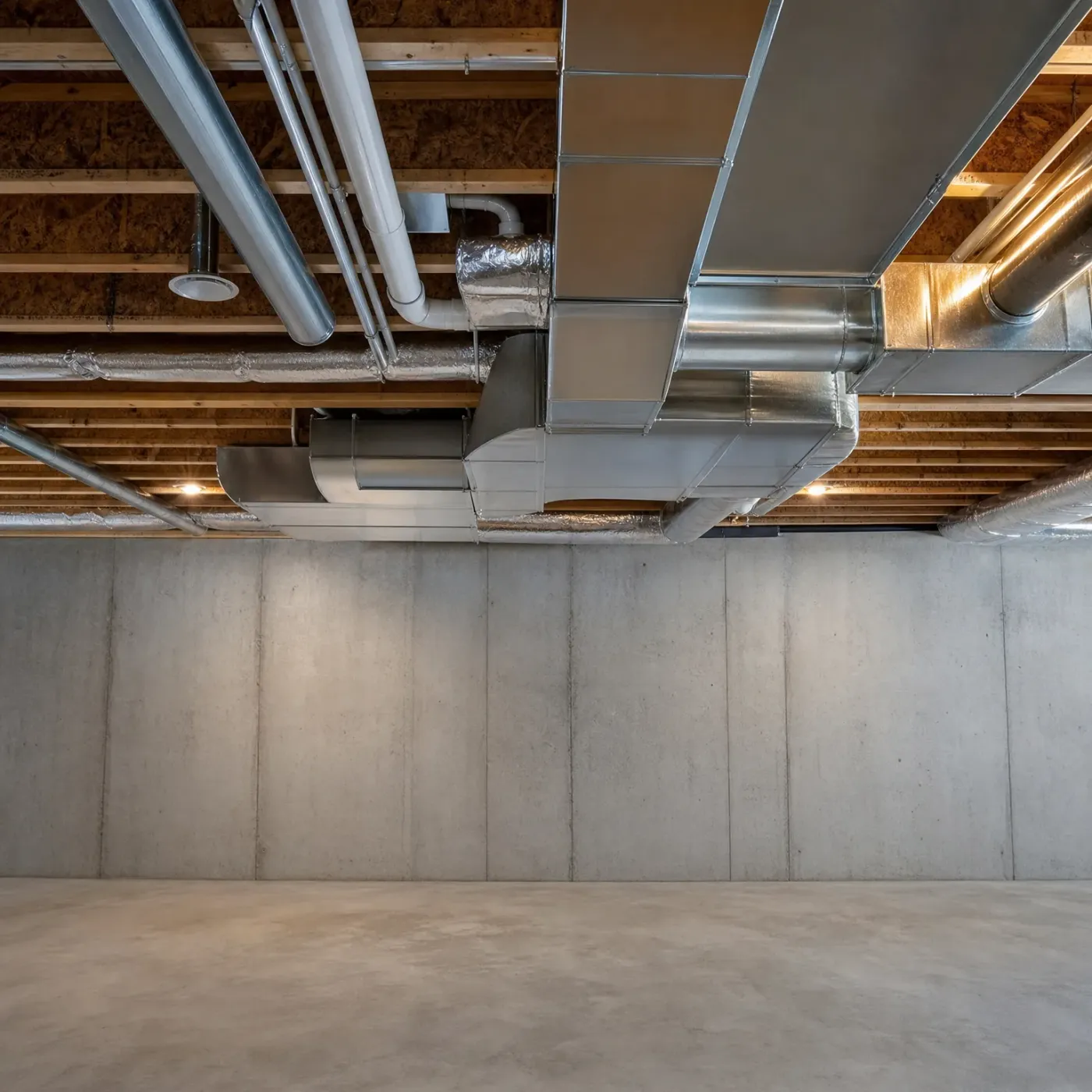
Metal trunks and branch lines like these move air from the furnace to every room and back again. When the system is sealed and the filter is doing its work, dust stays put instead of riding the airflow through your house.
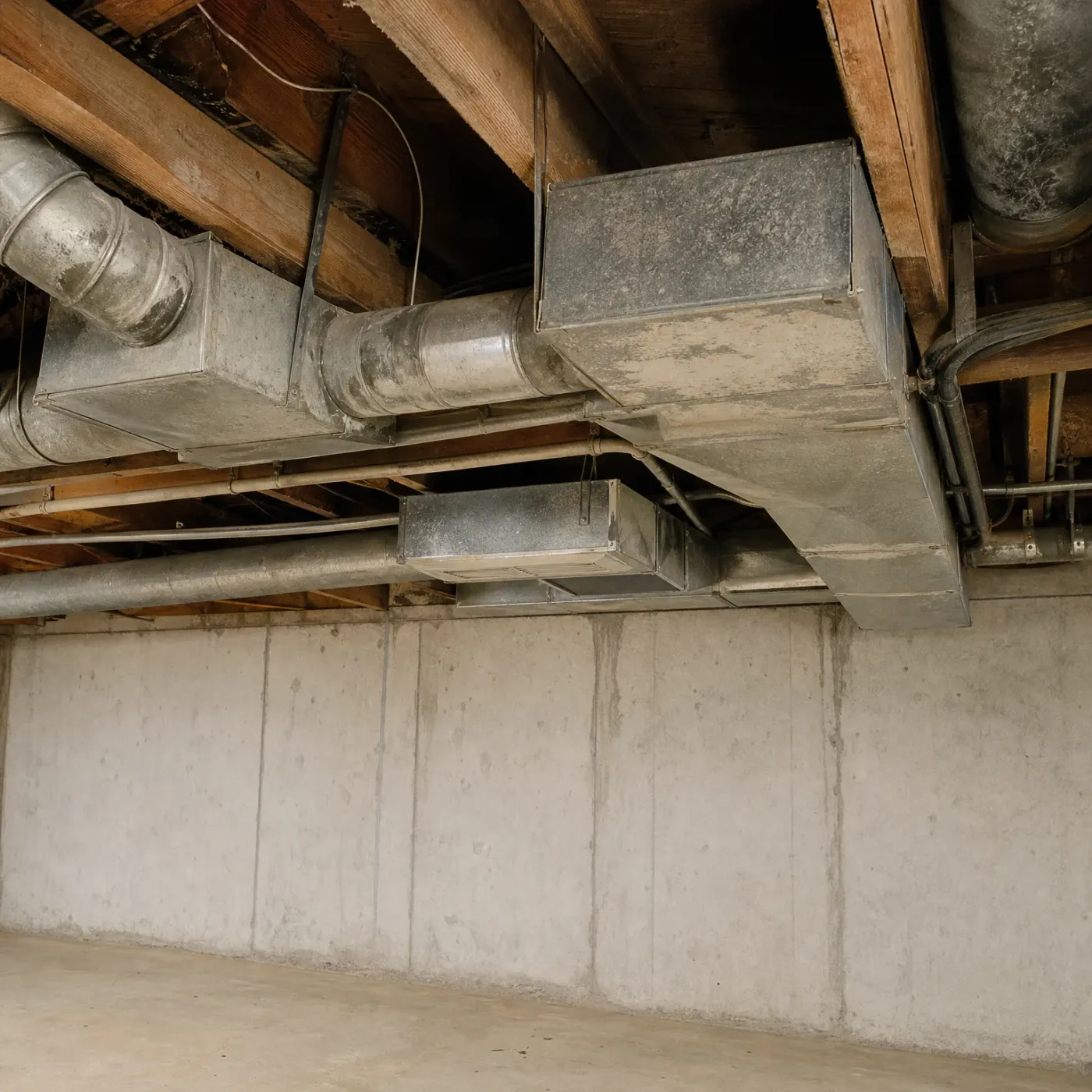
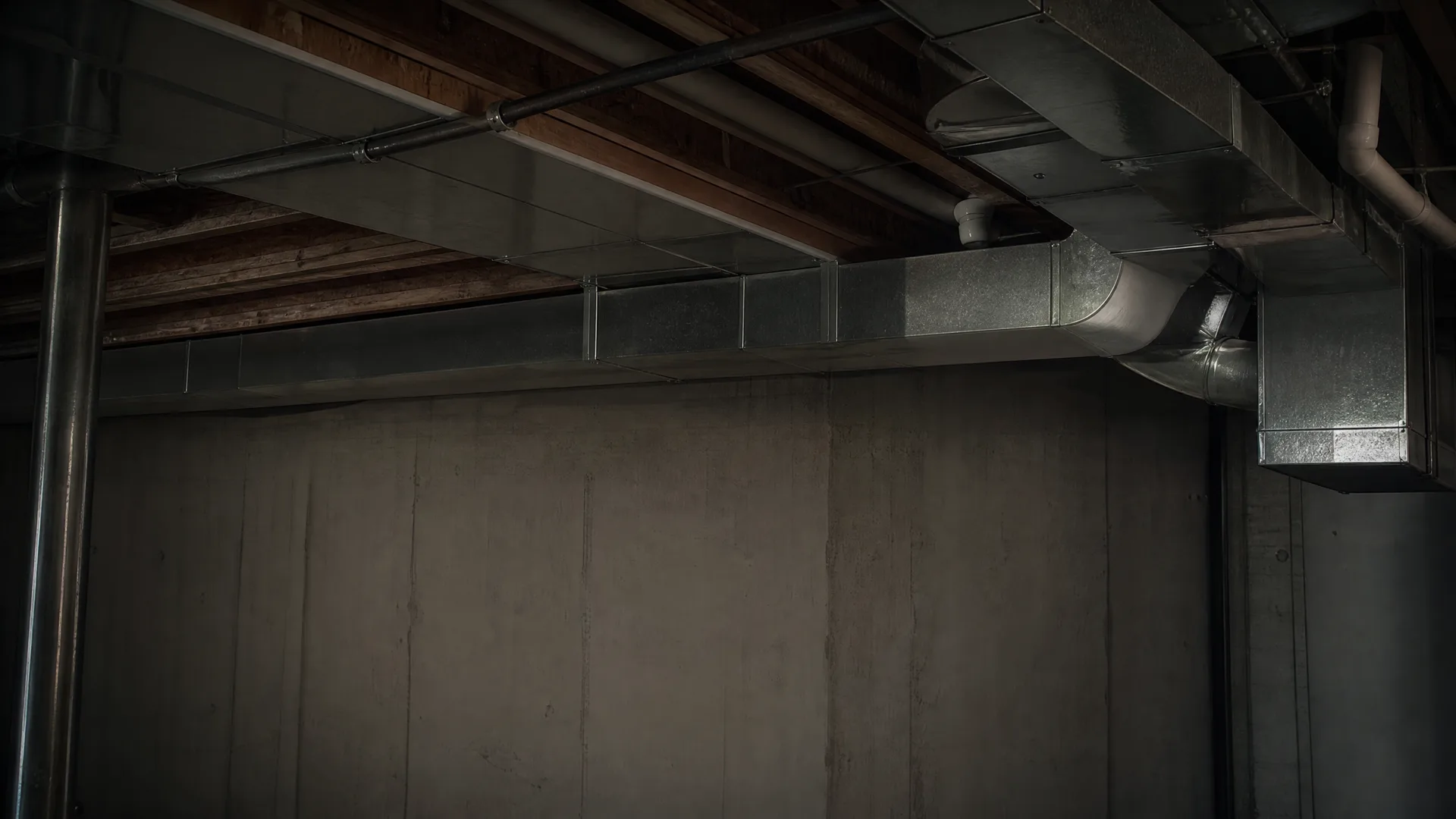
Open seams, loose fittings, or a gap at a joint let the ducts pull air from the basement itself, concrete dust, insulation fibers, whatever is sitting up near those joists, and push it straight into your living room.
Half the homes here were built by 1990
About half the homes in Washington County went up in 1990 or earlier, old enough that the ductwork has had decades to work loose at the seams and pull in dust as it runs.
Heat runs October through June
Heat runs here from October clear through June, nine months of the furnace blower pushing air through those ducts and stirring up whatever dust has settled.
Power here costs 18.43 cents per kilowatt-hour
Electricity runs 18.43 cents a kilowatt-hour in this county, so a dirty filter or leaky duct making the system work harder costs you more every month it goes unfixed.
ACS 2020-2024 · NOAA nClimDiv 1991-2020 · EIA-861 2025
A house that's always dusty is a house where the filter can't keep up and the ducts are pulling in more than they push out. You'll see it on the ceiling fan blades a day after you clean them, and feel it if anyone in the house deals with allergies or asthma, because that dust is carrying in whatever the ducts are picking up along the way: attic fiberglass, crawlspace dirt, whatever sits in the gaps at the seams. It settles into the carpet and the bedding, not just the shelves. Gas heat running from October into spring means that air is moving through the system for months at a stretch, so a duct that's loose at the joints gets a long season to prove it. Leave it alone and the furnace works harder pulling against those gaps, which shows up on the power bill given what electricity runs here. None of it is dramatic on its own. It just keeps happening until the ducts get sealed and checked.




About half the houses in Washington County were built by then. Ductwork that age has had decades to loosen at the seams, and loose seams pull dust in as the system runs.
A contractor can find where your ducts are pulling in dust and seal it up, so the filter starts catching what it's supposed to instead of getting outrun.


Forced air is a loop. The blower pulls air back through the return, pushes it past the filter, and sends it out through the supply ducts to every room, then does it again. That loop runs dozens of times a day, and every pass is a chance for dust to get in or get moved around.
The return side is where trouble usually starts. If a seam has opened up on a return line, especially one running through an attic or crawlspace, it acts like a second intake that nothing filters. Attic dust, insulation fibers, whatever is sitting in that space gets pulled in and pushed through the house along with the air you meant to condition.
The filter is supposed to catch what the return side lets in, but it can only catch what it's rated to catch. A filter with too low a rating lets fine dust pass through even brand new, even seated correctly in its slot. That's why swapping filters more often doesn't fix a dust problem that's coming from somewhere else in the system.
And dust that's already inside the ductwork doesn't just sit there. It rides the airflow every time the blower kicks on, so a duct system that's accumulated dust over the years keeps redistributing it room to room, cleaning or no cleaning, until the ducts themselves get addressed.
If your house went up around 1990 or before, the ducts have been in the walls and attic that whole time. Seams that were tight when the system was installed can work loose over the years, and once they do, your ducts start pulling in dust instead of just moving clean air.
ACS 2020-2024


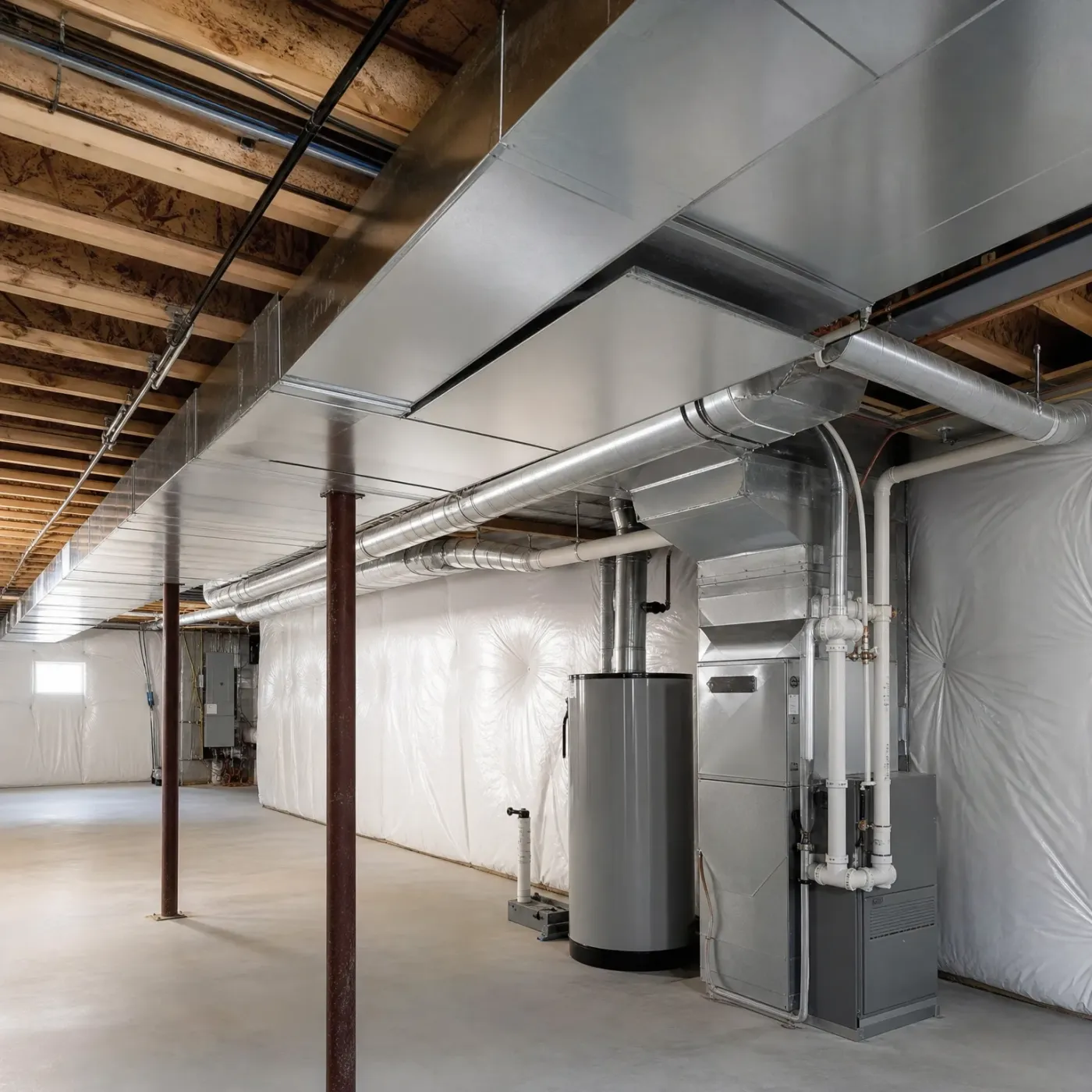
Send the form and finding a duct cleaner is handled.
Get matched with someone who does this kind of work in Washington County.
You're not committing to anything by asking.
Return air carries house dust into the filter first.
The filter traps particles before air reaches the blower.
Gaps or loose seams pull in unfiltered attic or crawlspace air.
That unfiltered air rides along with the clean, filtered air.
A layer of gray on the TV stand within a day or two of dusting it off. Dust on top of the ceiling fan blades even though you just wiped them down. A dry, gritty feel on windowsills and baseboards. If you look at the supply vents, you might see a dark ring of buildup around the edges, a sign of how much is moving through there. Some households notice it more directly: more sneezing, a scratchy throat, or a run of stuffy mornings for anyone with allergies or asthma. None of this means your house is dirty. It means more air is moving through your ducts than your filter is catching.
Dust builds back up within a day or two of cleaning, no matter how often you run the vacuum. It collects on the TV stand, the sills, the fan blades, and feels gritty under your hand. Registers may show a dark ring around the edges. If a loose seam or a gap at the plenum is pulling in attic or crawlspace air, the house keeps generating its own dust supply faster than you can wipe it away.
The trunks and branch lines are clear of the dust and debris that built up over years of use, so less of it rides the airflow into your rooms. If a contractor also finds and seals a loose seam or gap while in there, the ducts stop drawing in unfiltered air from the attic or crawlspace. Surfaces hold their clean longer, and the gritty feel on sills and baseboards eases up.

A house that stays dusty no matter how often you clean isn't bad luck. It's air moving through ductwork that's pulling in more than it should, and no amount of wiping down the windowsills changes what's happening behind the walls. The fix isn't a better rag or a stronger vacuum. It's getting someone to look at the ducts themselves and find where they're letting dust in.
That's not a job to guess your way through. A contractor who works on ductwork in Washington County homes can tell you whether your seams are loose, whether the cleaning alone will hold, or whether something else needs attention first. Once you send in the details, you're not the one tracking down who to call or whether they're any good. That part is off your plate, and you'll hear from someone who already knows what you're dealing with.

One request and the duct cleaning stops waiting on you.