Mini Split Installation in Portland, OR
A new system here will heat from October through June and cool from August through August every year. Tell us about the house, and a licensed contractor who covers Multnomah County will get in touch.
Tell us about the job
It takes about a minute.

Ten months of the year, this house needs heat or cooling
Multnomah County asks a mini-split to run heat from October through June, then switch to cooling in August. That is ten months of work most years. Winter nights average 34°F, mild as heating loads go, so a properly sized unit can carry the house through those months without much strain. Summer afternoons average 76°F, a light cooling load by comparison to hotter places, but the same unit still has to switch modes and handle it.
Any mini-split installed new has to meet the federal minimum for a split-system heat pump, 14.3 SEER2 for cooling and 7.5 HSPF2 for heating. Almost half of homes here already heat with electricity, so a mini-split is doing a job the house is already wired for. Winter storms are common in this county, and in 2024, 20 percent of Oregon households lost power for at least 24 hours. It is worth asking your contractor how the unit you choose behaves when the power comes back on.
- 9 months
- October through June, your system heats
- 1 months
- August through August, it cools
- 34°F
- the average winter night it heats against
- 76°F
- the average summer afternoon it cools against
NOAA nClimDiv, 1991–2020 normals
Oregon requires HVAC contractors to hold a state license.
That license is held by the contractor, not by the job, so the same one covers this installation and whatever work that contractor takes on next. It means the Construction Contractors Board has that contractor on record. Oregon does allow an exception for small work. Jobs under $1,000 do not need a licensed contractor. A mini-split installation costs more than that, so the license requirement applies here.
The license is what stands behind the person doing the work, but it is not the only check on a mini-split job. In most cities and counties here, this kind of installation also needs a permit from the local building office, with an inspection once the work is done. That inspection is a separate check, done by the local building office rather than the state, and it looks at how the unit was actually installed.
Source: Oregon Legislative Assembly
- Is a mini split worth it?
- For most homes here, yes, because a mini split covers both sides of the year. Winters run cold enough to need real heat from October through June, and August afternoons in the mid-70s call for cooling too. A mini split heats and cools from the same unit, so it earns its keep across ten months instead of sitting idle half the year.
- How many rooms can a mini split cover?
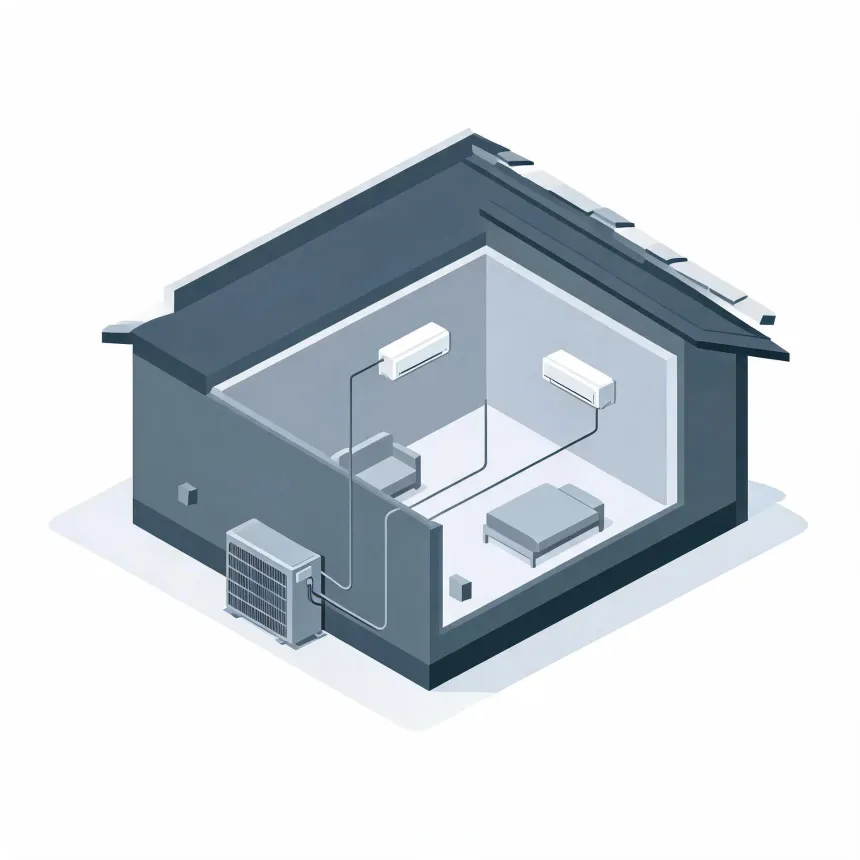
- A single indoor head is built to condition one room or one open area well. If you need coverage in several rooms, a multi-zone system runs more than one indoor head off a single outdoor unit. A contractor can look at the layout and say how many zones the house actually needs.
- Can a mini split heat a whole house?
- It can, but only if it is sized and placed to reach every room, which usually means a multi-zone system with a head in each main living area. A single head heats the room it is in well and whatever space is open next to it, nothing further. With winter lows here averaging 34°F, a whole-house mini split setup needs enough capacity and zones to keep up on the coldest nights, so this is worth having a contractor size room by room rather than guessing.