Mini Split Installation in Oregon City, OR
Tell us about the house, and a licensed contractor who covers Clackamas County will get in touch.
Tell us about the job
It takes about a minute.
Ten months of the year, your mini-split is the only thing standing between you and the weather
Oregon City barely gets a break. Heat runs September through June, and winter nights average 32°F from December into February. A mini-split installed here needs to hold up to that stretch without much rest.
Any new system has to meet the federal minimum for split-system heat pumps, 14.3 SEER2 for cooling and 7.5 HSPF2 for heating. That's the floor, not a feature, so it's worth knowing what you're getting beyond it. Power is worth planning around too. One in five Oregon households went at least a day without power in 2024, and the county has seen five winter storms and two damaging wind events over the past ten years. A mini-split doesn't run without electricity, so backup matters as much as the unit itself.
- 10 months
- September through June, your system heats
- 32°F
- the average winter night it heats against
- 73°F
- the average summer afternoon it cools against
Oregon requires HVAC contractors to hold a state license.
The Construction Contractors Board license covers the contractor, not each job. It means the state has tested the person or company and keeps them on record, and that record follows them from one job to the next. Work under $1,000 is exempt from this rule, but installing a mini-split runs well past that line, so the contractor doing yours needs to hold that license.
Most cities and counties in Oregon also require a permit for this kind of installation, with an inspection once the work is done. That inspection is where the local building office checks what was installed, separate from anything the state license covers.
Source: Oregon Legislative Assembly
- Is a mini split worth it?
- For a home here, yes, since the system needs to carry the heat load most of the year and a mini split does that room by room without ductwork. Oregon City almost never gets hot enough to need real cooling, so most of what you are paying for is heat, and a mini split's compressor can produce heat down into cold weather far better than a baseboard or space heater can. A contractor can size it to the rooms you actually use and tell you what that means for your house.
- How many rooms can a mini split cover?
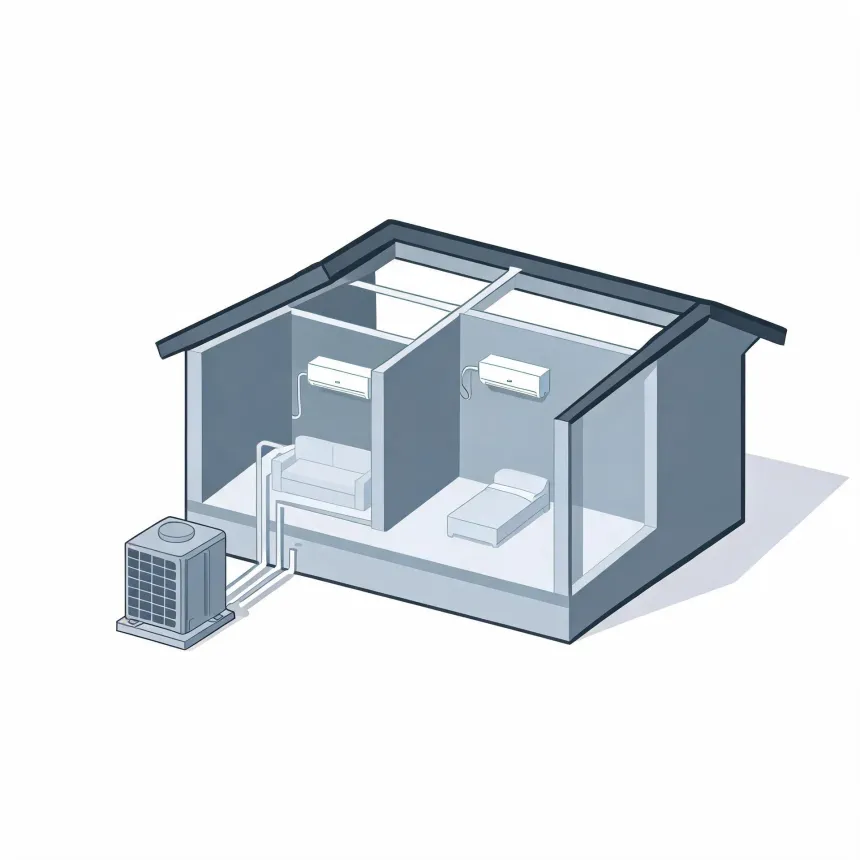
- A single outdoor unit can run one indoor head or several, depending on the model. Each indoor head heats and cools the room it sits in, so the count you need depends on how many rooms you want covered and how open they are to each other. A contractor will walk the house and size the system to those rooms, not just to the square footage.
- Can a mini split heat a whole house?
- It can, if enough indoor heads are placed to reach every room. A one-head system will heat the room it is in and maybe warm the rooms right next to it, but it won't carry a whole house on its own. With winter lows here averaging 32°F, a whole-house layout has to be sized for that cold, and that sizing is what a contractor works out room by room before installing anything.