Mini Split Installation in Bend, OR
Tell us about the house, and a licensed contractor who covers Deschutes County will get in touch.
Tell us about the job
It takes about a minute.
Bend asks a mini-split to run nearly year round
Heat is on somewhere in Bend from September through June, 10 months a year. Summer afternoons here only average 77°F, so a mini-split installed in Bend spends far more of its life keeping a home warm than keeping it cool.
Winter nights average 22°F from December through February, cold enough that a heat pump has to work for its output rather than coast. Any new mini-split has to meet the federal minimum for a split-system heat pump, 7.5 HSPF2 for heating and 14.3 SEER2 for cooling, and in Bend the heating side of that rating is the one doing the work most months of the year. Almost half of homes here heat with electricity, and Oregon saw 20% of households go at least 24 hours without power in 2024, so it is worth asking how a mini-split you install will handle both the cold and the outages that come with it.
- 10 months
- September through June, your system heats
- 22°F
- the average winter night it heats against
- 77°F
- the average summer afternoon it cools against
Oregon requires HVAC contractors to hold a state license.
The Construction Contractors Board tests and records the contractor, not the job. Anyone doing licensed HVAC work in Oregon has already been checked by the state, and that license stays tied to them across every job they take on. Work under $1,000 falls outside that requirement, but a mini-split installation runs well past that mark, so the contractor doing it should hold the license.
In most cities and counties, a mini-split installation also needs a permit from the local building office, with an inspection once the work is done. That permit and inspection are separate from the state license and come from the local building office rather than the state.
Source: Oregon Legislative Assembly
- Is a mini split worth it?
- For most homes here, yes, because a mini split is a heat pump and this area needs heat or cooling ten months a year. Winter nights average 22°F, cold enough that the heating side of the system gets real use through fall, winter, and spring. The same unit handles the milder summer afternoons too, when highs average around 77°F. Whether it makes sense for a specific house still depends on the layout and what's heating it now, so a contractor should look at the house before you decide.
- How many rooms can a mini split cover?
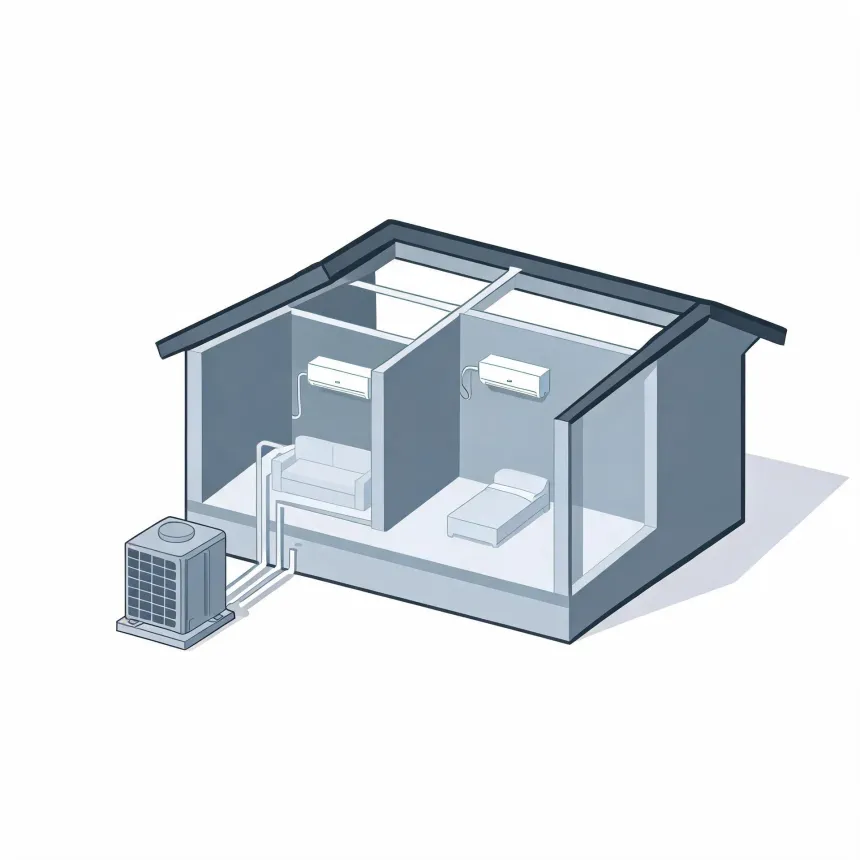
- A single outdoor unit can run more than one indoor head, so it can cover several rooms, not just one. These are called multi-zone systems, and each indoor head has its own thermostat, so one room can run warmer or cooler than the next. How many rooms make sense for a given house depends on the layout and where the walls and doors are, so that part is worth having a contractor walk through in person.
- Can a mini split heat a whole house?
- It can, if it's sized and placed for the whole house rather than one or two rooms. A multi-zone mini split with heads in each main room can carry a house through a winter where nights average 22°F, the way any heat pump does. Whether one system can cover the whole place or whether it needs more than one outdoor unit depends on the size and layout of the house, so that's a decision a contractor should make after seeing the floor plan.