Mini Split Installation in Klamath Falls, OR
Tell us about the house, and a licensed contractor who covers Klamath County will get in touch.
Tell us about the job
It takes about a minute.
Klamath Falls asks a mini-split to heat, not cool
Nights here average 22°F from December through February, and homes need heat from September through June, 10 months a year. A mini-split installed here is doing winter work almost all year. It needs to be sized and set up for heat, not for the rare warm afternoon.
Summer only reaches an average of 78°F, so cooling is barely part of the job. Any mini-split installed new has to meet the federal minimum for a split-system heat pump, 7.5 HSPF2 for heating and 14.3 SEER2 for cooling. In a place that runs cold most of the year, the heating side of that rating matters more than the cooling side ever will.
- 10 months
- September through June, your system heats
- 22°F
- the average winter night it heats against
- 78°F
- the average summer afternoon it cools against
Oregon requires HVAC contractors to hold a state license.
The Construction Contractors Board licenses the contractor, not the job, so what's on file is the company doing the work, tested and registered with the state, rather than a check on this particular installation. Work under $1,000 falls outside that requirement, but a mini-split installation runs well past that line, so the contractor doing this job needs to hold that license.
Most cities and counties here also require a permit from the local building office for this kind of installation, with an inspection once the work is done. That inspection is what checks the work itself, separate from whether the contractor is licensed.
Source: Oregon Legislative Assembly
- Is a mini split worth it?
- Yes, for most homes here, because a mini split heats with a heat pump that runs on electricity instead of burning gas. Klamath Falls homes need heat from September through June, and winter nights average 22°F, so the outdoor unit has to be sized for real cold, not just a mild day. A mini split also cools, which matters on the warmer summer afternoons even though cooling isn't the main job here. A contractor can look at your house and tell you whether one unit or several makes sense for what you're trying to heat.
- How many rooms can a mini split cover?
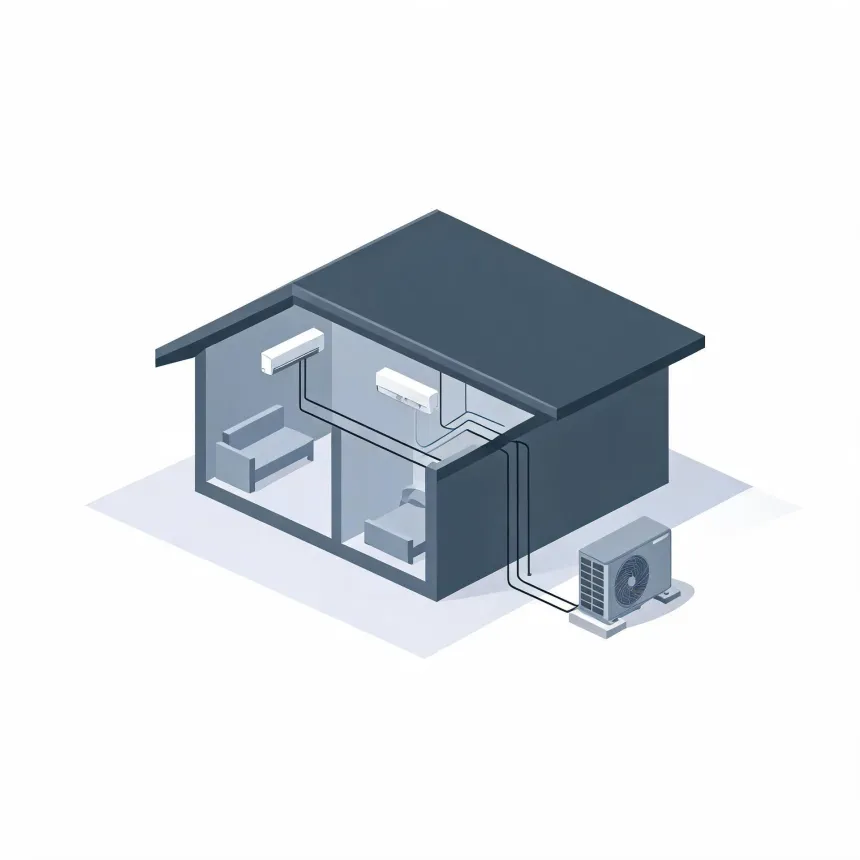
- A single indoor head is built for one room or one open area, but multi-zone systems tie several indoor heads to one outdoor unit, so the number of rooms depends on which system goes in. Each indoor head has its own thermostat, so you can heat one room without running the others. A contractor sizes the system to your house, counting rooms, ceiling height, and how the space is laid out, since a great room needs more capacity than a bedroom.
- Can a mini split heat a whole house?
- It can, if the system has enough indoor heads placed where the house needs them and enough capacity for how cold it gets. Winter nights here average 22°F, so the outdoor unit has to be sized for that, not just for a mild day. Homes with an open layout are easier to cover with fewer heads. Homes with a lot of closed-off rooms usually need one head per room to heat evenly. A contractor can work out how many heads your house needs and where they should go.