Mini Split Installation in Prineville, OR
Tell us about the house, and a licensed contractor who covers Crook County will get in touch.
Tell us about the job
It takes about a minute.
Prineville asks a mini-split to heat, most of the year
Heat runs September through June here, ten months of the year. Winter nights average 23°F from December through February, and summer afternoons only reach 79°F, so this is a heating machine first and a cooling machine second. More than half the homes here already heat with electricity, and a mini-split installed new has to meet 7.5 HSPF2 for heating and 14.3 SEER2 for cooling, the federal minimum for split-system heat pumps since 2023.
Crook County has logged 44 winter storms and 14 damaging wind events over the last ten years. In Oregon, 20% of households went at least 24 hours without power in 2024. A mini-split that keeps a home warm on the coldest nights depends on wiring and setup that hold up when the weather turns, not just the equipment itself.
- 10 months
- September through June, your system heats
- 23°F
- the average winter night it heats against
- 79°F
- the average summer afternoon it cools against
Oregon requires HVAC contractors to hold a state license.
The Construction Contractors Board licenses the contractor, not each job. The license means the state tested the contractor and keeps a record of them. Oregon does carve out one exception. Work under $1,000 does not need a licensed contractor. A mini-split installation runs well past that, so the contractor doing this job needs to hold that state license.
Whoever installs a mini-split works with refrigerant lines, and that part of the job needs a licensed contractor as the facts above describe. Most cities and counties in Oregon also require a permit for this kind of installation, with an inspection once the work is done. That inspection checks the physical work itself, separate from whatever the license already tells you about the contractor.
Source: Oregon Legislative Assembly
- Is a mini split worth it?
- For Prineville, yes, because a mini split heats and cools from a single outdoor unit and this area needs heat ten months of the year. Winter nights average 23°F here, so the heat pump inside it is doing most of the work most of the year. It also gives you cooling for the summer afternoons without adding separate equipment. A contractor can size one to your house and price the job.
- How many rooms can a mini split cover?
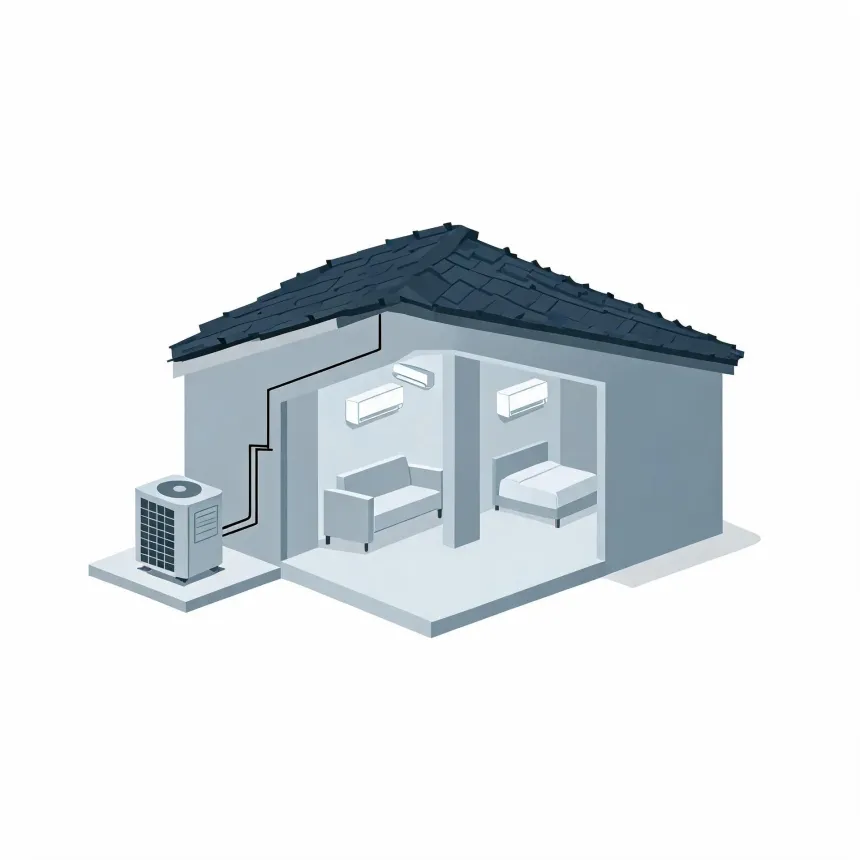
- A single outdoor unit can run one indoor head or several, each one heating and cooling its own room. The right number depends on how many rooms you want covered and how big each one is. A contractor sizes the outdoor unit to the total load of all the heads combined, so adding rooms later usually means adding capacity, not just more heads.
- Can a mini split heat a whole house?
- It can, if it is designed to. That means either enough indoor heads to reach every room or a ducted mini-split unit that ties into ductwork the way a furnace does. Prineville winters average 23°F at night, so the system has to be sized for that cold, not just for the mild months. A contractor can tell you whether your house needs one outdoor unit or more to heat the whole thing through winter.