
HVAC Installation in Albany, OR
Tell us about the house, and a licensed contractor who covers Linn County will get in touch.
Tell us about the job
It takes about a minute.

Ten months of heat, mild summers
Nights here average 32°F from December through February, and homes in Linn County need heat from September through June, 10 months of the year. A new furnace or heat pump has to hold up to that long a season without much of a break. Summer asks little in return. Afternoons average 75°F, so the cooling side of a new system won't see hard use, but it still has to be sized right for the few warm stretches it does work.
More than half the homes here heat with electricity, so a power outage means no heat too. Linn County has seen six winter storms and four damaging wind events over the last ten years, and 20% of Oregon households went at least 24 hours without power in 2024. That is worth thinking about when choosing what kind of system goes in and how it is installed.
- 10 months
- September through June, your system heats
- 32°F
- the average winter night it heats against
- 75°F
- the average summer afternoon it cools against
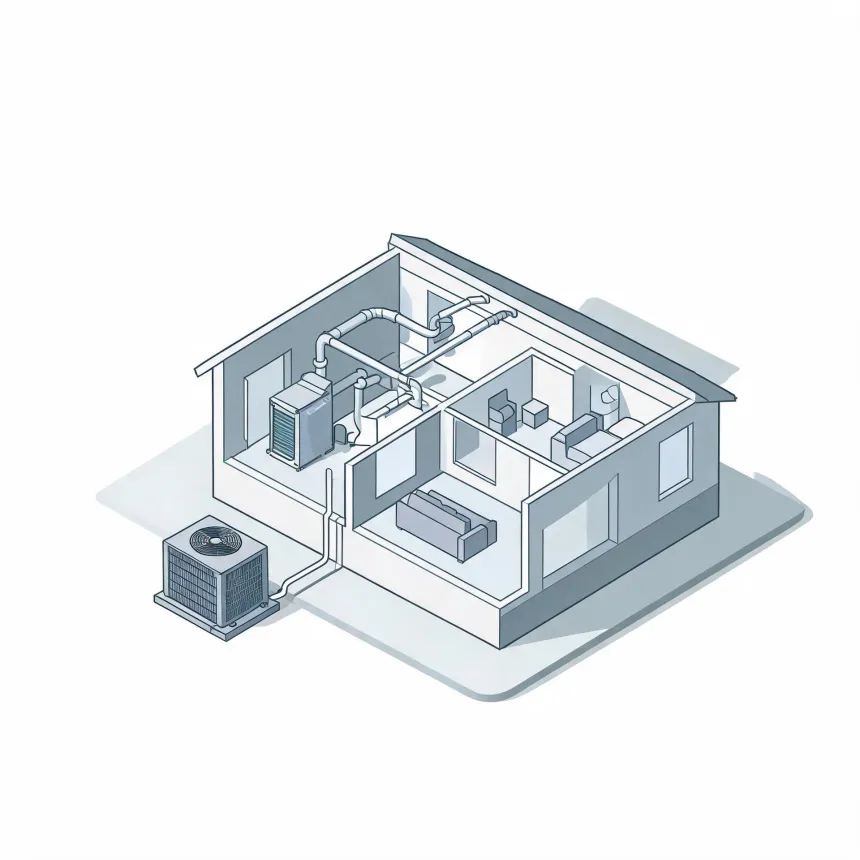
Oregon requires HVAC contractors to hold a state license.
The Construction Contractors Board licenses the contractor, not the job. That license is on file with the state, tied to the person or business doing the work no matter whose house they're in. Work under $1,000 falls outside that requirement, but installing a heating and cooling system runs well past that, so the contractor doing this job needs to be licensed.
The license is what stands behind the person doing this work. Alongside it, most cities and counties require a permit for a furnace, air conditioner or heat pump installation, with an inspection once the work is done. That inspection is separate from the license, and it's what catches a bad connection or an unsafe setup before it becomes a problem.
Source: Oregon Legislative Assembly
- When should I replace my HVAC system?
- Once it needs repairs more winters than not, or the repairs cost keeps climbing, replacement makes more sense than another fix. Age matters too. A furnace working hard for 10 months of heating a year, like it does here, wears faster than one running a few weeks a season. If yours is old enough that parts are getting harder to find, or it can't keep the house at 32°F on the cold nights, that's your answer. A contractor can look at the specific unit and tell you whether it's worth repairing again.
- Should I replace my furnace and air conditioner at the same time?
- If both are old, replacing them together saves a second round of labor and lets the new furnace and coil get matched to work as one system. But it isn't required. Cooling barely factors into a home here since summer afternoons average 75°F and the season doesn't demand much from an air conditioner. If your furnace is struggling but the AC is still young, a contractor can replace just the furnace and leave the rest alone.
- What happens during an HVAC installation?
- A contractor removes the old equipment, sets the new furnace, air conditioner or heat pump in place, and connects it to the ducts, gas or electrical line, and the flue or condensate drain. Once it's running, they test it and check that it's heating or cooling the way it should. In most cities and counties here, this job needs a permit from the local building office, and an inspector checks the work once it's done. Oregon also requires the contractor to hold a state license through the Construction Contractors Board, so it's worth confirming that before work starts.