Profile view of a bearded man wearing a dark baseball cap and a dark gray T-shirt against a plain off-white background.

Why your heat won't reach upstairs in Oregon

RepairFurnace or heatingOregon
Step 1 of 2

What ZIP code is the job in?

Why won't heat from my furnace reach the upstairs?

You keep the upstairs comfortable for the people who live there, and right now it just isn't happening. The thermostat downstairs might even say the house has hit temperature, but climb the stairs and the air feels ten degrees off. You want to know if this is something wrong with the furnace or just how the house is built, and whether it's worth having someone look at it.

Heat rises, but it needs help getting there through the ducts

Warm air naturally drifts up through a house, but that doesn't mean it reaches the upstairs rooms the way it should. Most of the time the furnace is pushing out plenty of heat, and the problem is what happens to it on the way up. A duct that's closed off, crushed, or disconnected in the attic or a wall cavity will starve the upstairs registers no matter how hard the furnace runs. A blower that's lost some of its force can't push air far enough through the ductwork to reach the second floor evenly. Either way, the upstairs ends up last in line for heat that the furnace already made. A contractor can check airflow at the registers and trace where it's being lost along the way.

A basement utility area with a gray furnace, sheet-metal ductwork, pipes, plastic-covered walls, a concrete floor, and a black shelving unit holding storage bins.

Ductwork sized and sealed the way it should be

Warm air moves through clean metal trunk lines sized for the whole house. Each run gets enough air to push upstairs and hold it there. The blower doesn't have to fight anything to get heat to the second floor.


A gray metal furnace with louvered vent panels stands on a concrete basement floor beside galvanized ductwork, gas and plastic pipes, and foil-faced insulation along the ceiling and wall.

An older furnace losing ground

Rust on the cabinet and years of wear can mean a blower that can't push air as far as it used to. If the ductwork feeding the upstairs was never balanced for this furnace, the top of the house ends up last in line.

A woman with dark hair in a bun wearing a cream knit sweater sits on a gray sofa in a bright living room, looking off to the side.
A woman wrapped in a knit blanket sits on a gray sofa in a living room, looking toward a bright window with houseplants and an armchair in the background.
A woman in a gray cowl-neck sweater sits on a light sofa with cushions, smiling and looking to the side, with a kitchen and window visible behind her.
A woman with dark hair in a bun, wearing a light linen shirt, sits on a sofa and looks to the side, with a window, houseplants and a kitchen with pendant lights blurred behind her.

Where the Heat Actually Goes

  • Warm air rises on its own once it reaches the second floor, but it has to get there first through the ducts.
  • A single return low in the house pulls air back before it ever climbs the stairs, so the loop never finishes.
  • Furnaces with electric heat strips push air at a lower temperature than gas, so weak duct pressure shows up faster upstairs.
  • A blower running at the wrong speed moves air through the easy, short runs downstairs and leaves the long upstairs runs short.
  • Supply runs that narrow or bend sharply lose pressure before the air ever reaches the upstairs registers.
  • A duct system split unevenly between floors sends more conditioned air to whichever floor has the shorter, straighter path.

Heat doesn't fail to reach the upstairs by accident. It takes a path, and that path has weak points. Air leaves the furnace through the blower, moves into the trunk line, then splits off into branch runs that feed each room. Every bend, narrowing or badly sealed joint along that path costs pressure, and the upstairs runs are usually the longest ones in the house, so they feel it first. If the system has only one return, usually low on the first floor, the air downstairs gets pulled back before the loop that would carry warmth up the stairs ever completes. That's a design issue, not a dirty filter or a failing part. Electric furnaces add another layer to this. Heat strips don't push air as hot as a gas furnace does, so there's less heat to spare when duct pressure is already weak, and a second floor running a few degrees cold shows up faster than it would with gas. Blower speed matters too. Set wrong, it moves plenty of air through the short, easy runs downstairs and leaves nothing extra for the long climb up. None of this means the furnace is broken. It means the air isn't being delivered where it's needed, and that's a duct and airflow problem a contractor can trace room by room, register by register, to find where the upstairs loses what the furnace is already producing.

A beige furnace with two access panels stands against a concrete basement wall, with galvanized sheet-metal ductwork, a white PVC pipe, flexible conduit and insulated ducting around it.
Before you get your furnace repair
A gray furnace with white PVC vent pipes stands beside sheet-metal ductwork in a basement with a smooth concrete floor, exposed wood framing, and plastic sheeting on the walls.
After you get your furnace repair

Get your furnace to the right pro

A furnace that can't push heat up a flight of stairs usually has a reason behind it, and most of those reasons don't fix themselves. Electric heat strips in an upstairs air handler can only do so much if the duct feeding them is too small or leaking into the attic. A return that's stuck low in the house keeps the air from ever completing the trip. You could spend a weekend checking dampers and filters and still not know if the problem is airflow, ductwork, or the furnace itself. A contractor who does this work in Oregon homes can look at your setup, find where the heat is actually being lost, and tell you what it takes to get the second floor warm. That saves you the calls to three or four companies, the repeat explanations of what the thermostat reads downstairs versus up, and the guesswork of comparing quotes for work you can't fully describe yourself. Cold bedrooms in the middle of winter aren't something to keep working around.

A cold upstairs shows up in small ways first. A bedroom door gets shut to keep the chill from spreading back into the hall. A space heater comes out of the closet in November and stays plugged in through March, running on the same electric rate as the furnace itself. Someone starts sleeping under a heavier blanket instead of asking why the vent in that room barely moves air. None of that fixes what's actually happening in the ducts, and the furnace keeps running longer trying to satisfy a thermostat downstairs that already reads warm. That's extra electric heat you're paying for every month it goes on this way. If people nap or do homework upstairs during the day, that's where they'll feel it most, and where they'll keep noticing it until the duct run or the return is actually looked at.

An older woman with short gray hair in a cream cable-knit turtleneck sweater smiles while looking to the side in a wooden kitchen, with a round loaf of bread on a board in the foreground and a lit candle by a dark window.
A woman and a child wrapped together in a thick knitted blanket on a sofa, both with eyes closed, with a lit table lamp and houseplant in the dim background.
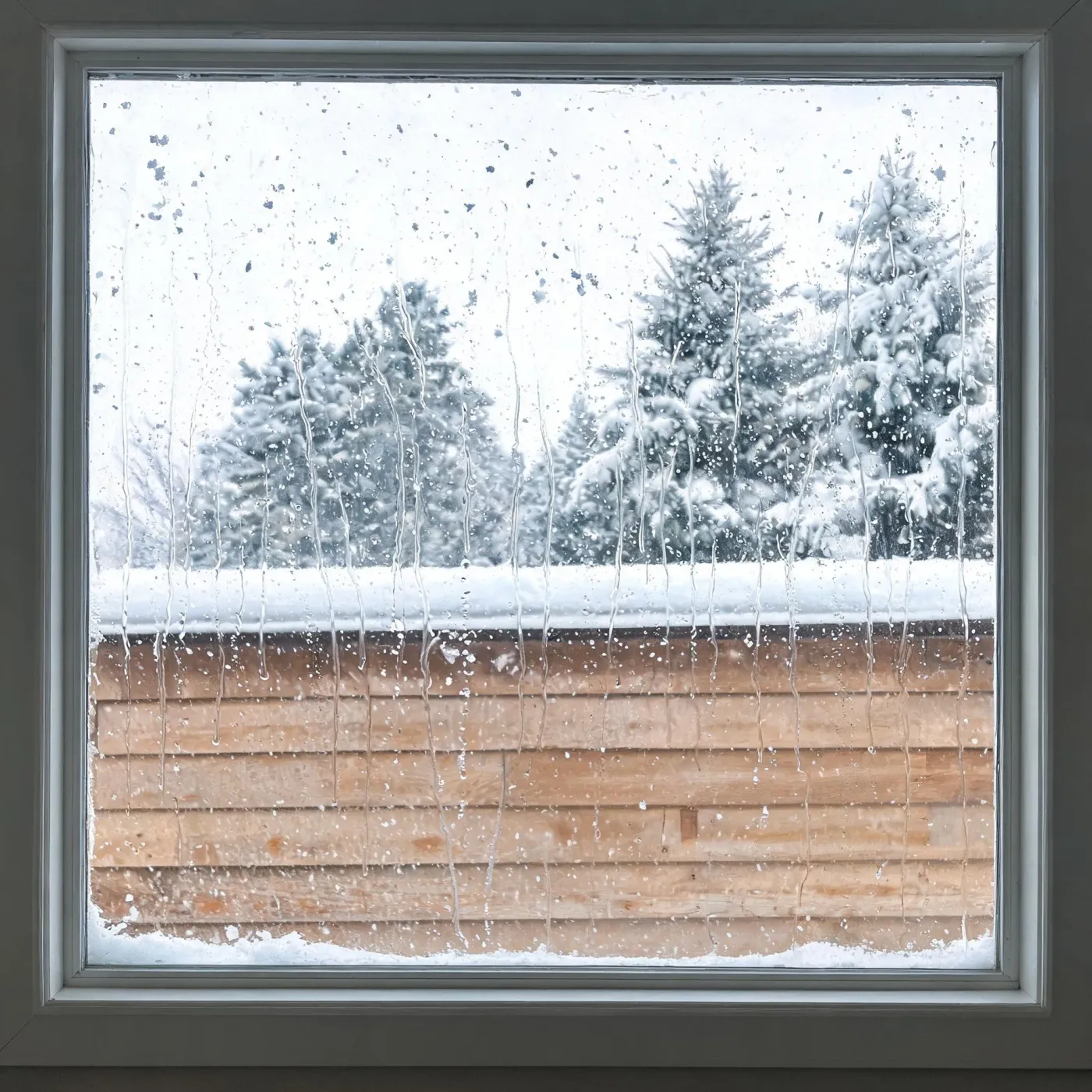
View through a wet, snow-flecked window with water streaks running down the glass, showing snow-covered evergreen trees above a wooden board fence topped with snow.

Statewide, winter nights average 32°F, right at freezing, according to NOAA climate data. That's the air working against your furnace while the upstairs tries to catch up. A furnace sized and ducted right can still hold a steady temperature on nights like that. One that's struggling downstairs already will fall further behind upstairs, because the heat has to travel through duct runs before it even gets the chance to rise. You'll notice it most in the early morning, when outside temperatures sit at their lowest and whatever's left of the night's heat has already drained out of the second floor hours before.

NOAA nClimDiv 1991-2020 county normals weighted by homes

A woman stands in the open black front door of a white-sided house with a dark shingled roof while a man in a navy jacket approaches along the walkway, with lantern wall lights, a potted shrub, and flowering garden beds nearby.

Your upstairs can run as warm as the rest of the house

The duct run, the return, the heat strips, the blower. Somewhere in that path is the reason heat stops short of the second floor, and it's specific to your house, not every house on your street. A furnace built right for the space it serves doesn't leave one floor behind while the other hits temperature fine.

Finding that reason usually means getting someone into the house who can trace the ductwork and test the parts instead of guessing from the thermostat. That's the part that takes the time, calling around, explaining the cold bedroom over and over, sorting through quotes from people who haven't seen your attic or your ducts. Answer a few questions about your furnace and your house and a contractor who works on heating in your area will reach out directly, already knowing what you told them.

A gray upholstered sofa with a beige cushion and knit blanket beside a curtained window, with a white mug and a book on a dark wooden table in the foreground and a lit lamp in the background.
Sunlight falls across a beige upholstered sofa with a textured woven cushion and a chunky knit throw, beside a dark wood cabinet holding a ceramic vase with green leafy branches, near a white-framed window.
A sunlit corner of a room with a wooden side table holding a ceramic vase of green foliage and a wooden bowl, beside a light upholstered sofa with a knit throw and rust-colored pillow, with window shadows cast on a beige wall.
A sunlit room corner with beige walls, a white-framed window with sheer cream curtain, wood floor with a light rug, and a woven basket holding a knit blanket.
A beige ceramic vase holding a leafy green branch sits on a wooden cabinet in a corner, with sunlight through a sheer curtain casting leaf shadows on the wall.
A grey upholstered sofa with a rust-orange velvet cushion and a textured throw sits beside a window with linen curtains, next to a wooden side table holding a pale ceramic vase of olive branches.

The right pro for this job

Fill out one short form instead of calling around.

Request a pro

You only hire the pro if you want to.