Oregon HVAC Help

What to do when the AC goes out in Oregon

Describe your air conditioner job, and a local pro who handles it gets in touch.

Get matched

My AC stopped working, what should I do first?

Your AC quits on a warm afternoon and before you call anyone, you want to know what's actually wrong and whether it's something simple. Oregon summers don't bring the thick heat other states get, but a dead AC on a hot day in July or August still makes the house uncomfortable fast, and you want to rule out the easy stuff before paying for a repair visit.

Check the thermostat and the breaker before anything else

Most of the time an AC that won't start has stopped at the thermostat, the breaker panel, or the outdoor unit itself. Set the thermostat below room temperature and listen for a click. If nothing happens, check the breaker for the AC and the one for the furnace, since the indoor blower usually runs off that circuit too. Look at the outdoor unit and clear away any leaves or debris blocking it. If the breaker keeps tripping when you reset it, stop resetting it. That's usually a sign something inside the system is drawing too much power, and a licensed contractor who works on AC units around Oregon regularly should take a look before it causes more damage.

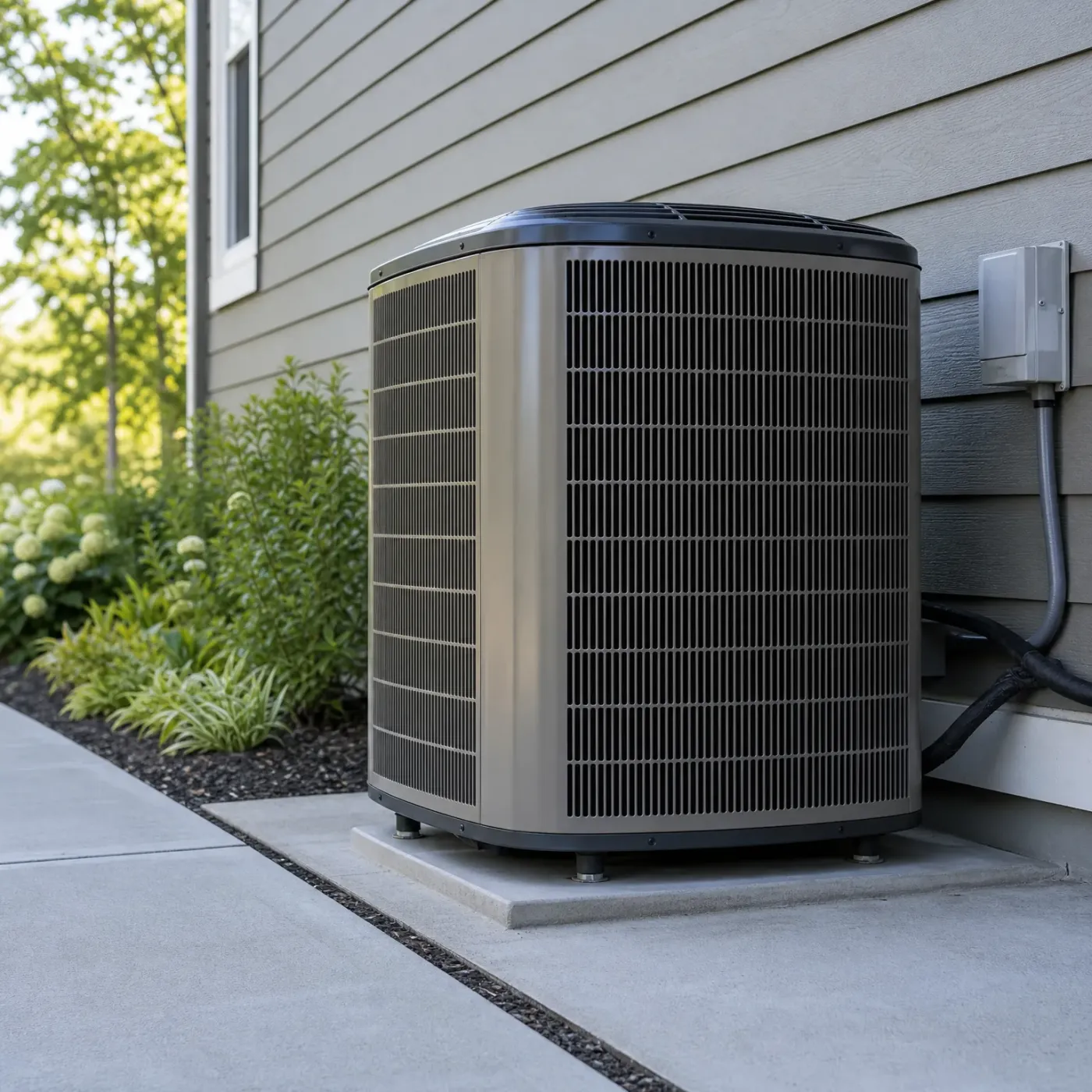
An outdoor air conditioner condenser unit on a concrete pad beside a house wall, with a gray electrical disconnect box and conduit above it and grass in the foreground.

Why the breaker trips first

Most central air conditioners run on a 240-volt circuit with its own breaker in the electrical panel. When a capacitor weakens or a fan motor binds, the compressor draws more current trying to start, and the breaker trips to protect the wiring. Flip it back once. If it trips again right away, something inside the unit is pulling too much power, and that's a job for someone who can test it with the panel open, not something to keep resetting.

A gray outdoor air conditioner condenser unit on a concrete pad beside a house with horizontal lap siding, surrounded by white gravel and a lawn, with a white wall at left.

What the outside unit tells you

The condenser sits outside and does the work of rejecting heat from your home into the air. If it's not running at all, check that nothing is blocking the airflow around it, leaves, a fence, anything stacked too close. If it's running but the air inside stays warm, the problem is more likely the refrigerant charge or the indoor coil than the unit outside. A contractor who services this equipment in Oregon every summer can tell which from a short visit.

A woman in a cream sweater and jeans stands in the open doorway of a white stucco house, holding the dark door, while a man in a dark quilted jacket seen from behind walks toward the entry past potted plants.

What a dead AC means for your house

Without the thick humidity you'd get elsewhere, a few hours without cooling in Oregon usually means discomfort, not danger. The house holds heat longer than the air outside, especially upstairs, and by evening it can feel worse than when the AC first quit. If anyone in the house is older, very young, or has a health condition that makes heat hard on them, that's the bigger concern, more than the house itself.

Since most homes here heat with electricity, your panel is already doing double duty across the year, and a breaker that trips for your AC is worth paying attention to rather than just resetting and forgetting. A contractor who works on this equipment every summer in your area has seen which parts tend to go first in homes like yours, and getting matched with one local technician means you're explaining the problem once, not repeating it to three different companies.

A living room corner with a beige sofa and cushion, a round wooden coffee table holding a pale ceramic vase of eucalyptus stems and a wooden bowl, and a curtained window with a potted plant above a latticed radiator cover in the background.
A gray outdoor air conditioner condenser unit on a concrete pad beside a house with horizontal vinyl siding, surrounded by mulch, flowering shrubs, and lawn.

Running clean

This is what a healthy unit looks like. The fins are open to the air, the cage is clear, and nothing is blocking the airflow it needs to dump heat outside. Grass and mulch are nearby but not against the cabinet. A unit kept like this has a better shot at finishing the summer without a breakdown.

A weathered outdoor air conditioning condenser unit on a concrete pad beside a house with light horizontal siding, an electrical disconnect box and conduit on the wall, and mulched soil on either side.

Choked with debris

Dirt and grime cake the coil fins and the cage around them. When the fins are packed like this, the unit can't shed heat the way it's built to, so it runs harder and longer for the same result. Left alone, that strain is what pushes a capacitor or a fan motor toward failure.

A man with grey hair and stubble in a dark sweater sits on a grey sofa indoors, looking off to the side, with a potted plant and a sunlit window behind him.
A man with gray hair, a beard and glasses, wearing a dark green sweater, sits on a gray sofa in a sunlit living room with a potted plant, table lamp and wooden sideboard behind him.
A middle-aged man with graying hair and a short beard sits on a blue sofa in a living room, looking toward a window, with a bookshelf, lamp and framed picture in the background.
A man with graying curly hair and a dark green sweater sits on a gray sofa in a sunlit living room, looking off to the side, with a framed picture, shelving, an armchair and a window with sheer curtains behind him.
  1. Flip the breaker off, then back on once to test it.

  2. Check the thermostat is set to cool and below room temperature.

  3. Look at the outdoor unit for a fan that won't spin.

  4. Listen for a hum with no start, which points to the capacitor.

An outdoor air conditioning condenser unit on a concrete pad beside a house with horizontal lap siding, with a conduit and electrical disconnect box on the wall at right.
Before you get your air conditioner repair
A gray outdoor air conditioner condenser unit on a concrete pad beside a house with horizontal lap siding, with a wall-mounted disconnect box and conduit to its right and shrubs to the left.
After you get your air conditioner repair
An outdoor air conditioning condenser unit on a concrete pad beside a house with horizontal lap siding, with a gray electrical disconnect box and conduit on the wall and green shrubs and trees to the left.

Get your air conditioner to the right pro

The pro who reaches out is licensed in Oregon.

Say what's going on with your air conditioner, and a pro who works on them reaches out.

Reach a local pro

No charge to send it. You decide if you hire them.

Is your house just not cooling down anymore?

You notice it room by room. The air coming from the vents feels the same temperature as the room, or close to it. The thermostat says 78 and climbing and the unit outside either isn't running or is running without doing anything. Upstairs rooms get stuffy first and stay that way into the evening. Sometimes there's a smell, a musty or burnt note from the vents, or a hum from outside with no air moving at all. None of this is dangerous in a house that heats with electricity and sits in a mild Oregon summer, but a unit that keeps tripping its breaker or running without cooling is working against itself, and left alone long enough that strain tends to turn into a bigger repair.

A dimly lit living room with a black pedestal fan on a wood floor beside a gray sofa with a patterned pillow, a wooden coffee table in the foreground, potted plants at left, and a curtained window with blinds behind.

It's a little past two and the blinds are down against the sun. The floor fan next to the couch is turning on its stand, pushing the same warm air around the room. You already flipped the breaker once and checked the thermostat, and the unit outside still didn't come back. Your phone says it's warm out, not the kind of heat that comes with heavy air, but the house doesn't know the difference by now. The couch cushion feels warm where the light's been sitting on it. You keep angling the fan toward the window instead of the hallway, like that might help, and you're starting to think about who you'd even call for this.


Power costs 15.46 cents per kilowatt-hour statewide

At 15.46 cents per kilowatt-hour, running a window unit or a whole-house fan while you wait on repair won't do much damage to your bill. With most Oregon homes heating with electricity already, the bigger cost swing comes from winter, not from a few extra days of cooling.

EIA-861 2025 statewide residential average

A tripped breaker, a fan that won't spin, a hum with no start: these point to something specific, and a licensed contractor who works on these systems every summer has likely seen your exact problem before. Oregon's dry heat gives you room to wait for the right person instead of the first one who answers, and when you request help here, it goes to one contractor local to your area, not a handful competing for your callback. That matters when the fix needs to be right, not just fast. You know the breaker is good, the thermostat is set right, and whether the fan outside is turning. What's left is the part a trained eye finds quickly: a weak capacitor, a stuck motor, a refrigerant leak. Get that matched to someone who already knows what fails on these units and what doesn't, and the rest of this stops being a guessing game.

An outdoor air conditioner condenser unit on a concrete pad beside a dark horizontal-lap sided house, with mulch beds, shrubs and ornamental grasses nearby.

The right pro for this job

Only one pro gets your request, so you hear from one company.

RepairCentral ACOregon
Step 1 of 2

What ZIP code is the job in?