
How long an AC takes to cool a house in Oregon
Send the form, and lining up the air conditioner tune-up stops being yours to chase.
Most homes in Oregon cool down in one to two hours once the air conditioner starts, if the unit is sized right and running the way it should. The air here is dry even on hot days, so the system isn't fighting humidity the way it would in a muggier state, and that lets it bring the temperature down faster once it's actually moving air. What slows it down is almost always something mechanical: a dirty filter choking airflow, a coil caked with dust, a refrigerant charge that's dropped. Any one of those can stretch an hour into three or four and still leave the house warmer than the thermostat says it should be. If your AC has been running longer than it used to for the same drop in temperature, that's the system telling you something's working harder than it needs to, not the weather.

The thermostat calls for cooling and signals the outdoor unit.
The compressor starts and pumps refrigerant to the outdoor coil.
The outdoor coil releases heat pulled from inside your house.
The indoor coil cools air as the blower pushes it through your ducts.
Why does my house cool faster some days than others?
You've noticed your house drops to a comfortable temperature in an hour on some days, and on others it still feels warm after two or three hours even though the AC has been running the whole time. The unit hasn't changed, so it seems like it should cool the same way every time, but it doesn't.
Outdoor temperature and sun load change how hard the system has to work
Your air conditioner moves heat out of the house, and the hotter it is outside, the more heat it has to move against. A 95 degree afternoon takes longer to cool through than an 80 degree one, even with the same thermostat setting. Direct sun on the house through the day adds heat to the walls and roof that the system has to catch up on later. Oregon summers stay dry, so humidity isn't the variable here, but a dirty outdoor coil, a clogged filter, or low refrigerant will slow things down no matter what the weather is doing. If cooling time has been creeping up over several hot days in a row rather than swinging with the weather, that points to the equipment rather than the afternoon.




Why Some Homes Cool Faster
Cooling On Time
- A system sized right for your square footage cools most Oregon homes in one to two hours once it starts.
- The dry air here means the AC spends its energy lowering temperature instead of pulling moisture out first.
- A clean filter and a coil free of dust let the air move through at the rate the system was built for.
- Refrigerant at the right charge lets the outdoor unit pull heat out of the house at full capacity.
- A thermostat placed away from direct sun or a warm hallway reads the room's actual temperature and calls for cooling at the right time.
Cooling Running Long
- A unit sized too small for the house keeps running past two or three hours and still can't catch up on the hottest days.
- A dirty filter or a blocked return slows the air down, so the coil can't move enough cool air through the house.
- Low refrigerant means the outdoor unit is working without enough to carry heat away, so the house cools slower than it should.
- A thermostat near a sunny window or a kitchen can call for less cooling than the rest of the house actually needs.
- Ducts that leak into an attic or crawlspace let cooled air escape before it reaches the rooms it was meant for.

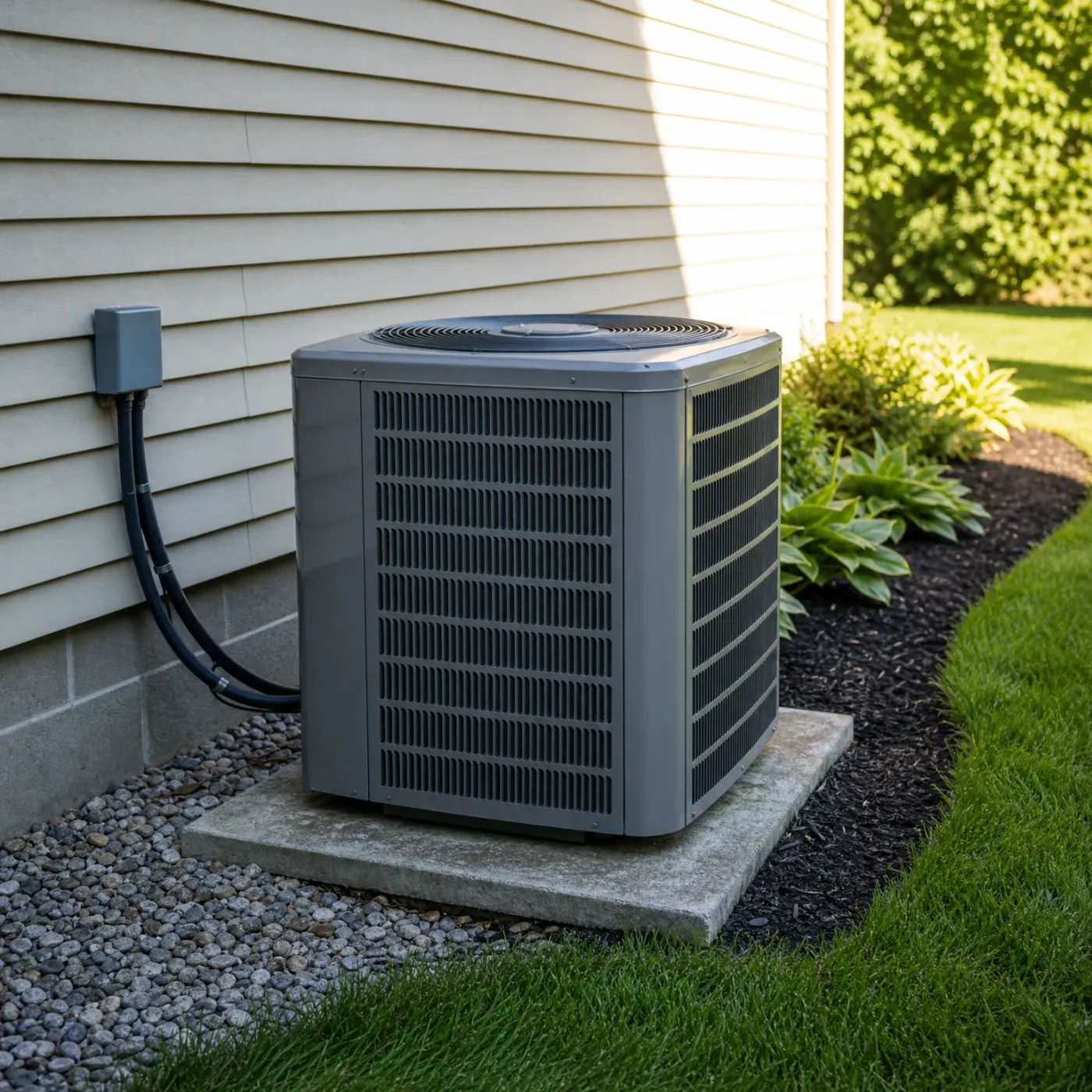
You walk out to the side yard to check on the unit, and the condenser is matted with cottonwood fluff, caught thick in the fins like gray wool. It's late spring, that stretch when the cottonwoods let go all at once, and yours landed right where the unit pulls its air. You press a finger against the fins and barely feel any give. The house has been running warmer than it should the last couple of days, and now you see why. A tech who covers your area in a season like this has pulled fluff out of a dozen units already this week and knows exactly how to clear it without bending the fins. Once you send the request, that part stops being yours to figure out.
Send one request and you're done looking
If your system is taking three or four hours to cool your house instead of one or two, something is making it work harder than it should, and in dry Oregon air that almost always points to the equipment itself rather than humidity. A dirty coil, a low charge, a blower that's lost some of its pull. These are the kind of things a tune-up catches before they turn into a hot afternoon with no cool air at all. A local contractor who services this equipment every summer knows which of those problems shows up most in homes around you, and what tends to go first on a system that's been running a few seasons without a checkup. Sending the request puts that knowledge to work on your unit specifically, and only one contractor gets it, so you're dealing with one call back and one visit, not a stack of estimates to sort through while your house sits warm.

What the compressor is doing
The compressor is the part under the most strain, and it runs harder on the hottest afternoons. On a 95 degree day it has to push refrigerant through more cycles to pull the same heat out of the house as it would on a 75 degree morning. That's normal wear, not a sign of trouble. But a compressor that labors through every cycle because of a dirty coil or a low charge ages faster, and a worn one is what turns a two hour cooldown into four.

Why the outdoor unit needs room
The outdoor coil has to release the heat pulled from inside your house, and it can only do that if air moves freely through the fins. Grass clippings, leaves, or anything stacked against the cabinet slows that exchange down. The unit keeps running, but it's pushing heat into air that isn't moving away fast enough, so the house takes longer to drop. A couple of feet of clearance on all sides lets it work the way it was built to.
Power costs 15.46 cents per kilowatt-hour statewide
At 15.46 cents per kilowatt-hour, every extra hour your AC runs shows up on the bill. A unit that cools your house in one hour instead of three is using a fraction of the power to get there, which is the real payoff of keeping it tuned up.
EIA-861 2025 statewide residential average


What You Know Now
- A system cooling your house within one to two hours is running the way it should for Oregon's dry air.
- Three or four hours points to a specific cause, a dirty coil, a weak capacitor, or a charge that's drifted low.
- A local contractor who services this equipment all season knows which of those three to check first for your system.
- Sending one request puts you with one licensed Oregon contractor instead of fielding calls from several companies.
- Catching the slow spot now, before next summer's heat, keeps the fix small instead of letting it become a replacement.
One to two hours is the mark for a healthy system in Oregon's dry air. If your house gets there in that window, there's nothing to chase down. If it's taking three or four hours instead, the cause is usually one of a few things: a coil that's caked with dust or cottonwood fluff, a capacitor that's weakening, or refrigerant that's dropped below the charge the system needs. None of those show up by guessing. They show up when someone who works on this equipment all season checks the coil, tests the capacitor, and measures the charge against what the unit calls for.
That's the part a local contractor brings that a chain company answering calls from three states away doesn't. Someone who services Oregon systems through the summer has seen which of those three tends to go first on units like yours, and knows what the dry climate here does and doesn't do to a condenser over a few years. Send one request and you're matched with one licensed contractor local to you, not a list of five companies calling back one after another.
The slow spot you're noticing now is smaller and cheaper to fix before next summer's heat arrives than after a season of the compressor working harder than it should. Catching it while it's a dirty coil or a weak capacitor keeps it from becoming a replacement.
Finding a pro stops being your job
The pro who reaches out is licensed in Oregon.
No charge to send it. You decide if you hire them.