
HVAC Installation in La Grande, OR
Tell us about the house, and a licensed contractor who covers Union County will get in touch.
Tell us about the job
It takes about a minute.

A system built for ten months of work
In La Grande, heat is not a winter job. Homes here need it from September through June, ten months of the year, and winter nights average 23°F from December through February. Whatever you install has to hold up to that stretch, not just the cold snaps.
Summer only asks for cooling on afternoons averaging 76°F, so the load on a new system falls mostly on the heating side. That balance matters when you are sizing equipment or choosing between a furnace, a heat pump, or both. Storms are part of the picture too. Union County has seen 110 winter storms and 18 damaging wind events over the past ten years, and a fifth of Oregon households lost power for 24 hours or more in 2024. A new system should be able to come back on its own when the power does.
- 10 months
- September through June, your system heats
- 23°F
- the average winter night it heats against
- 76°F
- the average summer afternoon it cools against
Oregon requires HVAC contractors to hold a state license.
Oregon licenses HVAC contractors through the Construction Contractors Board. That license belongs to the contractor, not to any single job, so it stays with them from one project to the next. The state draws one line around this rule. Work under $1,000 does not need a licensed contractor at all. Installing a heating and cooling system runs well past that line, so the contractor doing this job in Union County needs to hold that license.
A state license is not the only check on a job like this one. In most cities and counties, an installation like this needs a permit from the local building office, and an inspector looks at the work once it is done. That inspection is separate from licensing. It is what catches problems in the actual gas connections, wiring and refrigerant lines put in on this specific job.
Source: Oregon Legislative Assembly
- When should I replace my HVAC system?
- Replace it when repairs start costing more than they're worth or the unit can't keep up anymore. Watch for a furnace that runs constantly through the cold months, uneven temperatures room to room, or a technician telling you the same part keeps failing. Age matters too. A furnace working nights at 23°F for months on end is under real strain, and one nearing the end of its life is more likely to fail when you need it most. If your system is old and starting to need attention every winter, it's worth getting a contractor to look at whether replacing it makes more sense than another repair.
- Should I replace my furnace and air conditioner at the same time?
- If both units are old, replacing them together usually makes sense, but it depends on the condition of each one. A furnace and air conditioner installed at the same time are matched to work together, and mismatched systems can run less efficiently or wear out sooner. That said, homes here need heat ten months of the year and cooling isn't a real factor in this climate, so the furnace is doing most of the work and matters more day to day. A contractor can look at the age and condition of both units and tell you whether pairing the replacement makes sense for your house.
- What happens during an HVAC installation?
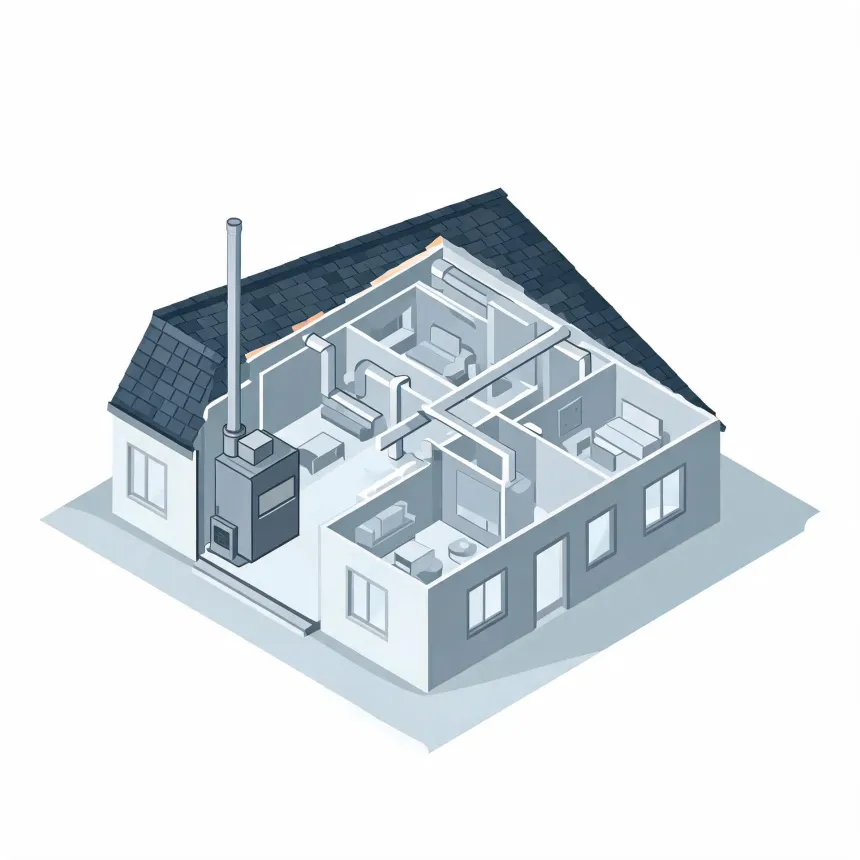
- A contractor removes the old equipment, sets the new furnace or air conditioner in place, and connects it to your ductwork, gas line or electrical, and venting. Once it's connected, they test it, check refrigerant charge and airflow if there's an AC unit involved, and walk through the settings with you. In most cities and counties, this work needs a permit from the local building office and an inspection once it's done. That inspection confirms the installation was done to code, which matters for both safety and for any warranty on the equipment.