
Why your laundry room gets so hot in Oregon

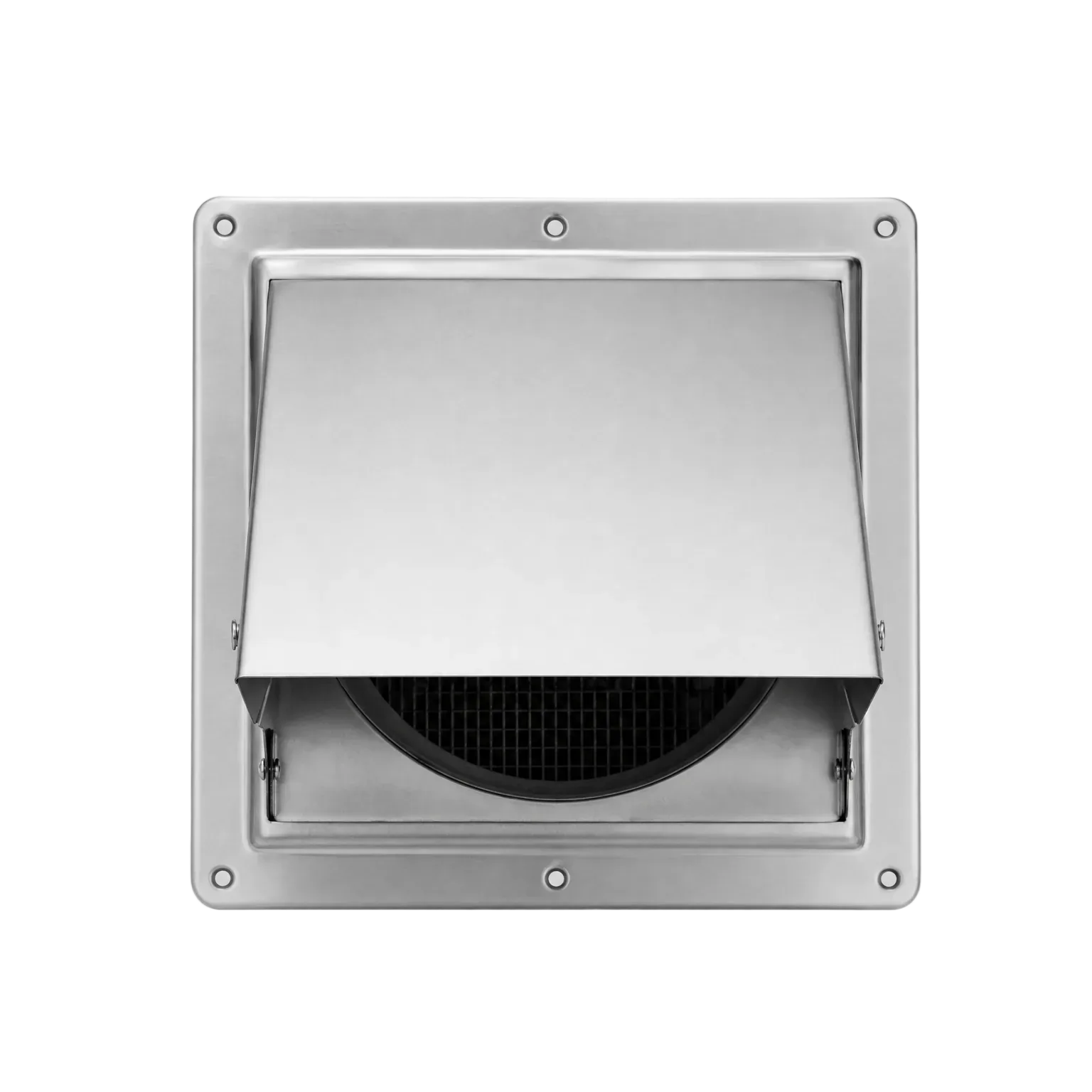
A square stainless steel wall vent hood with a hinged flap cover and a round mesh-screened duct opening, shown centered against a plain light gray background.
Answer a few questions

Why does my laundry room get so hot in Oregon?

You run a load of laundry on a warm evening and the room turns into an oven. Oregon summers don't carry the heavy mugginess other places get, but that small room still bakes while the dryer runs, and the heat hangs around long after the cycle ends. You want to know what's actually causing it before you start opening windows or running a fan every time you do laundry.

A clogged dryer vent is pushing hot air back into the room instead of outside

Your dryer is built to send hot, damp air outside through the vent, not into the room around it. When lint builds up inside that vent, the air has nowhere to go but back into the laundry room. The dryer keeps heating, the air keeps backing up, and the room gets hotter with every load. A vent that's clogged also makes the dryer run longer to dry the same load, which adds even more heat to a small space. Most homes in Oregon heat with electricity, so that extra run time shows up on the power bill too. If the room stays hot well after the cycle ends, or the dryer feels hot to the touch, the vent is the place to look.

A white plastic louvered dryer vent hood mounted on beige horizontal lap siding above a concrete foundation wall bordered by gravel.

Vent clear and venting out

Air pushes straight out through the cap and outside, taking the heat and moisture with it. The flap swings open while the dryer runs and closes when it stops. Your laundry room warms up some, but the heat doesn't linger once the load is done.


A dusty white plastic dryer vent hood with lint-clogged louvers mounted on beige horizontal vinyl siding above a concrete foundation wall and a bed of rounded gray rocks.

Vent clogged with lint

Lint packs the cap and the flap barely opens. The dryer keeps pushing out hot, damp air with nowhere to go, so it backs up into the vent and the room around it. That's the heat you're feeling, and it builds with every load until the vent gets cleaned out.

Why does the heat stick around after the dryer stops?

A load or two used to leave the room warm, and it cleared out once the dryer clicked off. Now the heat hangs around long after, and it builds faster than it used to, maybe before the cycle even finishes. You might notice the dryer running longer to get clothes dry, or the top of it warm to the touch. Check the outside vent cap while the dryer runs. If the flap barely moves or you feel little air coming out, the lint built up inside the duct is holding that heat and moisture in the room instead of letting it outside. Left alone, that trapped lint is also what a dryer fire starts in.

A white hooded exhaust vent with a louvered opening mounted on white horizontal lap siding, with blank white space at right.

A dryer pushes out a lot of air

A dryer moves a large volume of hot, damp air every cycle, all of it meant to go straight out through the vent and outside. When lint packs the duct, that air has nowhere to go but back into the room. The motor keeps running the same as always, so the heat keeps coming, it just stops leaving.

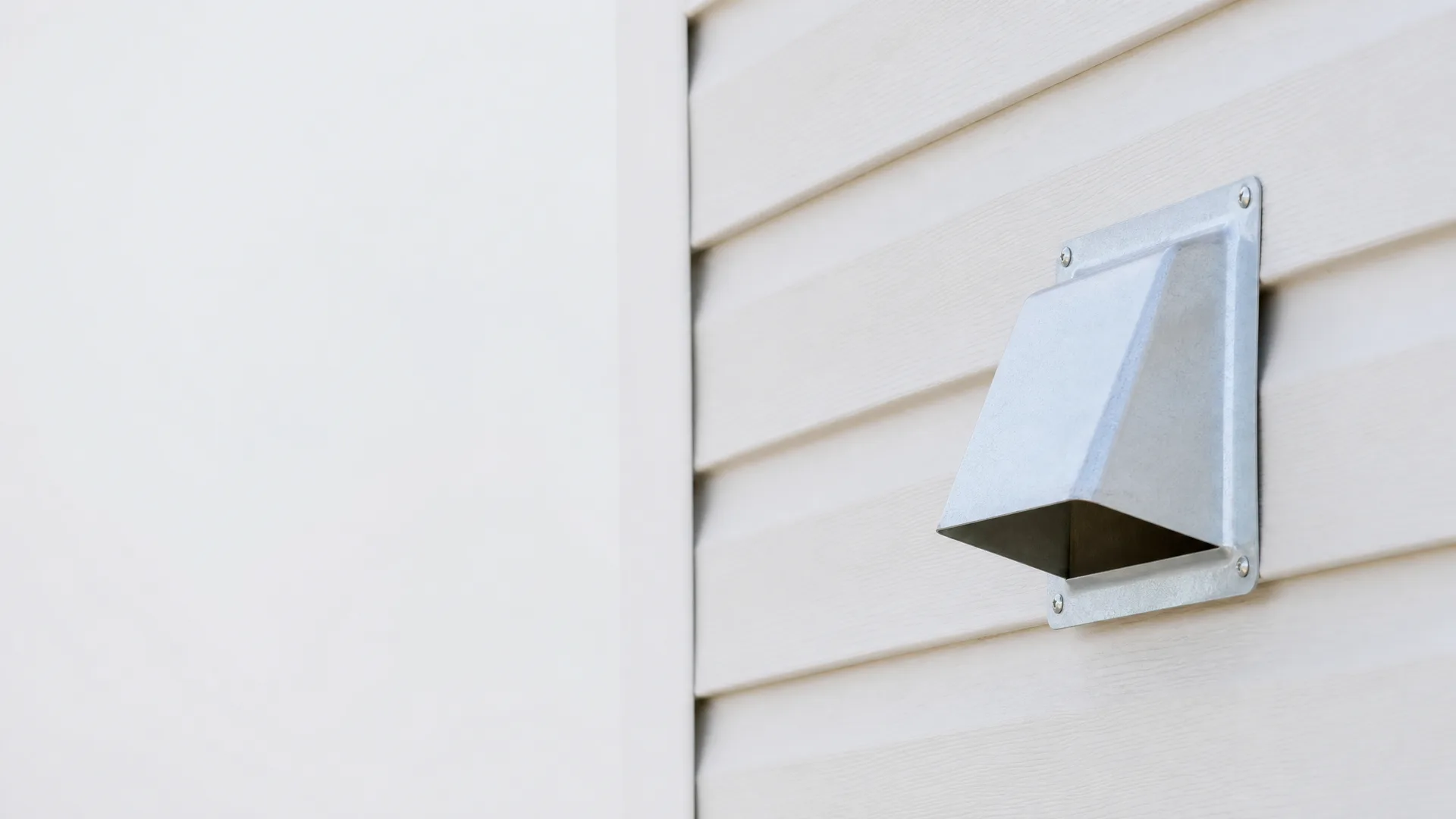
A metal hooded exterior vent cover screwed to beige horizontal lap siding, next to a plain white wall corner.

Lint is an insulator, not just fuel

Lint buildup does two things at once. It blocks airflow, and the layer of it sitting inside the duct holds heat against the metal instead of letting it pass through and out. A duct that's clear sheds that heat fast. One that's coated in lint stays warm after the cycle ends, and so does the room around it.

Power costs 15.46 cents per kilowatt-hour statewide

Most homes here heat with electricity, and at 15.46 cents a kilowatt-hour, a dryer working harder to push air through a clogged vent runs longer and pulls more power each time you do a load. A clean vent gets the air out fast, so the dryer shuts off sooner instead of grinding through an extra cycle.

EIA-861 2025 statewide residential average

A smiling woman with long dark hair in a gray sweater sits at a white stone counter with a glass of white wine, with a kitchen, fireplace and sofa visible behind her.
A smiling woman with dark hair in a cream sweater sits at a marble table with a glass of red wine, with a lit lamp, sofa, fireplace and kitchen counter behind her.
A woman in a cream sweater laughs while seated at a marble countertop with a glass of red wine, with a dimly lit living room and sofa behind her.
A woman in a beige turtleneck sweater with her hair up sits laughing and looking to the side at a white marble table with a glass of red wine, in a dimly lit interior with a lamp and seating area behind her.

Skip calling around

Your dryer vent cleaning request goes to one local pro.

No charge to send it. You decide if you hire them.

Clean it yourself or call someone

You can pull the dryer out, disconnect the duct, and vacuum out what you can reach from both ends. That gets the lint sitting right at the opening, and it helps. What it usually misses is the run in the middle, especially if the duct bends on its way to the wall cap, which is where lint tends to pack tightest. A shop vac hose only reaches so far around a bend. You also won't see what's built up right at the cap itself unless you go outside and check it from that end too.

What a full cleaning catches

A contractor who does this work brings a brush and rod system built to run the full length of the duct, through the bends, out to the cap. That gets the buildup a vacuum can't reach, and it's the kind of job a local contractor handles every week during the warmer months, so they know which vent runs in Oregon homes tend to clog first. Finding one usually means calling around and explaining the same thing more than once. Matching with one contractor who already knows this equipment skips that part, and the laundry room stops baking once the full run is clear, not just the end of it.

A smiling middle-aged man in a dark green sweater sits at a candlelit table with wine glasses and a plate of greens in a dimly lit interior.
A woman in a dark knit turtleneck sweater reclines on a couch under a cream knit blanket, looking down at an open book, with a lit table lamp and framed pictures behind her.

A hot laundry room is the dryer telling you the vent isn't doing its job. The air has to go somewhere, and if it's not going outside, it's coming back at you. Clearing that duct is what fixes it, and it's not something to leave half done, since the lint sitting in the middle of the run is the part you can't reach from either end. A local contractor who clears vents in Oregon homes all summer has seen what a run like yours usually looks like and where it tends to pack up. You call one contractor, not a handful, and someone who already knows this equipment comes out to deal with it. Once the vent is clear, the room stops holding onto heat, the dryer isn't working as hard to push air through, and laundry goes back to being just laundry.

A shingled two-story house with lit windows and stone accents at dusk, with a stone paver walkway and landscape lighting leading past ornamental grasses toward a calm bay under an orange and blue sky.

Dryer Vent Cleaning

Describe it once

Duct and vent cleaningOregon
Step 1 of 3

What kind of equipment?

  • A dimly lit living room corner with a beige upholstered sofa holding a dark green cushion and a chunky knit throw, beside a wooden sideboard with a lit ceramic table lamp, a small potted plant, and a wooden bowl, with a framed artwork on the wall and a mug on a book in the foreground.
    • A local pro who cleans dryer vents gets in touch with you.
    • Your dryer vent cleaning request goes to a local pro who does this work.
  • A round wooden coffee table holding a round stone vase of green foliage, a lit candle in a glass container, and a small dark bowl, with a beige sofa, cushions and knit throw behind and a window at left.
    • Send the request and finding a pro stops being your problem.
    • After this form, you can stop searching for a dryer vent pro.
  • Sunlit living room with a wooden coffee table holding a ceramic vase of leafy branches and a carved wooden tray with two stacked books, in front of a beige sofa with tan and green cushions and a potted plant near a window.
    • One form replaces the calls you'd make to find a dryer vent pro.
    • Skip calling around for someone who cleans dryer vents.
  • Interior corner with a lit ceramic table lamp and wooden bowl on a wood sideboard, a framed picture and branch-filled vase behind, a knit throw over an upholstered chair, and a lit candle in a glass holder, stoneware mug and round planter of green foliage on a wooden table in the foreground.
    • Only one pro gets your request, so you hear from one company.
    • Your request stays with one local pro.