Mini Split Installation in Newport, OR
Tell us about the house, and a licensed contractor who covers Lincoln County will get in touch.
Tell us about the job
It takes about a minute.
In Newport, a mini-split works mostly as a heater
Homes here need heat from September through June, ten months of the year. Winter nights average 37°F through December, January, and February. Summer afternoons average just 72°F, and homes here don't need cooling at all, so a mini-split installed here spends nearly all its life in heating mode.
A unit installed new has to meet the federal minimum of 7.5 HSPF2 for heating and 14.3 SEER2 for cooling. With ten months of heating and no cooling season to speak of, the heating side of that rating is what actually matters here. A mini-split runs on electricity, and with 20% of Oregon households losing power for at least 24 hours in 2024, an outage during a cold stretch means no heat until power is back.
- 10 months
- September through June, your system heats
- 37°F
- the average winter night it heats against
- 72°F
- the average summer afternoon it cools against
Oregon requires HVAC contractors to hold a state license.
The license is held by the contractor, not issued per job. It covers this contractor's work across every project they take on, not just the mini-split going into your home. Oregon does carve out an exception for small jobs. Work under $1,000 does not need a licensed contractor. A mini-split installation runs well past that, so this is licensed work through the Construction Contractors Board.
That license is what stands behind the installation itself, since Oregon licenses HVAC contractors directly rather than leaving it to counties or skipping it altogether. Most cities and counties also require a permit for a job like this, with an inspection once the work is done. That inspection checks that the mini-split was put in correctly, separate from the licensing itself.
Source: Oregon Legislative Assembly
- Is a mini split worth it?
- For most homes here, yes. Newport needs heat or cooling ten months of the year, and a mini split heat pump handles that kind of long heating season well because it draws heat from outside air instead of burning fuel or running resistance strips. It also gives you cooling for the warmer afternoons without adding much load. The bigger question is whether it can cover the whole house or just part of it, and that depends on the layout.
- How many rooms can a mini split cover?
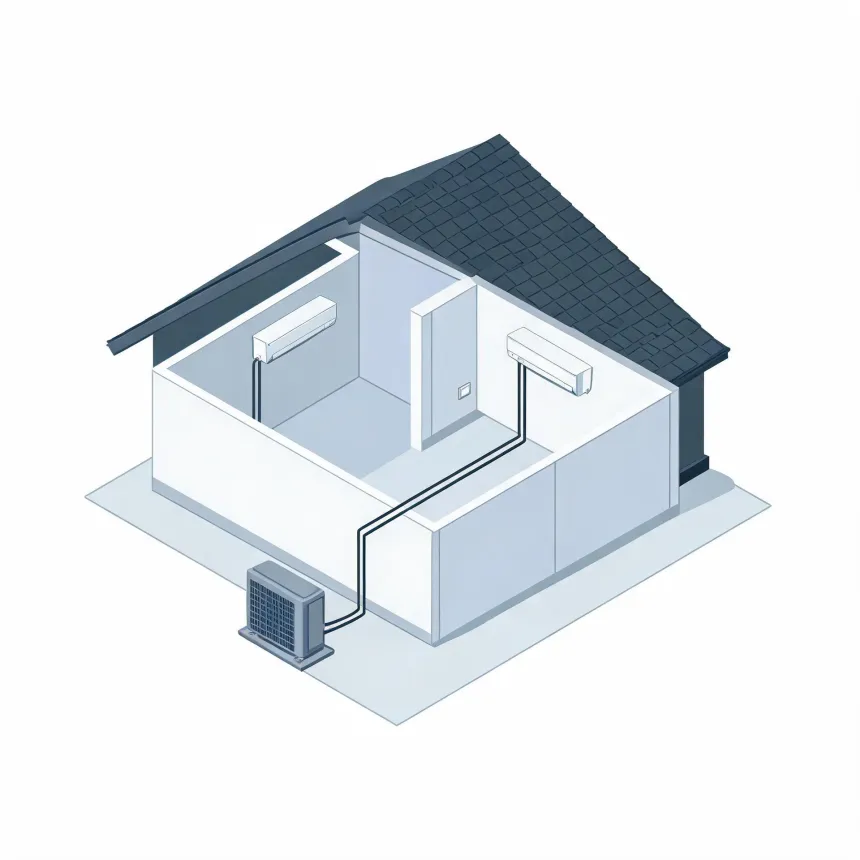
- A single outdoor unit can run one indoor head or several, depending on which system a contractor installs. A single-zone system heats and cools one room or open area well. A multi-zone system splits the output across several indoor heads, each with its own thermostat, so bedrooms and living areas can run at different temperatures at once. How many zones a given outdoor unit can support is a real limit, and a contractor will size that against the house.
- Can a mini split heat a whole house?
- It can, if enough indoor heads are placed to reach every room and the outdoor unit is sized for the whole load. Newport's winter nights average 37°F from December through February, so the heat pump has to be sized to keep up on the coldest nights, not just the average ones. Homes with an open layout are easier to cover with fewer heads than homes with a lot of separate closed rooms. A contractor can look at the floor plan and say how many zones the house actually needs.