Mini Split Installation in Coos Bay, OR
Tell us about the house, and a licensed contractor who covers Coos County will get in touch.
Tell us about the job
It takes about a minute.
Nine months of heat, almost no cooling
Coos Bay asks a mini-split to heat, not cool. Winter nights average 37°F from December through February, and the heat runs October through June, nine months of the year. Summer afternoons average just 73°F, so the same unit spends very little time in cooling mode. It needs to be sized and set up for steady, long-season heating rather than for hot afternoons.
Most homes here heat with electricity, so when the power goes out, the heat goes with it. Coos County has logged 24 winter storms and 74 damaging wind events over the last ten years, and a fifth of Oregon households went at least a day without power in 2024. A new mini-split will restart on its own once power is back. Any unit installed now, if it's a split system manufactured from 2023 on, has to meet 7.5 HSPF2 for heating and 14.3 SEER2 for cooling under the federal minimum.
- 9 months
- October through June, your system heats
- 37°F
- the average winter night it heats against
- 73°F
- the average summer afternoon it cools against
Oregon requires HVAC contractors to hold a state license.
The Construction Contractors Board tests and records the contractors it licenses. That license belongs to the contractor, not to your address or to this one job, so it follows them to whatever work they take on next. Oregon does carve out an exception for small jobs. Work under $1,000 doesn't need a licensed contractor, though a mini-split installation runs well past that.
For this job, the license is what stands behind the person doing the work. A mini-split installation also needs a permit from the local building office in most cities and counties, with an inspection once the work is done, so someone besides the contractor looks at the finished installation before it's called complete.
Source: Oregon Legislative Assembly
- Is a mini split worth it?
- For most homes here, yes, because a mini split is built to both heat and cool, and this area needs heat nine months out of the year. It runs without ducts, so no heat gets lost through duct runs in an attic or crawlspace. Winter nights average 37°F here, and a properly sized mini split is rated to handle that kind of cold. Whether it's worth it for your house depends on the layout and what you're heating now, so a contractor should walk through that with you.
- How many rooms can a mini split cover?
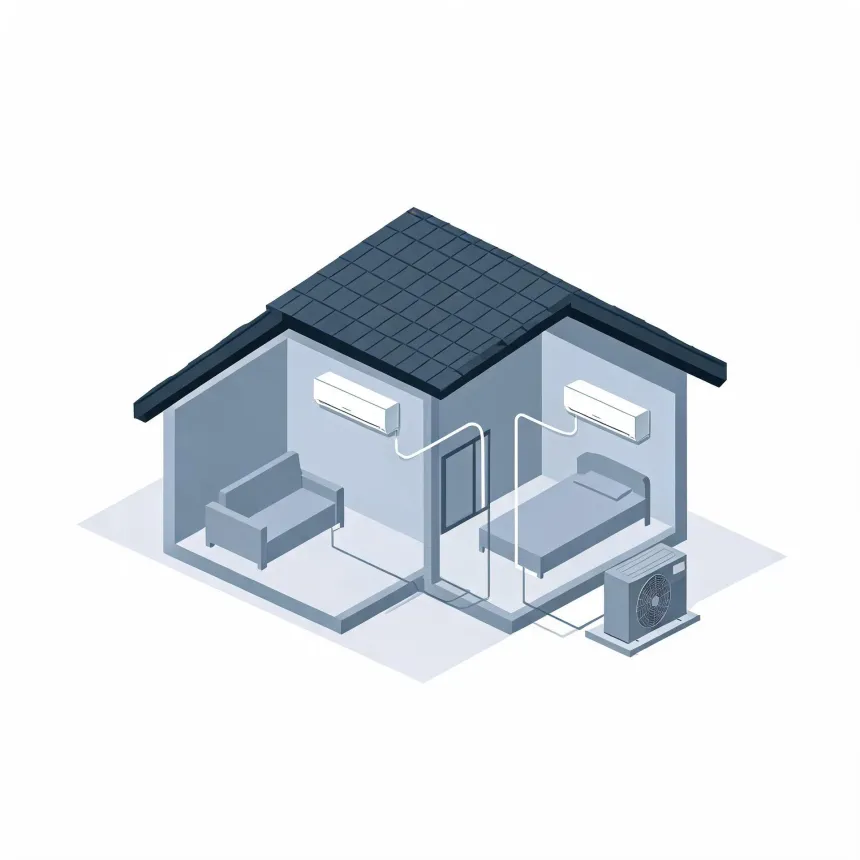
- A single outdoor unit can run one indoor head or several, depending on the system. A single-zone system heats and cools one room or open area. A multi-zone system connects multiple indoor heads to one outdoor unit, so each room gets its own thermostat and can be set independently. The right count comes down to the square footage and layout of your house, which a contractor needs to measure, not guess.
- Can a mini split heat a whole house?
- Yes, with enough indoor heads placed in the right rooms and outdoor capacity to match. A multi-zone mini split can cover a whole house the same way a central system does, just without ducts. What that takes for your house depends on how many rooms need their own head and how the space is laid out, so a contractor will need to size it room by room rather than guess at a number.