Mini Split Installation in Astoria, OR
Tell us about the house, and a licensed contractor who covers Clatsop County will get in touch.
Tell us about the job
It takes about a minute.
Astoria asks a mini-split to heat, not cool
Your mini-split will run September through June here, ten months of the year. Summer afternoons average 70°F, mild enough that cooling barely comes into it. The real job is winter, when nights average 35°F and the heat pump has to carry the house on its own.
A unit built for that has to hold onto its heating capacity as the temperature drops, not just meet a cooling number on a spec sheet. Any split system made from 2023 on has to clear 7.5 HSPF2 for heating and 14.3 SEER2 for cooling, but in Astoria the heating side is what you'll actually lean on. Clatsop County also sees its share of wind, nine damaging storms over the last ten years, and 20% of Oregon households lost power for at least a day in 2024. Worth asking how the unit you install handles a restart once the power comes back.
- 10 months
- September through June, your system heats
- 35°F
- the average winter night it heats against
- 70°F
- the average summer afternoon it cools against
Oregon requires HVAC contractors to hold a state license.
Oregon licenses HVAC contractors through the Construction Contractors Board. That license is held by the contractor, not tied to any single job, so the same license covers a mini-split install the same as any other work that contractor takes on. Oregon does carve out an exception for small jobs. Work under $1,000 does not need a licensed contractor. A mini-split installation runs well past that, so the contractor doing yours should hold a Construction Contractors Board license.
The license covers who is allowed to take on the work. It does not replace the permit. In most cities and counties, installing a mini-split needs a permit from the local building office, and an inspection once the work is done. That inspection is what checks the installation itself, the mounting, the wiring, the refrigerant lines. The license and the inspection are two separate checks, and this job gets both.
Source: Oregon Legislative Assembly
- Is a mini split worth it?
- For a house here, yes, since heat is needed September through June and a mini split handles both heating and cooling from the same unit. Winter lows average 35°F, and a mini split heat pump is built to keep pulling heat from outside air even in cold weather. A contractor can size the system to your house and tell you what it will take to cover it.
- How many rooms can a mini split cover?
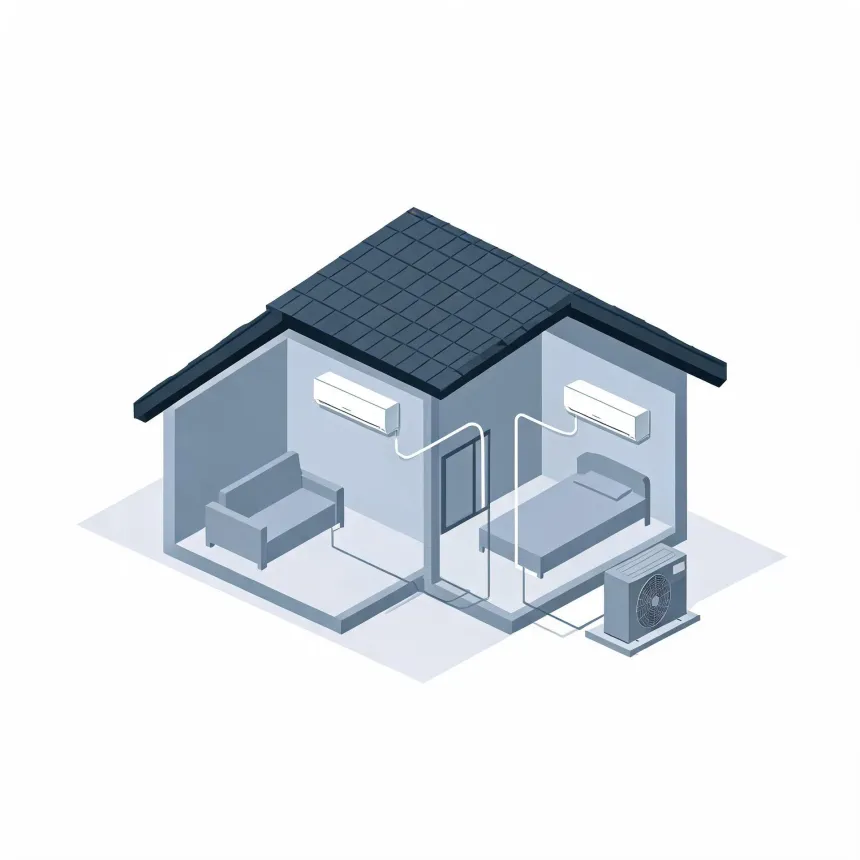
- A single-zone system covers one room or open area well. If you have several rooms to cover, a multi-zone system runs multiple indoor heads off one outdoor unit, with one head placed in each room or area that needs heating or cooling. A contractor sizes the number of heads and the outdoor unit to your house's layout and square footage.
- Can a mini split heat a whole house?
- A multi-zone mini split can heat a whole house if it's sized and placed for that from the start, with an indoor head in each room that needs one. A single indoor head will heat the room it's in and maybe an open space next to it, not rooms behind closed doors down a hallway. Since homes here need heat ten months a year, it's worth having a contractor lay out the full zone count at the start rather than adding heads one at a time.