
HVAC Installation in Hillsboro, OR
Tell us about the house, and a licensed contractor who covers Washington County will get in touch.
Tell us about the job
It takes about a minute.

Nine months of heat, and not much summer to speak of
Hillsboro asks a lot more of a furnace than an air conditioner. Winter nights average 34°F from December through February, and homes here need heat from October through June, nine months of the year. Summer afternoons only average 76°F, so the cooling side of a new system barely gets tested. About half of homes here heat with gas, which means the furnace does most of the work most of the year.
A new system still has to hold up when the power doesn't. Across Oregon, 20% of households went at least 24 hours without power in 2024. Most gas furnaces need electricity to run the blower and controls even with a standing pilot, so that's worth weighing when choosing a system that can get through a long outage without leaving the house cold.
- 9 months
- October through June, your system heats
- 34°F
- the average winter night it heats against
- 76°F
- the average summer afternoon it cools against
Oregon requires HVAC contractors to hold a state license.
The Construction Contractors Board licenses the contractor, not the job itself. That means the license covers this installation and whatever else that contractor takes on elsewhere. Oregon does carve out an exception for small jobs. Work under $1,000 does not need a licensed contractor at all. An installation of a full heating and cooling system is well above that line.
For a job this size, the license is what stands behind the work. It is not the only check, though. Most cities and counties in Oregon require a permit from the local building office before a furnace, air conditioner or heat pump goes in. An inspection follows once the work is done. That inspection is where a bad gas connection or a wiring mistake gets caught, separate from anything the contractor's license covers.
Source: Oregon Legislative Assembly
- When should I replace my HVAC system?
- Replace it when repairs keep coming back, or when the system can't keep up on a cold night here without running nonstop. Winter lows around here average 34°F from December through February, and homes need heat from October through June, so a system on its last legs gets tested most of the year. A contractor can tell you whether what's failing is worth fixing again or whether it's time to plan a new system.
- Should I replace my furnace and air conditioner at the same time?
- Not necessarily. About half of homes here heat with gas, and a furnace and air conditioner installed at different times can still run fine side by side as long as each one was sized correctly for the house. What matters more is whether either unit is near the end of its life or breaking down, not whether they were installed together.
- What happens during an HVAC installation?
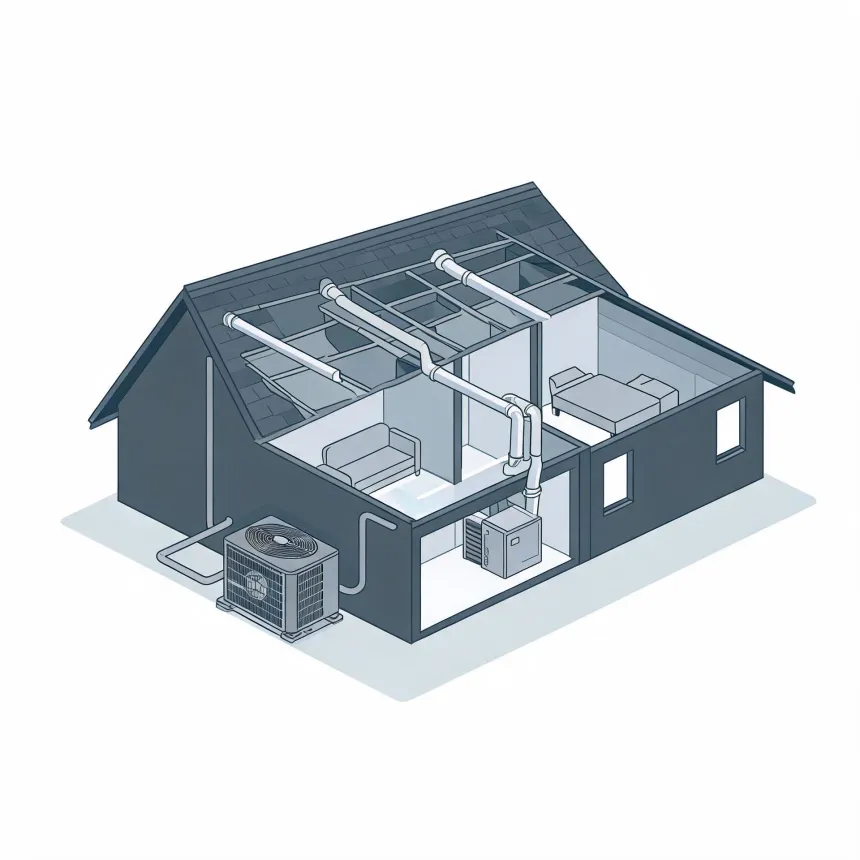
- A contractor removes the old equipment, sets the new furnace, air conditioner or heat pump in place, and connects it to the ductwork, gas line or electrical circuit already in the house. They check the vent or flue and the thermostat wiring, then run the system to make sure it heats and cools the way it should. In most cities and counties this work needs a permit and a final inspection, and the contractor handles filing for that as part of the job.