Heat Pump Installation in Grants Pass, OR
A new system here will heat from October through June and cool from July through August every year. Tell us about the house, and a licensed contractor who covers Josephine County will get in touch.
Tell us about the job
It takes about a minute.
Grants Pass asks a heat pump to work most of the year
Nine months of heat, October through June, then two months of cooling in July and August. Winter nights average 33°F here, cold enough that the system has to keep working steadily, not just kick on for an hour and stop.
A new split-system heat pump has to meet federal minimums of 14.3 SEER2 for cooling and 7.5 HSPF2 for heating. That is the baseline now, not an upgrade. Josephine County also sees its share of winter storms and wind, and with 56.2% of homes here heating with electricity, a heat pump that comes back on reliably after the power drops matters as much as one that runs well the rest of the time.
- 9 months
- October through June, your system heats
- 2 months
- July through August, it cools
- 33°F
- the average winter night it heats against
- 79°F
- the average summer afternoon it cools against
NOAA nClimDiv, 1991–2020 normals
Oregon requires HVAC contractors to hold a state license.
The Construction Contractors Board licenses the contractor, not the job itself, so the same license that covers this heat pump installation covers whatever else that contractor takes on. Oregon does carve out an exception for work under $1,000, but a heat pump installation runs well past that line.
Because Oregon licenses at the state level, that license is what stands behind the work on this job. Most cities and counties in Oregon also require a permit for a heat pump installation, with an inspection once the work is done. That inspection is a separate check, done by the local building office rather than the state board.
Source: Oregon Legislative Assembly
- Is a heat pump better than a furnace?
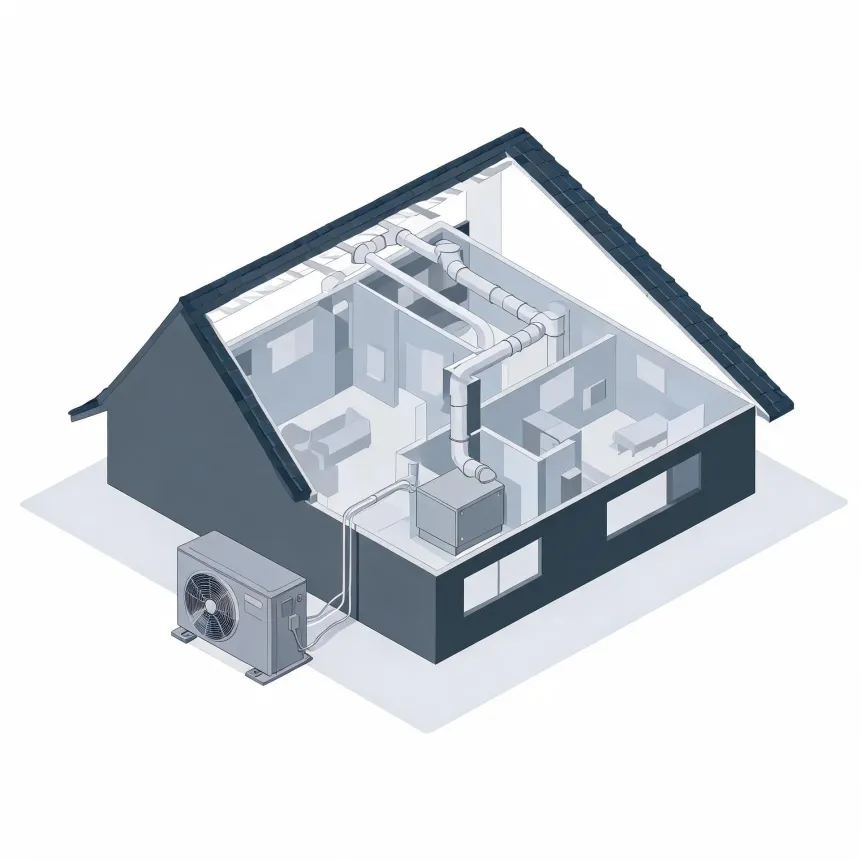
- A heat pump does more for you because it heats and cools, where a furnace only heats. Grants Pass needs heat from October through June and cooling in July and August, so one system that covers both jobs instead of two is worth something here. A furnace burns fuel or uses electric resistance to make heat, while a heat pump moves heat that already exists in the outside air, which is what lets it run in reverse and cool the house in summer. Whether one makes more sense than the other for your house is something a contractor should look at directly.
- What's the difference between a heat pump and an air conditioner?
- An air conditioner only cools. A heat pump cools the same way in summer but can also run in reverse to bring heat into the house in winter. Both rely on refrigerant moving heat from one place to another, but the heat pump has a valve that lets it switch direction, and the air conditioner does not. That valve is what gives you heating and cooling from one system instead of needing a separate furnace.
- Does a heat pump work in cold weather?
- Yes. A heat pump pulls heat from outside air even when that air is cold, though it has to work harder and puts out less heat as the temperature drops. Grants Pass winter nights average 33°F from December through February, and a heat pump built to the current federal minimum of 7.5 HSPF2 is rated to perform in that range. A contractor can tell you how a specific model performs at your coldest nights and whether it will meet the house's heating load on its own.