
AC Maintenance in Medford, OR
Air conditioners here run from July through August, so June is the time for a tune-up. Tell us about your system, and a licensed contractor who covers Jackson County will get in touch.
Tell us about the job
It takes about a minute.

Two months of work, then a long rest
Your air conditioner in Medford only has to earn its keep in July and August, when afternoons average 80°F. The rest of the year it sits outside, doing nothing, exposed to whatever the weather brings.
Jackson County has logged 69 damaging wind events and 9 hail storms over the past ten years, including one hailstone 1.75 inches across. That kind of weather can bend the fins on your outdoor coil or knock the unit out of level. A tune-up catches a bent coil or a shifted cabinet before the two months you actually need the unit to run.
- 2 months
- July through August, your air conditioner is on duty
- 80°F
- the average summer afternoon it cools against
- 9 hail events
- in ten years, and hail bends the fins on outdoor coils
- 69 wind events
- in ten years, and wind drives debris into outdoor units
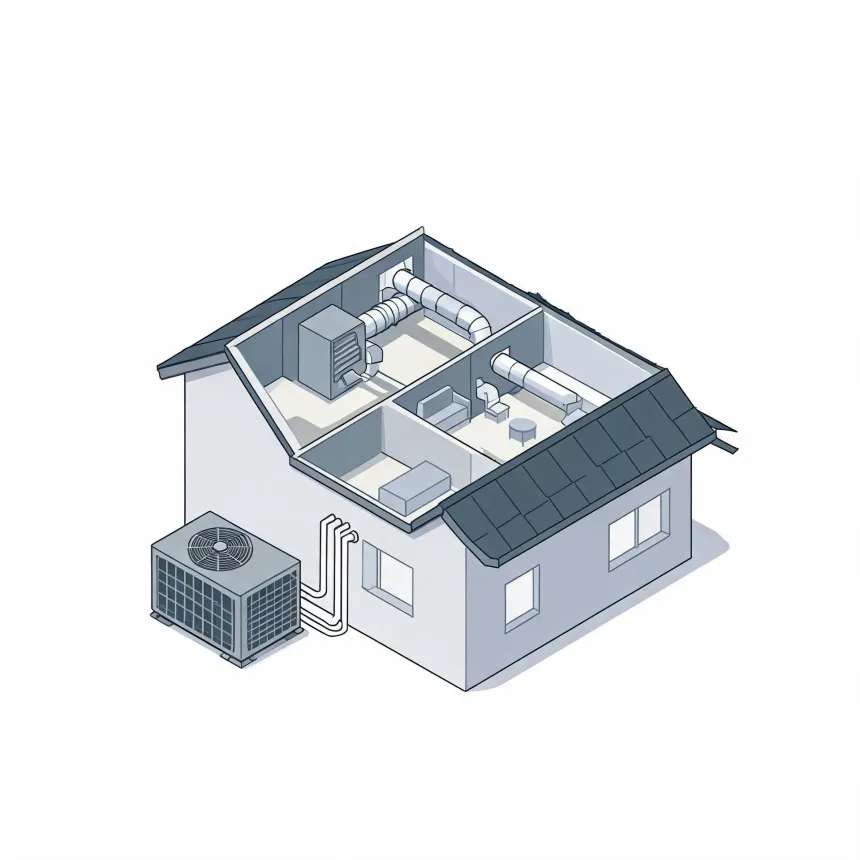
NOAA nClimDiv, 1991–2020 normals

Book your AC tune-up in June, before homes here start needing cooling in July.
- Jan
- Feb
- Mar
- Apr
- May
- Jun
- Jul
- Aug
- Sep
- Oct
- Nov
- Dec
A tune-up checks the refrigerant charge, cleans the coils, tests the capacitor and tightens the electrical connections.
Oregon requires HVAC contractors to hold a state license.
Oregon's Construction Contractors Board tests and licenses HVAC contractors, and keeps a record of who holds one. The license belongs to the contractor, not to any single job, so the same license covers the work whether it is a repair, an install or a maintenance visit like this one. Work under $1,000 in Oregon does not need a licensed contractor, though most air conditioner maintenance falls well within that range.
A license from the CCB is what stands behind this job in Oregon. If the maintenance includes opening the refrigerant side of the system, the technician doing that part also needs EPA Section 608 certification, a federal requirement that applies in every state regardless of what Oregon licenses. That certification covers handling refrigerant safely. It has nothing to do with the CCB license or what it tracks.
Source: Oregon Legislative Assembly
- What does AC maintenance include?
- A technician checks refrigerant charge, cleans the condenser coil, and tests the electrical connections and capacitor. They also check the thermostat settings, inspect the ductwork for obvious leaks, and change or clean the filter. Only someone with EPA Section 608 certification can open the refrigerant side of the system, so that part of the check has to be done by a certified technician.
- How often does an air conditioner need maintenance?
- Once a year, before the weather turns hot. Here that means getting it done before July, since cooling season only runs through July and August. A yearly check catches a weak capacitor or a low refrigerant charge before it causes a breakdown during the two months you actually need the system.
- Is AC maintenance worth it?
- Yes, because a system that has not been checked is more likely to fail on the hot afternoons when you need it most. Summer highs here average around 80°F, so the cooling season is short, and a breakdown in July or August means going without air conditioning when it counts. Maintenance also catches small problems, like a dirty coil or a loose electrical connection, before they turn into bigger repairs.